MEMETERIA by Thomas May

Music & the Arts

Firebird Fever in Seattle, with Hard-Hitting Poulenc

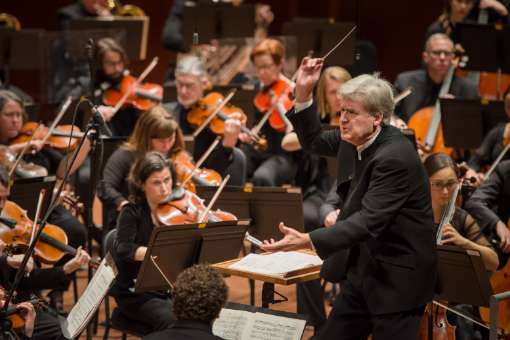
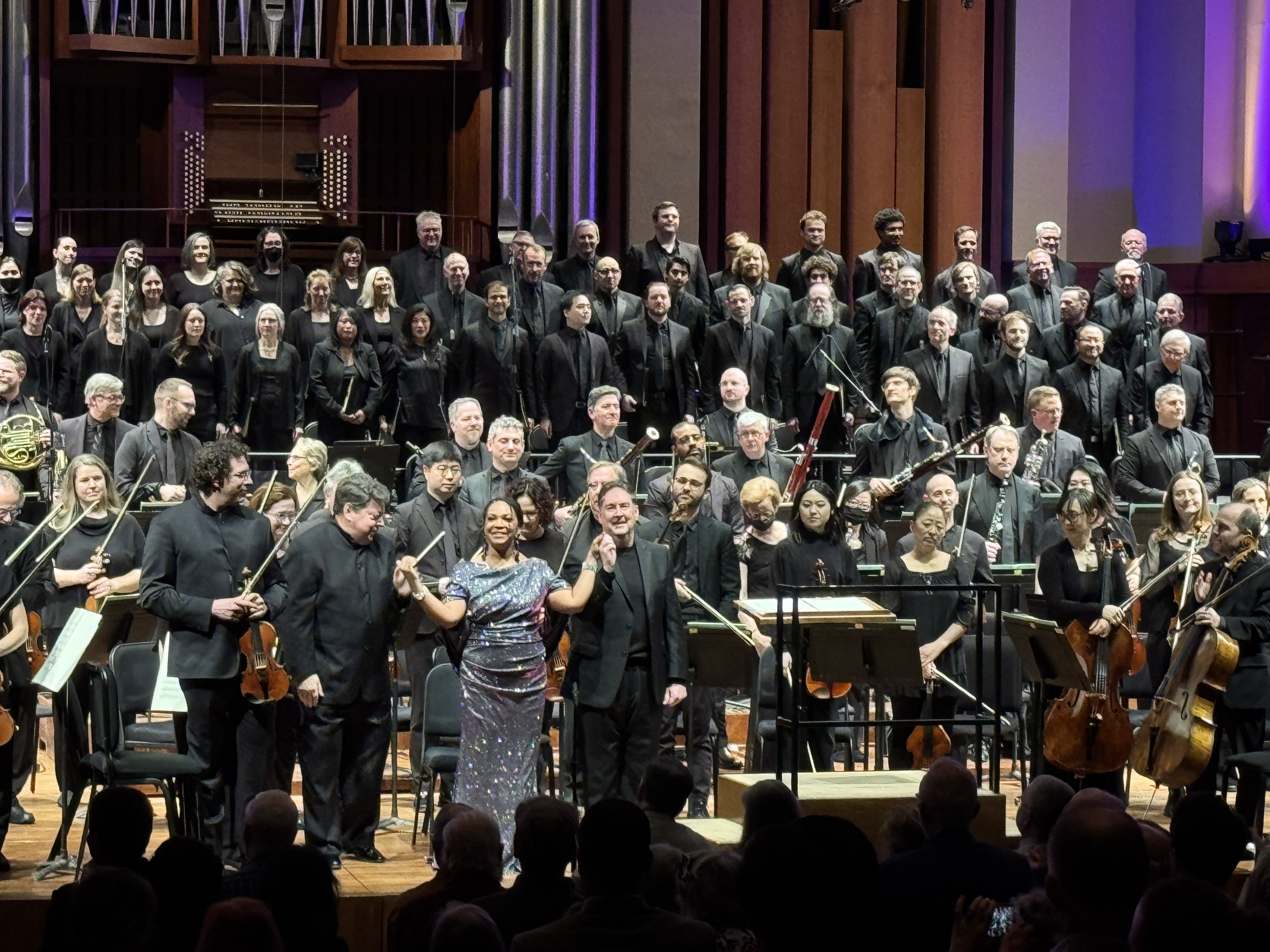
Seattle Symphony and Chorale with guest conductor Andrew Litton, soprano Janai Brugger, and chorus director Joseph Crnko; photo (c) Jorge Gustavo Elias

Stravinsky’s Firebird took on a conspicuous double life in Seattle this weekend, appearing both on the Seattle Symphony’s program and in Pacific Northwest Ballet’s first revival of its iconic Kent Stowell production of the complete ballet in two decades. 

At Benaroya Hall, guest conductor Andrew Litton led the orchestra in the suite from 1945 – the last and most expansive of the three concert suites Stravinsky fashioned from his breakout ballet for Diaghilev’s Ballets Russes company from 1910. The performance on Saturday felt fresh, gorgeously detailed, and unapologetically theatrical.


Litton leaned into the ballet’s contrasts. The more he coaxed the musicians to luxuriate in its moments of late-Romantic lushness and scintillating Impressionist atmosphere – the introductory music and Firebird dance, the hazy suspense of the mass hypnosis into which the evil wizard and his monsters are lured (featuring a moodily spellbinding bassoon solo from Luke Fieweger) – the more sharply its modern edges came into relief, especially in a jaggedly propulsive account of the Infernal Dance.

The same ear for contrast extended to dynamics under Litton, from the most delicate brushes of strings to the shattering volume of the Infernal Dance and the blazing brass of the wedding apotheosis. 

After my experience of the full ballet at PNB the night before (vividly conducted by Emil de Cou and with Ashton Edwards making the Firebird’s ornateness feel natural), the suite registered differently than usual. It felt less abstract, more pointedly mimetic. Stravinsky’s astonishingly precise tracking of the stage action remained unmistakable. Take the Round Dance, with its graceful lyricism enhanced by the poignant interplay of cello and clarinet. Not just “lyrical contrast,” but a precise dramatic beat, inseparable from the princesses’ circling dance.

For all the impact of this Firebird, it was Poulenc’s Stabat Mater – astonishingly, the first appearance in Seattle Symphony’s repertory of this sacred choral work from 1950 – that made the strongest impression of the evening, and not just because of its rarity. Here, too, contrasts were paramount, if of a very different order. The twelve sections unfolded like panels of an altarpiece, their distinct characters left exposed and unsmoothed. 

The stern pathos of the opening chorale gave way abruptly to the stabbing violence of “Cujus animam gementem,” with moments of unexpected serenity later intervening. Litton let these tensions accumulate side by side, like a mosaic, so that the uneasy balance Poulenc sustains – between suffering and the promise of consolation – stood out with real force. 

There was no sentimental resolution here. Poulenc illuminates the prayer’s central paradox, with its scenes of gruesome suffering set alongside images of victory palms and paradise. Litton seemed fully attuned to that tension, with a real flair for Poulenc’s harmonic language – those turns that unsettle just as they begin to reassure – and a compelling sense of the overall sonic picture.

Soprano Janai Brugger sang with heartfelt, stirring beauty, her top register especially appealing—you just wish Poulenc had given her more to do. But he uses the part sparingly, allowing the soloist to emerge from and return to the choral texture. It’s an approach that was well served by the Seattle Symphony Chorale. Excellently prepared by Joseph Crnko, the chorus was as capable of Day-of-Judgment fury as hushed a cappella wonder.

A different strain of French music came with the opening account of Ravel’s orchestrated Le tombeau de Couperin, where the balance between elegance and loss is more delicately poised. Here, though, that poise proved elusive. Where Poulenc thrives on stark juxtaposition, Ravel’s more elusive paradox—the bright, even playful music of the Rigaudon shadowed by wartime loss—felt rather flattened.

Litton’s reading came across as polite but bland – beautifully played, but missing the suppleness and lift this music needs. The Forlane in particular feeling drawn out where I would have preferred a little more rhythmic flexibility. Still, there was fine playing to enjoy, not least Mary Lynch VanderKolk’s poignant oboe lines.

Filed under: Francis Poulenc, Maurice Ravel, review, Seattle Symphony, Stravinsky, , , ,

Rites of Earth: Music of John Luther Adams and Stravinsky at Carnegie Hall

John Luther Adams onstage at Carnegie Hall after the New York premiere of his ‘Vespers of the Blessed Earth’ by the Philadelphia Orchestra and The Crossing. (Photos by Chris Lee)

A most interesting concert at Carnegie Hall, pairing a new major work by John Luther Adams with the never-old Rite of Spring: my review for Classical Voice North America is now online.

NEW YORK — In late March, the front page of The New York Times announced the latest warning from the UN’s Intergovernmental Panel on Climate Change under the headline “Earth Is Nearing The Tipping Point For A Hot Future.” It served as a grim contextual prelude to Vespers of the Blessed Earth, the latest work by John Luther Adams, which the Philadelphia Orchestra performed on its Carnegie Hall program March 31, a night after presenting the world premiere at its home base.

continue

Filed under: Carnegie Hall, John Luther Adams, new music, Philadelphia Orchestra, Stravinsky

Rites of Ecstasy: Thomas Dausgaard Pairs Knockout Scores by Scriabin and Stravinsky

152723-sso-2019-11-21-carlin-ma-9911

Thomas Dausgaard conducts the Seattle Symphony; photo (c) Carlin Ma

My review of the most recent program performed by Seattle Symphony under Thomas Dausgaard:

As Thomas Dausgaard continues along in his inaugural season as Seattle Symphony’s Music Director, it’s gratifying to see his intense rapport with the musicians expanding to different areas of the repertoire…

continue

Filed under: Alexander Scriabin, review, Seattle Symphony, Stravinsky, Thomas Dausgaard

Seattle Symphony Performs Stravinsky’s Perséphone

82103-bpatoc-sso-persephone-press-preview-0006-resized

Stravinsky’s Perséphone at Seattle Symphony in Michael Curry staging; photo by Brandon Patoc

My review of a very memorable evening with Ludovic Morlot, Seattle Symphony, and the visual artistry of Michael Curry:

Since its tepid première at the Paris Opera in 1934, Perséphone has remained among the most neglected of Stravinsky’s major scores, unable to find a comfortable home on the opera, ballet or concert stage.

continue reading

Filed under: Ludovic Morlot, review, Seattle Symphony, Stravinsky

Pairing Masterpieces by Shostakovich and Stravinsky

DS

Here’s my new story for the Seattle Times on this week’s upcoming Seattle Symphony program:

On Jan. 28, 1936, Dmitri Shostakovich woke up to read a sternly worded condemnation of his music in the official Soviet newspaper, Pravda.

continue reading

Filed under: Seattle Symphony, Seattle Times, Shostakovich, Stravinsky

In C and in Sync: Delights from Morlot, Melnikov and the Seattle Symphony

Alexander Melnikov; © Arts Management Group

Alexander Melnikov; © Arts Management Group

A new Bachtrack review:

One unfortunate trend in how concert music is often marketed these days showers disproportionate attention on a ‘star’ soloist, who basks in the limelight and the obligatory standing ovations, as though the orchestra were merely the house ‘backup band’ graciously permitted to share the stage.

What a delight this concert was, in contrast, when Alexander Melnikov joined with the Seattle Symphony under Ludovic Morlot’s baton to reaffirm the unadulteratedly collaborative experience of a concerto.

Rather than a parade of quirks justified as ‘virtuosity’ or a psychogram of a performer’s dominating personality, the 41-year-old Russian pianist provided a deeply satisfying, richly musical account of Beethoven’s Piano Concerto no. 1 in C major. And much of that satisfaction came from the sympathy Melnikov, Morlot and the SSO found in their partnership.

continue reading

Filed under: Beethoven, Ludovic Morlot, Mozart, pianists, review, Seattle Symphony, Stravinsky

“Lament and Moaning of a Heart”

Igor Stravinsky and Charlie Chaplin

Igor Stravinsky and Charlie Chaplin

An apparent missing link in the development of the young Igor Stravinsky has been unearthed.

Titled Funeral Song (Pogrebal’naya Pesnya in Russian), the piece was written by the 26-year-old composer as a memorial to his recently deceased mentor Rimsky-Korsakov in 1908. After a single performance, the manuscript was never published and was long believed to have been irretrievably lost in the 1917 upheaval and its aftermath.

But it turned out to be hibernating amid a pile of old manuscripts gathering dust somewhere inside the St. Petersburg Conservatory.The Stravinsky authority Natalya Braginskaya described the find at hte International Musicological Society in St Petersburg early this month.

According to the eminent Stravinsky expert Stephen Walsh:

Stravinsky recalled it as one of his best early works, but could not remember the actual music.
[…]
Braginskaya, who has studied the orchestral parts (the full score has not turned up and will need reconstructing), describes “The Funeral Song” as a slow, unvarying processional with contrasting instrumental timbres: a dialogue of sonorities, very much as Stravinsky himself vaguely remembered it in his autobiography 25 years later. There are echoes of Rimsky-Korsakov, but also, she says, of Wagner, whose music Stravinsky admired more than he was later prepared to admit.

In his post on the find, Zachary Woolfe quotes from one of the reviews of the premiere (which predated Stravinsky’s sudden fame with The Firebird in Paris:

One critic described “the lament and moaning of a heart against the backdrop of a somber landscape,” while another chastised it for chilliness: “Better keep silence if losing a friend and teacher leaves us cold.”

Filed under: music news, Stravinsky

Life with the Stars

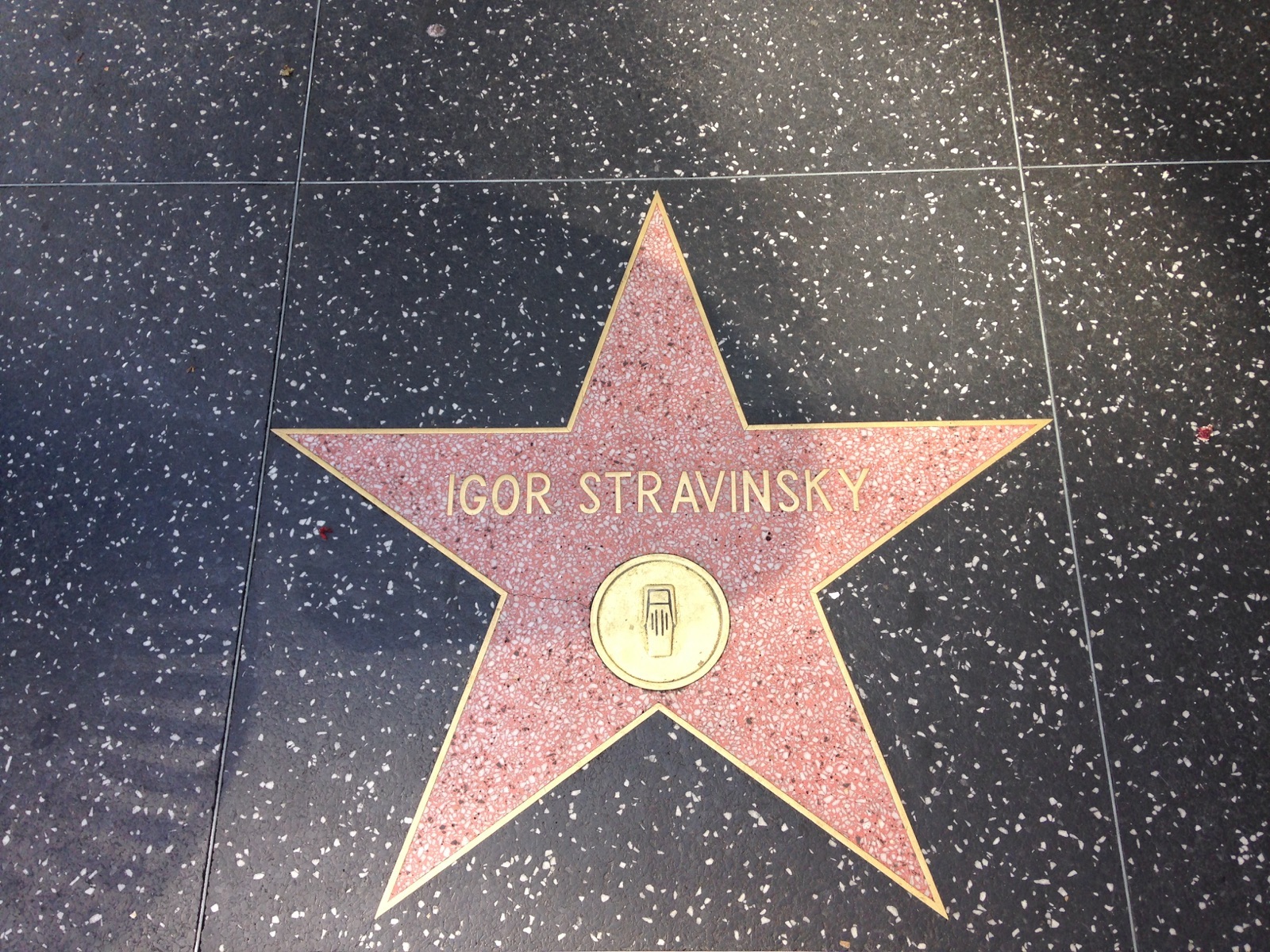
IMG_1432.jpb

Filed under: photography, Stravinsky

Glorified One

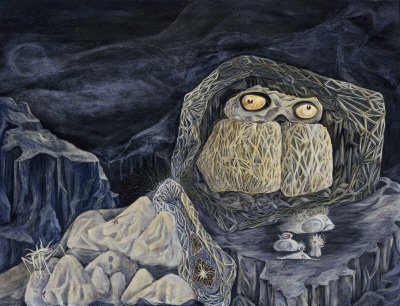
Glorified One, Leo Kenney (1945)

Glorified One, Leo Kenney (1945)

I was intrigued by the Stravinsky connection in this painting, currently on display as part of Seattle Art Museum’s Modernism in the Pacific Northwest: The Mythic and the Mystical. Leo Kenney (1925-2001), a native of Spokane, belonged to the second generation of the Northwest School of painters.

He referred to “The Glorification of the Chosen One” section from Stravinsky’s Rite of Spring as the inspiration for Glorified One.

Writes the curator Patricia Junker: “Yet Kenney was well-versed in Christian scripture and might just as well have been invoking the idea of resurrection in the post-apocalyptic second coming of Christ. A creature appears to live within stone, the one remaining sign of life in a landscape of complete destruction, perhaps a symbol of hope — or it may represent the final sacrifice to plead for peace and renewal.”

The enormous influence of Stravinsky’s score on other composers — which continues to this very moment — is well documented. Associations between this period of his work and the “primitivism” and Cubism of his colleague Pablo Picasso are also frequently discussed in a more general way (usually in terms of their putative influence on the music rather than the other direction). But I’m curious now about how the music of Sacre specifically influenced particular visual artists. Any other candidates?

Filed under: art exhibition, painters, Stravinsky

Seattle Symphony’s Stravinsky Marathon

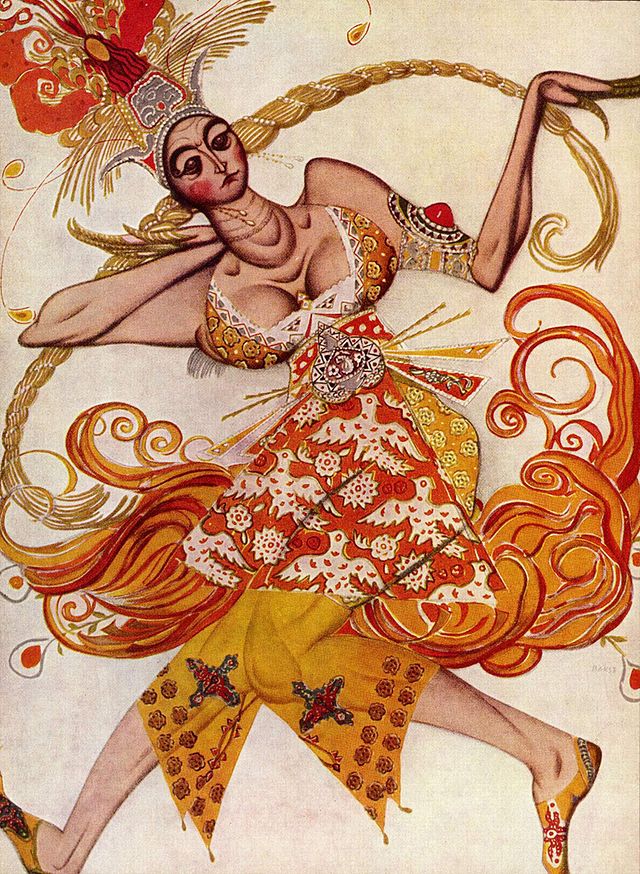
A costume sketch by Léon Bakst for The Costume sketch by Léon Bakst for The Firebird

Costume sketch by Léon Bakst for The Firebird

My review of the Seattle Symphony’s final concert of the season:

The past few months have brought the ensemble far more exposure than usual (an appearance at Carnegie Hall, a concert for the League of American Orchestras, the launch of an in-house label): its appetite for new challenges seems unstoppable.

So it’s hardly surprising that music director Ludovic Morlot is concluding the current season with an all-out marathon of orchestral virtuosity. The program of Stravinsky’s three pre-First World War ballet scores for the Ballets Russes in their entirety lasts close to three hours and, out of necessity for the players, requires two intermissions. It drew what appeared to be a close-to-packed house.

No matter how well we think we know this music, the opportunity to hear the young Stravinsky’s three iconic ballets back to back is bound to prompt new perspectives. And Morlot’s deeply sensitive interpretation of the uncut, sumptuous score for The Firebird (1910) did precisely that – all the more so since, only two weeks before, he’d led the SSO in the complete Daphnis et Chloé, also for the Ballets Russes, which was premiered in 1912, the year between Petrushka (1911) and The Rite of Spring (1913).

continue reading at Bachtrack

Filed under: review, Seattle Symphony, Stravinsky

Archive

Enter your email address to follow this blog and receive notifications of new posts by email.