Christian Tetzlaff and Leif Ove Andsnes open the Pierre Boulez Saal season; photo: Peter Adamik
I reviewedopening night with Christian Tetzlaff and Leif Ove Andsnes at Berlin’s Pierre Boulez Saal for The Strad:
In his famously mischievous binary, Ned Rorem asserted that ‘the entire solar system is torn between two aesthetics: French and German’ – with the kicker: ‘If you agree with all this, you’re French. If you disagree, you’re German’. … continue
Preparing to embark on her first season as artistic director of the Moab Music Festival later this month, the amazing violinist Tessa Lark spoke with me for The Strad:
When the Moab Music Festival opens its 33rd season later this month, it will mark the first change in artistic directorship since the festival’s inception, with violinist Tessa Lark taking the helm. The Kentucky-born musician combines a distinguished classical pedigree with a curiosity that spans Appalachian fiddle tunes to contemporary premieres. …
Even before the year reached its mid-point, Anne Akiko Meyers had released her third album of 2025, each strikingly different and, characteristically, showcasing new works she has commissioned.
My profile of this extraordinary violinist – and human being – is the cover story of this month’s Gramophone:
‘Curiosity’ doesn’t do justice to the force that drives Anne Akiko Meyers. A better word might be the German Neugier (literally, ‘greed for the new’), which suggests not just a hunger for the unknown, but an urgent, almost ravenous pursuit – a term that has a more active and impassioned meaning than does its English counterpart…
The C major Fantasy for Violin and Piano in Schubert’s manuscript (Wienbibliothek im Rathaus)
My essay for the recital by Leonidas Kavakos and Enrico Pace at the Pierre Boulez Saal on 29 April is here.
Complete program:
Ludwig van Beethoven: Sonata for Violin and Piano in A major Op. 47 “Kreutzer”
Richard Dubugnon: La minute exquise; Hypnos; Retour à Montfort-l’Amaury
Franz Schubert: Fantasy for Violin and Piano in C major D 934
The program that Leonidas Kavakos and Enrico Pace bring to the Pierre Boulez Saal offers three perspectives on the violin–piano duo, from the fire and drama of Ludwig van Beethoven to the rhapsodic lyricism of Franz Schubert—with a contemporary interlude of enigmatic, nocturnal miniatures by the Swiss-French composer Richard Dubugnon….
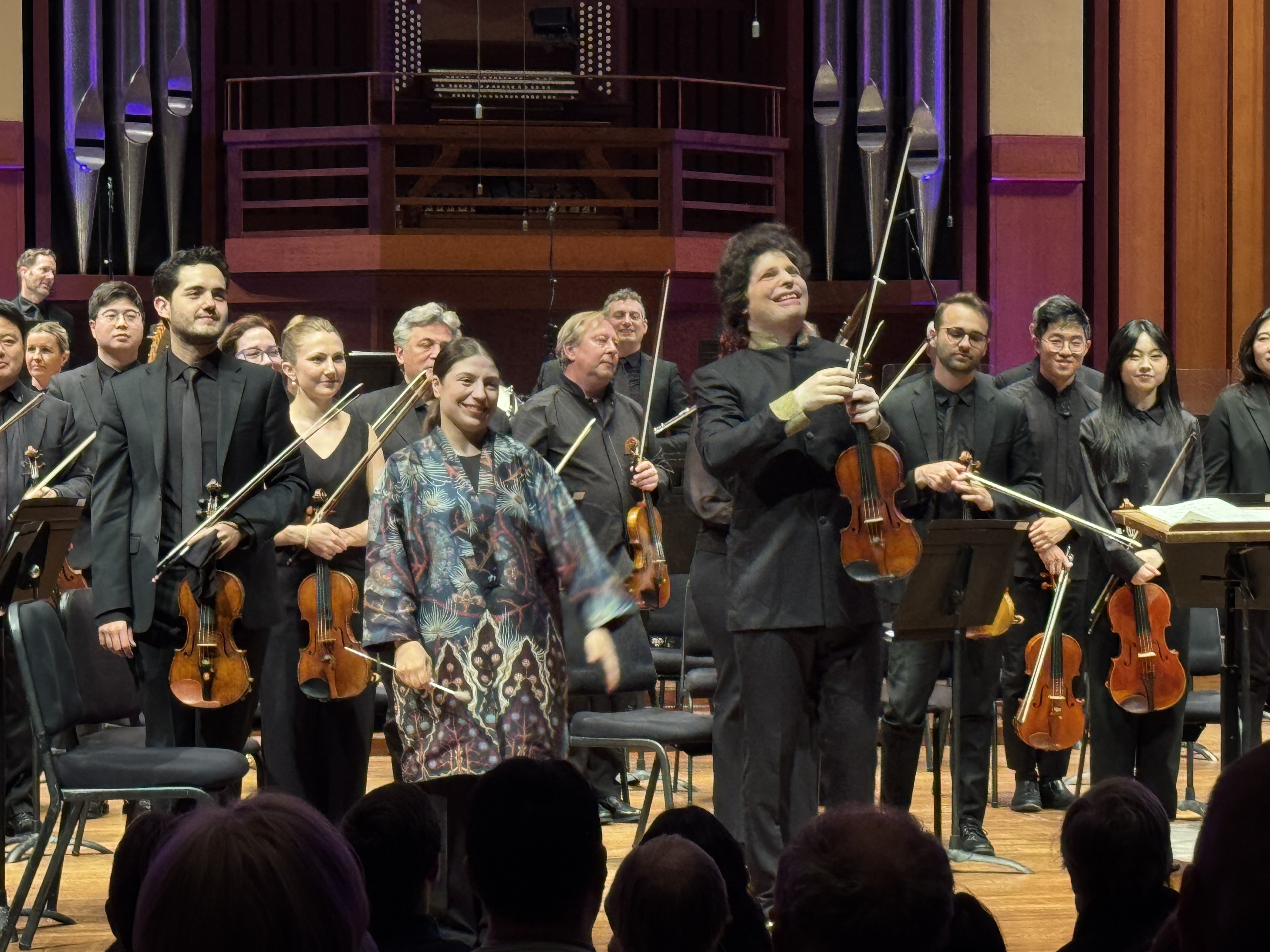
Dalia Stasevska and Augustin Hadelich with Seattle Symphony; (c)Jorge Gustavo Elias
Dalia Stasevska has returned to guest conduct Seattle Symphony this week with a relatively brief but refreshing program. Thursday night’s performance offered plenty of dazzling energy, albeit a curious combination of early Prokofiev sandwiched between two vibrant Latin American works.
Alberto Ginastera’s Malambo from the 1941 ballet Estancia — music that put him on the international map – launched the concert with such kinetic force that it reminded me what a crime it is that his music remains so rarely programmed in the US. (Bravo to the Miró Quartet for recording the entire Ginastera string quartet cycle, forthcoming later this year as part of the ensemble’s 30th-anniversary celebrations.) Stasevska articulated the layered rhythms and boldly strident dissonances of Ginastera’s dance with razor-sharp clarity. Even at just a few minutes in duration, it left the audience breathless.
So did violin soloist Augustin Hadelich — though in a very different way. A Seattle favorite – he gave a deeply memorable account of the Britten Violin Concerto on his last stop with the orchestra two years ago – Hadelich brought his signature artistry Prokofiev’s precocious Violin Concerto No. 1.
From his first phrases, which open the concerto, Hadelich astonished with the sheer beauty of his sound, caressing Prokofiev’s melodic line as if entering into a dream. Phrasing glissandi with effortless sprezzatura, he brought a transportive intensity to his account that was never schmaltzy. Hadelich embraced the concerto’s oneiric, fairy-tale character with personal warmth. Stasevska created a more integrated, immersive orchestral blend by positioning the brass stage right and offered sensitive, fluid support.
Hadelich then delighted with an encore that nodded to the evening’s Latin American framing: his own arrangement of Carlos Gardel’s Por una Cabeza, proving, with wryly elegant melancholy, that it doesn’t always take two to tango.
The concert’s second half was devoted to Mexican composer Silvestre Revueltas’s La noche de los Mayas, a quasi-symphony fashioned from his score for the now-forgotten 1939 film of the same name, which uses a tragic love story to romanticize pre-Columbian Mayan culture. Stasevska underscored the piece’s rhythmic elan and churning colors, along with its touches of chaos a la Stravinsky Rite.
The musicians seemed to thoroughly enjoy giving their all to the score – whether in the weighty brass chords evoking solemn ancient rituals, the mixed meter and collective revelry of a nighttime fiesta, or a touching Mayan serenade duet for flute and percussion.
The last movement opened up into a tour de force spectacle for a massively expanded percussion section that calls for an orchestra-within-the-orchestra, complete with rattles, güiro, and conch shells. I came way impressed by Stasevska’s versatility—a world away from the Sibelius of her last Seattle appearance, and wholly in the spirit of the evening’s exuberance.
Midori offers a provocatively thoughtful account of the Brahms concerto, with Anja Bihlmaier making her Seattle Symphony debut on the podium. Photo (c) Jorge Gustavo Elias
My review for The Strad of Midori’s recent performance with Seattle Symphony:
In the more than 15 years since Midori last performed with Seattle Symphony, the orchestra has undergone dramatic transformation, yet the violinist, now 53, returned with the same intense focus and uncompromising artistry that have long defined her career…. continue
Daniel Pioro in rehearsal with Manchester Camerata
I spoke with the adventurous British violin virtuoso for The Strad about why he couldn’t resist adding his stamp to one of classical music’s most beloved icons.
The Four Seasons hardly lacks for representation on disc or in the concert hall. But Daniel Pioro will make you reconsider your assumptions about Vivaldi’s beloved concertos. To celebrate the release of his extraordinary new recording with Manchester Camerata, the virtuoso violinist joined the ensemble to perform the cycle on Saturday 18 January at King’s Place in London, UK….
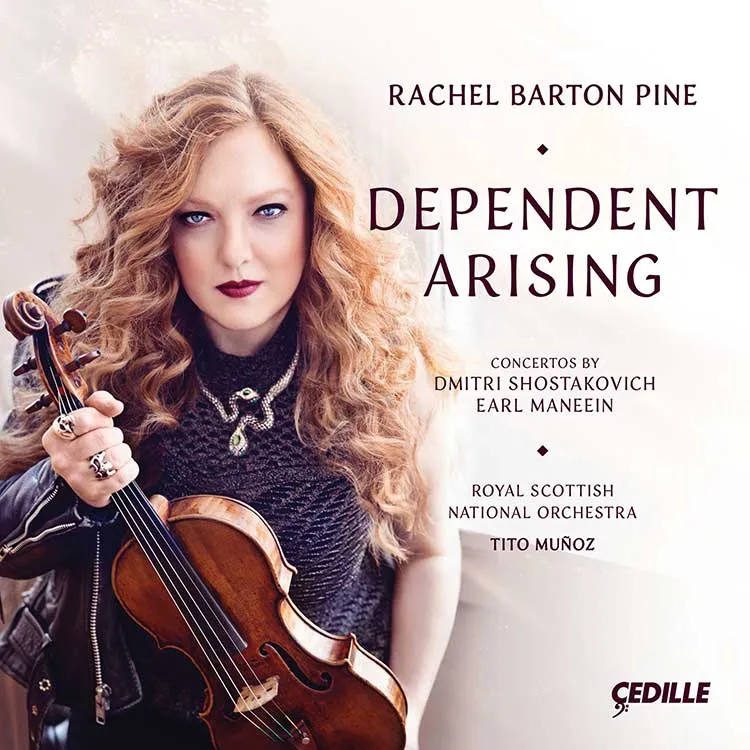
My latest for Strings magazine: meeting up with the insatiably curious Rachel Barton Pine.
Stickers for Metallica, Slayer, and Anthrax are emblazoned on the case that contains Rachel Barton Pine’s signature “ex-Bazzini, ex-Soldat” Joseph Guarneri del Gesù from 1742. The charismatic violinist doesn’t just defy categories. Her life as an artist is fueled by omnivorous curiosity, which Pine combines with searing musical intelligence and an impeccable virtuosity—all in the service of finding a deep connection to her audience….
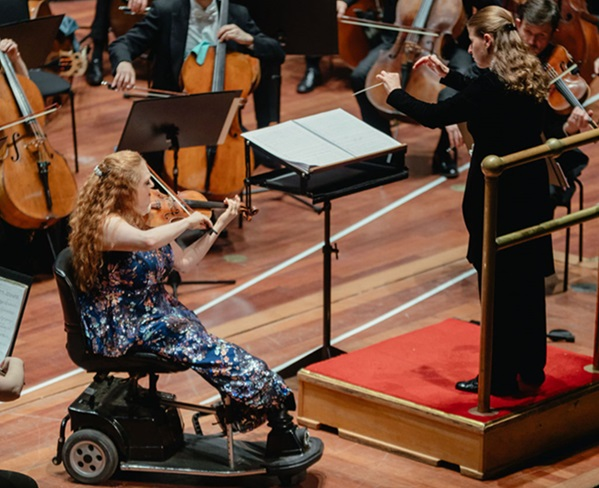
I had the pleasure of covering the Royal Scottish National Orchestra’s latest concert in Edinburgh, which featured two guest artists in remarkable sync:
Although the most recent work on this weekend’s Royal Scottish National Orchestra programme dates from 1952, audiences are still just beginning to make its acquaintance. The ongoing reappraisal of the twentieth-century African American composer Florence Price would not be possible without the contributions of performers who have championed her music….
For my story on the legacy of the music educator and visionary, which appears in the latest issue of Strings magazine, I spoke to Anne Akiko Meyers, Leila Josefowicz, and Patricia D’Ercole, past chair of the Suzuki Association Board of Directors.