The C major Fantasy for Violin and Piano in Schubert’s manuscript (Wienbibliothek im Rathaus)
My essay for the recital by Leonidas Kavakos and Enrico Pace at the Pierre Boulez Saal on 29 April is here.
Complete program:
Ludwig van Beethoven: Sonata for Violin and Piano in A major Op. 47 “Kreutzer”
Richard Dubugnon: La minute exquise; Hypnos; Retour à Montfort-l’Amaury
Franz Schubert: Fantasy for Violin and Piano in C major D 934
The program that Leonidas Kavakos and Enrico Pace bring to the Pierre Boulez Saal offers three perspectives on the violin–piano duo, from the fire and drama of Ludwig van Beethoven to the rhapsodic lyricism of Franz Schubert—with a contemporary interlude of enigmatic, nocturnal miniatures by the Swiss-French composer Richard Dubugnon….
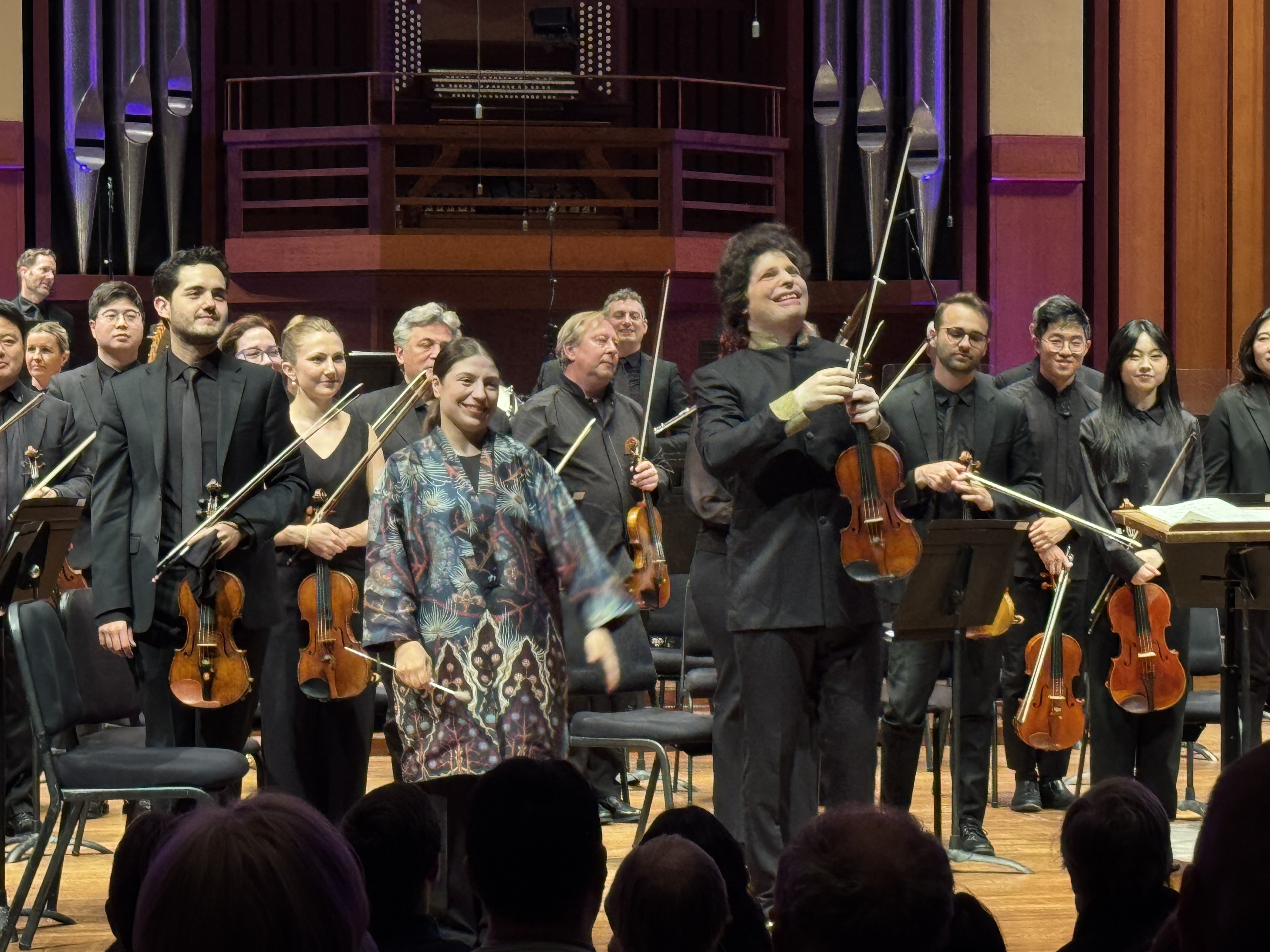
Dalia Stasevska and Augustin Hadelich with Seattle Symphony; (c)Jorge Gustavo Elias
Dalia Stasevska has returned to guest conduct Seattle Symphony this week with a relatively brief but refreshing program. Thursday night’s performance offered plenty of dazzling energy, albeit a curious combination of early Prokofiev sandwiched between two vibrant Latin American works.
Alberto Ginastera’s Malambo from the 1941 ballet Estancia — music that put him on the international map – launched the concert with such kinetic force that it reminded me what a crime it is that his music remains so rarely programmed in the US. (Bravo to the Miró Quartet for recording the entire Ginastera string quartet cycle, forthcoming later this year as part of the ensemble’s 30th-anniversary celebrations.) Stasevska articulated the layered rhythms and boldly strident dissonances of Ginastera’s dance with razor-sharp clarity. Even at just a few minutes in duration, it left the audience breathless.
So did violin soloist Augustin Hadelich — though in a very different way. A Seattle favorite – he gave a deeply memorable account of the Britten Violin Concerto on his last stop with the orchestra two years ago – Hadelich brought his signature artistry Prokofiev’s precocious Violin Concerto No. 1.
From his first phrases, which open the concerto, Hadelich astonished with the sheer beauty of his sound, caressing Prokofiev’s melodic line as if entering into a dream. Phrasing glissandi with effortless sprezzatura, he brought a transportive intensity to his account that was never schmaltzy. Hadelich embraced the concerto’s oneiric, fairy-tale character with personal warmth. Stasevska created a more integrated, immersive orchestral blend by positioning the brass stage right and offered sensitive, fluid support.
Hadelich then delighted with an encore that nodded to the evening’s Latin American framing: his own arrangement of Carlos Gardel’s Por una Cabeza, proving, with wryly elegant melancholy, that it doesn’t always take two to tango.
The concert’s second half was devoted to Mexican composer Silvestre Revueltas’s La noche de los Mayas, a quasi-symphony fashioned from his score for the now-forgotten 1939 film of the same name, which uses a tragic love story to romanticize pre-Columbian Mayan culture. Stasevska underscored the piece’s rhythmic elan and churning colors, along with its touches of chaos a la Stravinsky Rite.
The musicians seemed to thoroughly enjoy giving their all to the score – whether in the weighty brass chords evoking solemn ancient rituals, the mixed meter and collective revelry of a nighttime fiesta, or a touching Mayan serenade duet for flute and percussion.
The last movement opened up into a tour de force spectacle for a massively expanded percussion section that calls for an orchestra-within-the-orchestra, complete with rattles, güiro, and conch shells. I came way impressed by Stasevska’s versatility—a world away from the Sibelius of her last Seattle appearance, and wholly in the spirit of the evening’s exuberance.
Kronos Quartet’s Paul Wiancko and Ayane Kozasa playing on their new Hardanger instruments designed by Ottar Kåsa; photo (c) Ingo J. Biermann
I spoke with Kronos Quartet violinist Gabriela Díaz for The Strad about Elja, the ensemble’s new Hardanger fiddle collaboration with Benedicte Maurseth and Kristine Tjøgersen, which recently premiered at Carnegie Hall:
Few ensembles are as voracious for new experiences as the Kronos Quartet. This season has brought dramatic change for the adventure-loving American group, which launched its second half-century with two new members: violinist Gabriela Díaz and violist Ayane Kozasa, who joined founder and violinist David Harrington and cellist Paul Wiancko (a member since 2023)…. continue
Takács Quartet with Marc-André Hamelin; photo (c) Easel Images
A recent interview with the wonderful Richard O’Neill from Takács:
This year, the Takács Quartet celebrates its 50th anniversary with global tours, new commissions, and another opportunity to savour their artistry on disc. Their latest album — made in collaboration with a favourite partner, keyboard phenomenon Marc-André Hamelin — continues the ensemble’s commitment to expanding the chamber music repertoire by championing female composers…. continue
Edward Gardner’s complete Schubert cycle reaches its conclusion with this fourth volume, marking the culmination of a project that began in 2018 – just as he was wrapping up his well-regarded five volume Mendelssohn survey with Birmingham. …
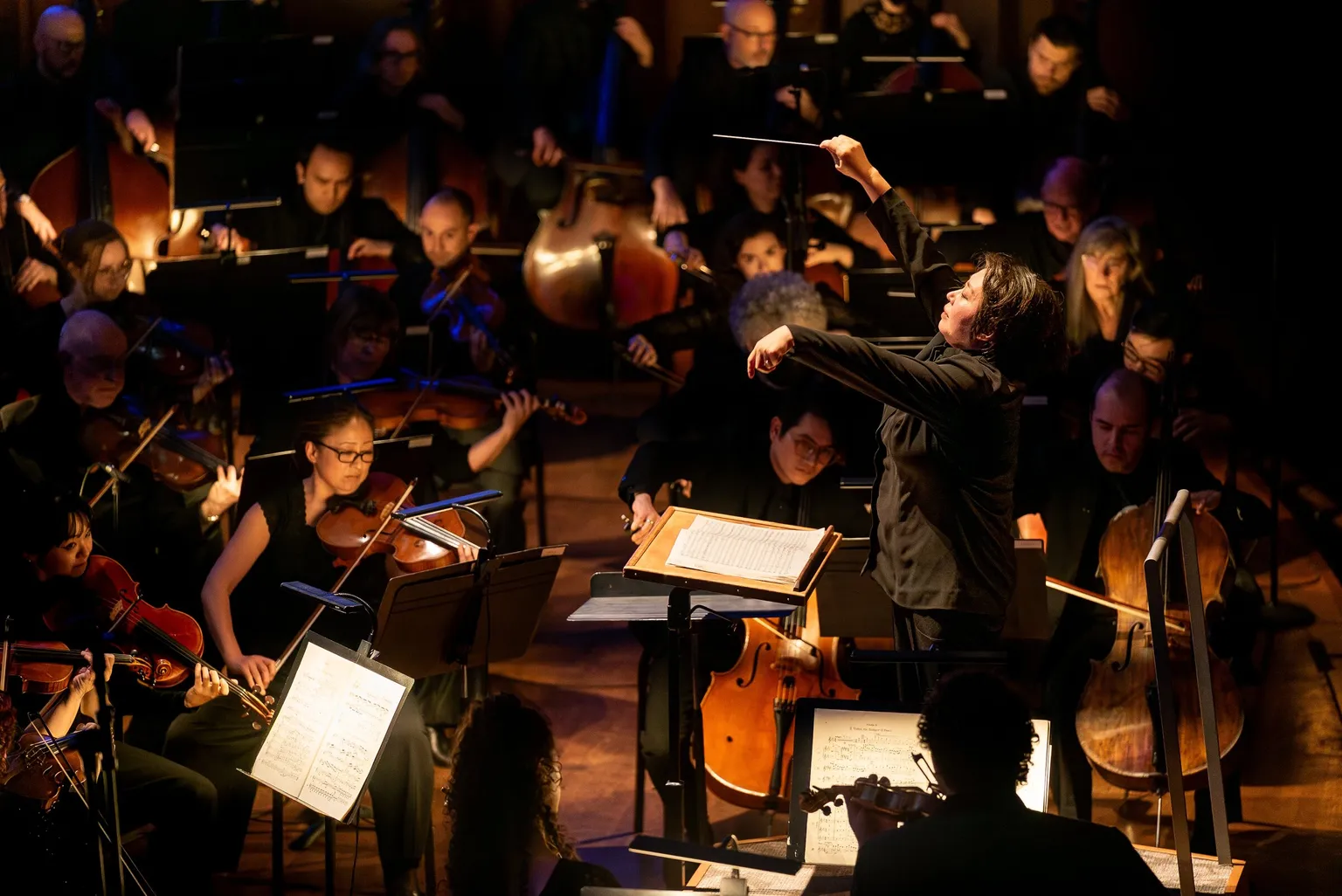
Xian Zhang, Seattle Symphony music director designate, conducts the Symphony in its “Holst: The Planets” program March 27. (James Holt / Seattle Symphony)
I reviewed Xian Zhang’s first concert with Seattle Symphony since being named music director designate :
With just a few gestures, Xian Zhang began conjuring a cosmos.
Returning to Benaroya Hall for her first full program since being named Seattle Symphony’s incoming music director, Zhang drew the nearly sold-out concert hall Thursday night into her orbit with her focused, magnetic conducting.
James Ehnes; photo courtesy Seattle Chamber Music Society
Along with my feature on Abel Selaocoe in Strings, my other cover story this month is a profile of the fabulous violinist and music director James Ehnes for The Strad:
Over a weekend in early December 2024, James Ehnes was in Seattle to perform all ten violin sonatas of Beethoven, partnering with pianist Orion Weiss. Presented in two concerts, each met with rapt attention, the performances were part of a new initiative of Seattle Chamber Music Society (SCMS) to engage audiences during the long interval between its flagship summer festival and the winter festival starting in late January.
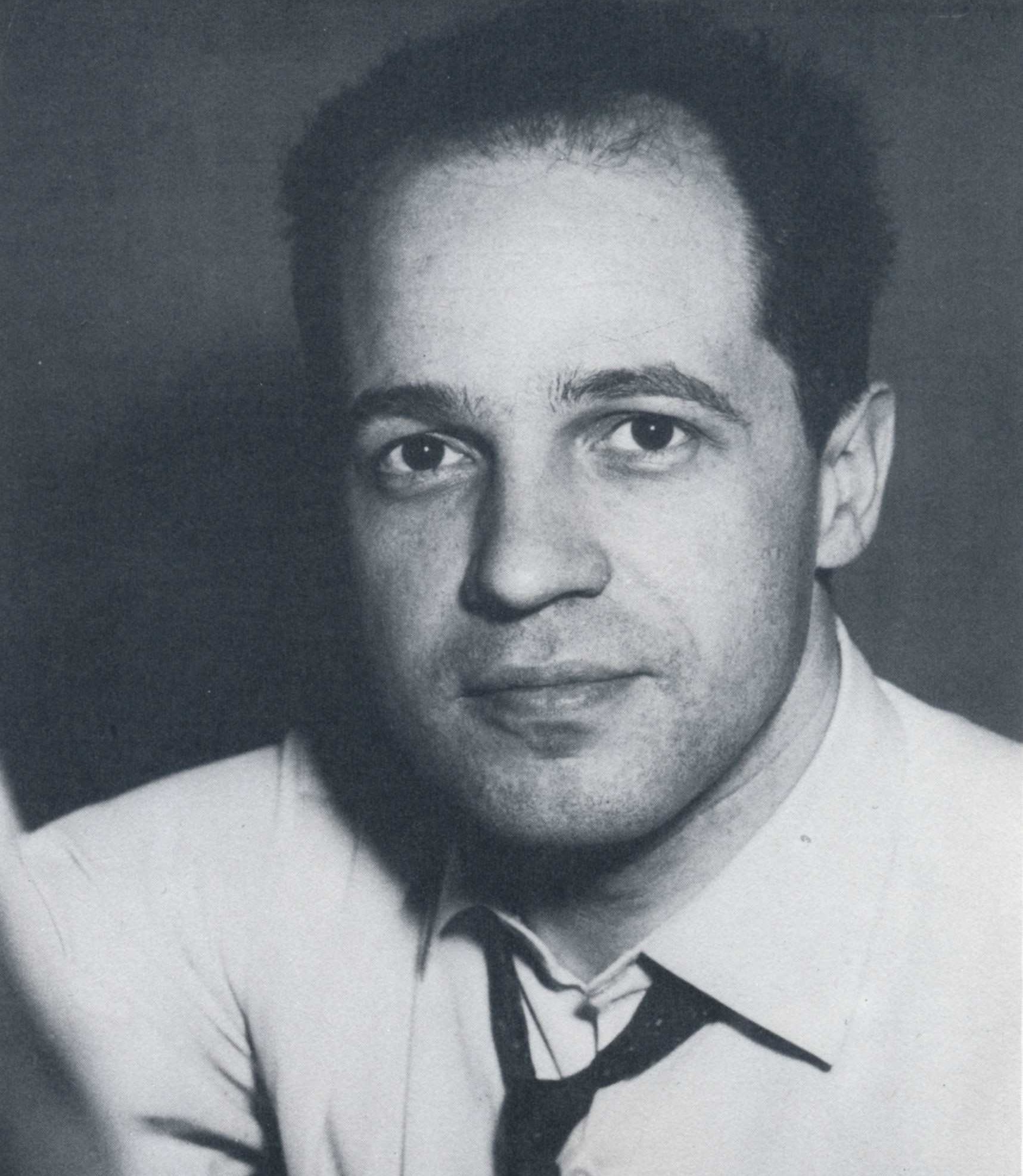
Here is my essay on the JACK Quartet’s 20 March program at the Boulez-Saal in Berlin in honor of the Pierre Boulez centenary.
When they initially met as participants in the Lucerne Festival Academy, the members of the JACK Quartet forged a connection with Pierre Boulez, the Academy’s founder, that left a lasting impression. Tonight’s program pays homage to their mentor by juxtaposing excerpts from his landmark Livre pour quatuor with works that resonate with the excitement and idealism that the young Boulez channeled into this radical reimagining of the string quartet.
“I am a religious Russian Orthodox person and I understand ‘religion’ in the literal meaning of the word, as ‘re-ligio’, that is to say the restoration of connections, the restoration of the ‘legato’ of life. There is no more serious task for music than this.” – Sofia Gubaidulina
The great Sofia Gubaidulina has died at the age of 93. She passed away on 13 March at her home in Appen, Germany.
From her publisher, Boosey & Hawkes: “Sofia Gubaidulina, the grande dame of new music, has passed away on 13 March 2025, aged 93, at her home in Appen, near Hamburg in Germany. She was considered the most important Russian composer of the present day and a person who drew inspiration from a deep faith. Her interest in the world, in people and in the spiritual touched everyone who met and worked with her. In her work, she always focussed on the elementary, on human existence and the transformative power of music.
She is like a ‘flying hermit’, said conductor Simon Rattle, because she is always “in orbit and only occasionally visits terra firma. Now and then she comes to us on the earth and brings us light and then goes back into her orbit.” Conductor Andris Nelsons has noted that “Sofia Gubaidulina’s music – its intellect and its profound spirituality – is deeply touching. It really gets under your skin”.
According to NPR: “In a 2017 interview with the BBVA Foundation, Gubaidulina talked about the power of music in sweeping terms. ‘The art of music is consistent with the task of expanding the higher dimension of our lives,’ she said. A deeply religious artist, she once described her writing process as speaking with God.” She also said: “The art of music is capable of touching and approaching mysteries and laws existing in the cosmos and in the world.”
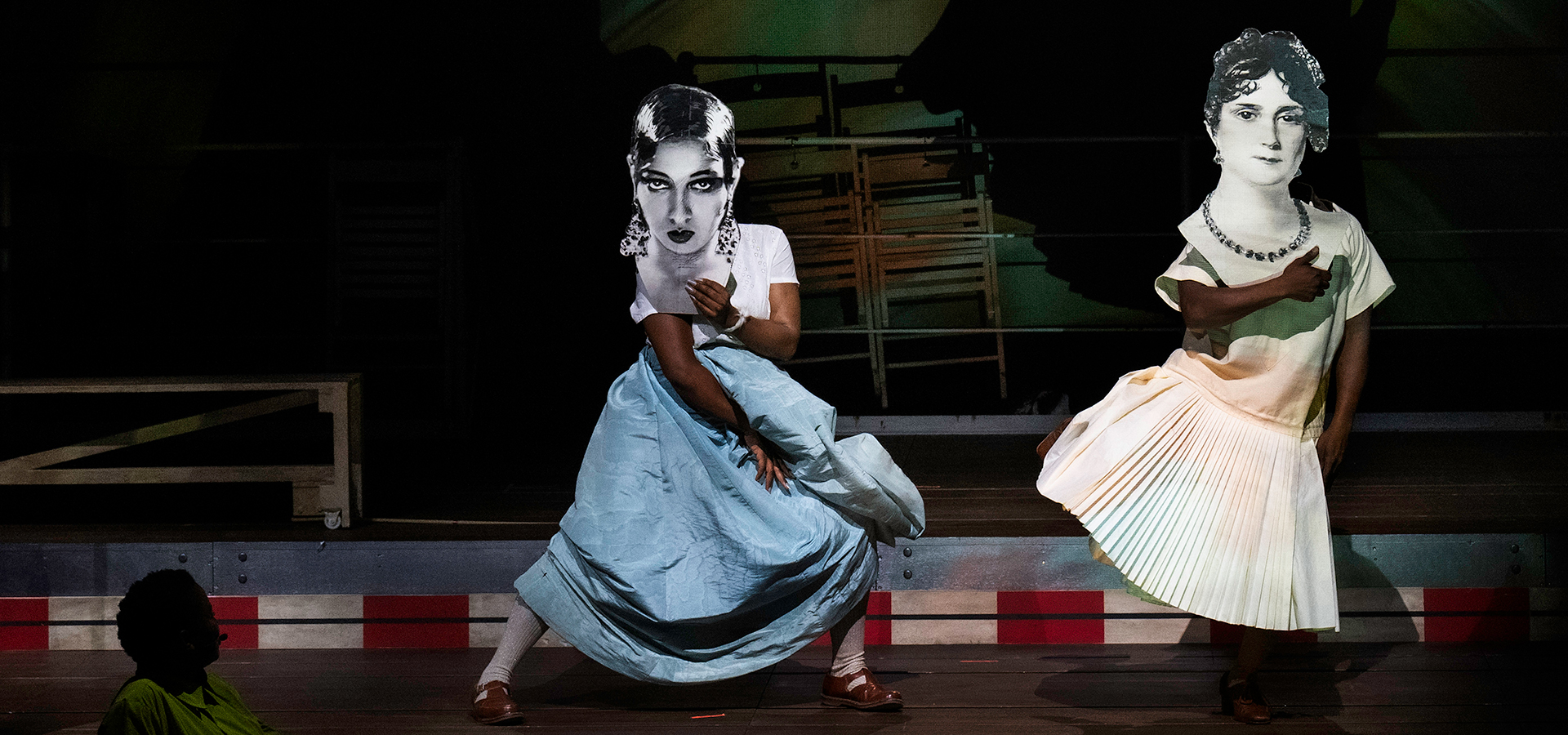
Here’s my feature on the new project from William Kentridge, which will be presented this weekend in Berkeley by Cal Performances:
A new production by William Kentridge is always a major event. Few other artists at work today span so many media while at the same time reimagining them: drawing, painting, sculpture, printmaking, animated film, and musical-theater performance are all encompassed within his practice. But what makes Kentridge especially resonant for a global audience is how his innovations push beyond merely aesthetic considerations to pose big, open-ended questions about history and identity. continue







 MEMETERIA by Thomas May