MEMETERIA

Icon

Arts writing by Thomas May

An Overshadowed Merry Wives Comes to Juilliard

wives

The Merry Wives of Windsor at The Juilliard School (photo by Richard Termine)

By a strange coincidence, the swan songs of two 19th-century composers, Giuseppe Verdi and Otto Nicolai, are dazzling comic operas that are based on the same play: Shakespeare’s The Merry Wives of Windsor, which was first registered in 1602. ..

continue reading

Filed under: Juilliard

John Corigliano at 80

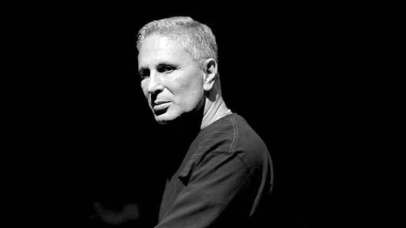
JCJohn Corigliano turns 80 this Friday. Here’s my profile of the composer for Strings magazine:

Released in 1999, François Girard’s film The Red Violin crystallized an image of the instrument for many who don’t usually listen to classical music…

continue reading

Filed under: John Corigliano, profile, Strings

A Rousing Reunion for Esa-Pekka Salonen and the Los Angeles Philharmonic

76517-esa-pekka-salonen-benjamin-suomela

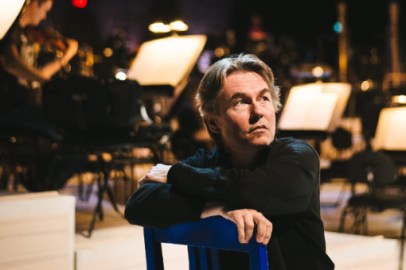
Esa-Pekka Salonen © Benjamin Suomela

Esa-Pekka Salonen’s return to Walt Disney Concert Hall highlighted his gifts as composer and conductor alike and underscored how an orchestra can sound genuinely 21st century.

continue reading

Filed under: Beethoven, Los Angeles Philharmonic, review, Salonen

David Lang World Premiere at Seattle Symphony


Tonight brings the world premiere of David Lang’s new opus, symphony without a hero, on tonight’s Seattle Symphony concert at 7.30 pm (PST). Ludovic Morlot also conducts the work to which it responds, Richard Strauss’s magniloquent Ein Heldenleben.

Here’s the Anna Akhmatova poem that inspired Lang:

Poem without a Hero

I have lit my treasured candles,
one by one, to hallow this night.
With you, who do not come,
I wait the birth of the year.
Dear God!
the flame has drowned in crystal,
and the wine, like poison, burns
Old malice bites the air,
old ravings rave again,
though the hour has not yet struck.

Dread. Bottomless dread…
I am that shadow on the threshold
defending my remnant peace.

Let the gossip roll!
What to me are Hamlet’s garters,
or the whirlwind of Salome’s dance,
or the tread of the Man in the Iron Mask?
I am more iron than they.

Prince Charming, prince of the mockers —
compared with him the foulest of sinners
is grace incarnate…

That woman I once was,
in a black agate necklace,
I do not wish to meet again
till the Day of Judgement.

Are the last days near, perhaps?
I have forgotten your lessons,
prattlers and false prophets,
but you haven’t forgotten me.
As the future ripens in the past,
so the past rots in the future —
a terrible festival of dead leaves.

All the mirrors on the wall
show a man not yet appeared
who could not enter this white hall.
He is no better and no worse,
but he is free of Lethe’s curse:
his warm hand makes a human pledge.
Strayed from the future, can it be
that he will really come to me,
turning left from the bridge?

From childhood I have been afraid
of mummers. It always seemed
an extra shadow
without face or name
had slipped among them…

You…
you are as old as the Mamre oak,
ancient interrogator of the moon,
whose feigned groans cannot take us in.
You write laws of iron.

Creature of special tastes,
you do not wait for gout and fame
to elevate you
to a luxurious jubilee chair,
but bear your triumph
over the flowering heather,
over wildernesses.
And you are guilty of nothing: neither of this,
that, nor anything..

Besides
what have poets, in any case, to do with sin?
They must dance before the Ark of the Covenant
or die! But what am I trying to say?

In the black sky no star is seen,
somewhere in ambush lurks the Angel of Death,
but the spices tongues of the masqueraders
are loose and shameless
A shout:
“Make way for the hero!”
Ah yes. Displacing the tall one,
he will step forth now without fail
and sing to us about holy vengeance…

There is no death, each of us knows —
it’s banal to say.
I’ll leave it to others to explain.

Is this the visitor from the wrong side
of the mirror? Or the shape
that suddenly flitted past my window?
Is it the new moon playing tricks,
or is someone really standing there again
between the stove and the cupboard?

This means that gravestones are fragile
and granite is softer than wax.
Absurd, absurd, absurd! From such absurdity
I shall soon turn gray
or change into another person.
why do you beckon me with your hand?
For one moment of peace
I would give the peace of the tomb.

~Anna Akhmatova (trans. Stanley Kunitz and Max Hayward)


https://www.kanopystreaming.com/product/anna-akhmatova-life-poet

Filed under: American music, David Lang, Seattle Symphony

Parsifal back at the Met

The Met’s revival of the François Girard production of Parsifal has started its run, with Yannick Nézet-Séguin conducting.
My essay for the Met’s Playbill program is here.

Michael Cooper offers this report for the New York Times on >1,000 gallons of fake blood Girard calls for in his staging:

The blood creates striking tableaus — drenching the dress Evelyn Herlitzius wears as she sings the role of Kundry, a wild woman in the thrall of an evil sorcerer; and helping the audience visualize the spiritual quest taken by Parsifal (the tenor Klaus Florian Vogt). And it fits squarely into Mr. Girard’s conception of the opera.

 “We’re talking about life, Christ, Amfortas’s wound, sexuality, all of those things,” he said. “Blood became the connector.”

Filed under: essay, Metropolitan Opera, Wagner

Machaut and Marcel Pérès

This weekend, Cappella Romana is presenting performances of Machaut’s Messe de Nostre Dame under guest conductor Marcel Pérès, an early-music authority. Upset that I had to miss last night’s performance in Seattle. Two more follow this weekend (in Portland and Eugene, respectively).

For Cappella Romana, Marcel Pérès published this fascinating commentary on this milestone of Western music:

A far-reaching transformation took place. The mastery of numbers in the sphere of time gave men the impression that they had become something greater than mere cogs in a greater cosmic order. Thanks to the mathematical mastery of durations, music had become geometry of time.

With this new ability to conceive music outside of time, musicians began to regard themselves as creators, building structures that did not exist before their intervention in the sound material. This is probably why the 14th century gave rise to the gradual emergence of named composers.

continue reading

Filed under: Cappella Romana, early music, Machaut

Stokowski’s Mussorgsky

This is a fantastic synthesis.

Filed under: Leopold Stokowski, Modest Mussorgsky

Happy Birthday, Philip Glass

Already a year beyond the Big 8-0!

Filed under: Philip Glass

Jennifer Higdon’s Latest Grammy

Warmest congratulations to Jennifer Higdon for winning the 2018 Grammy Award for Best Classical Composition for her Viola Concerto, written for Roberto Díaz. I had the privilege of writing the liner notes for this recording, which also garnered Nashville Symphony under Giancarlo Guerrero a Best Classical Compendium Grammy.

And here’s my profile of Jennifer Higdon from last spring for Strings magazine:

Jennifer Higdon is not only stunningly prolific but one of the most-performed American composers at work today…

continue reading

Filed under: awards, Jennifer Higdon

Thomas Dausgaard and Seattle Symphony in an All-Brahms Concert

fdfca316-02e6-11e8-8fe2-2bdf8a8705d1-1334x891

Thomas Dausgaard conducts the Seattle Symphony in a Brahms program at Benaroya Hall. (Brandon Patoc)

My review of last night’s program for The Seattle Times:

For a glimpse of the music of the future in Seattle, head down to Benaroya Hall this weekend to experience Thomas Dausgaard in action….

continue reading

Filed under: Brahms, review, Seattle Symphony, Seattle Times, Thomas Dausgaard

Archive

Enter your email address to follow this blog and receive notifications of new posts by email.