MEMETERIA by Thomas May

Music & the Arts

Alice Goodman: New York Times Profile

21ALICE5-master768

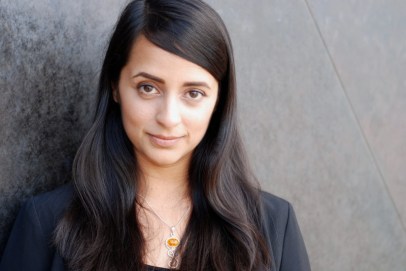
Alice Goodman in Fulbourn, England. Credit Nadine Ijewere for “The New York Times”

My New York Times story on the poet and librettist Alice Goodman is now online:

When “Nixon in China” had its premiere at Houston Grand Opera on Oct. 22, 1987, there had never been anything quite like it. No previous American opera — perhaps no opera, ever — had so boldly dealt with recent political history…

continue

Filed under: Alice Goodman, American literature, American opera, John Adams, librettists, New York Times, Peter Sellars, Uncategorized

Krapp’s Last Tape

Getting in the mood for Beckett tonight at Edinburgh International Festival.

And companion piece Not I:


Filed under: theater

In Search of Identity at Lucerne Festival

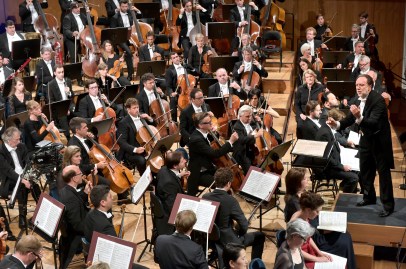
160812_16300_EO_LFO_Chailly_Solisten_Choere_P_Fischli_Lucerne_FeThe 2017 Summer Festival — which is all about the theme of “identity” — begins today in Lucerne as Riccardo Chailly leads the Lucerne Festival Orchestra in an all-Strauss program.

From accentus:

“Accentus Music is delivering the live video stream of the Lucerne Festival’s opening concert on Friday, August 11th, at 6:30 p.m. [CET]. The ceremonial act which is going to take place in the KKL Lucerne will be streamed simultaneously open-air at Lucerne’s Inseli Park as well as on Facebook Live. The Lucerne Festival Orchestra and its music director Riccardo Chailly will be performing three symphonic poems by Richard Strauss: Thus Spoke ZarathustraDeath and Transfiguration as well as Till Eulenspiegel’s Merry Pranks. 

Filed under: Lucerne Festival, music news

R.I.P. Barbara Cook

Filed under: American music, Bernstein, music news

Trying to rethink Madame Butterfly at Seattle Opera

65336-butterfly-alexey-dolgov--pinkerton--and-lianna-haroutounian--cio-cio-san--jacob-lucas-photo-resized

Alexey Dolgov (Pinkerton) and Lianna Haroutounian (Cio-Cio-San); photo by Jacob Lucas

My review for Bachtrack of the new Madame Butterfly production opening Seattle Opera’s season:

How well do we really know Madame Butterfly? So iconic that, for some, it’s the archetype of the art form itself, Puccini’s mega-popular opera has recently been coming in for renewed scrutiny.

continue

Filed under: Puccini, review, Seattle Opera

Bewitched, Bothered, and Bewildered: Alcina Casts Surprising Spells in Santa Fe

64947-alcina-else-van-den-heever-c-ken-howard-for-santa-fe-opera-2017-resized

Elsa van den Heever (Alcina) © Ken Howard for Santa Fe Opera, 2017

My review of Santa Fe Opera’s Alcina for Bachtrack:

George Bernard Shaw crystallised longstanding biases when he declared that Handel’s operas were “only stage concerts for shewing off the technical skill of the singers”. David Alden, a longstanding maverick director and hero of Regie-philes, made his reputation in part through his striking interpretations of Handel. If anything, his production of Alcina, which he first staged at the Opéra National de Bordeaux in 2012 (with many of the same singers), pushes too far in the opposite direction to the theatrically static fossil of Shaw’s stereotype.

continue

Filed under: directors, Handel, review, Santa Fe Opera

Reena Esmail: Musical America‘s New Artist of the Month

reena-esmail-amber2The remarkable young composer Reena Esmail is Musical America‘s New Artist of the Month for August 2017:

At Chorus America’s annual conference this past June in Los Angeles, a general session devoted to the topic “The Medicine of Music” featured a singalong demonstration of a new interactive choral work titled Take What You Need. It wasn’t only the members of Street Symphony and the Urban Voices Project, a community choir of singers from LA’s Skid Row neighborhood, who appeared transformed as they sang this music by Reena Esmail. The large audience of choral professionals from around America joined in, visibly moved by this confirmation of musical meaning.
“It was such a powerful moment, because I’ve always wanted my music connect people to one another,” Esmail told me in a recent interview.
As Composer-in-Residence with Street Symphony (cofounded by LA Philharmonic violinist Vijay Gupta as a project to bring music to the homeless population), Esmail created the anthemic Take What You Need last year as a vehicle for the disenfranchised from the Skid Row community to join with professional musicians and tell their deeply moving personal stories. Following the model of the Kronos Quartet’s Fifty for the Future Initiative—in which Esmail herself has participated—Street Symphony recently made the piece available for free use to community organizations (on the website http://twyn.info/), who are encouraged to adapt it to accommodate specific performers and contexts.
“It started as a piece for string quartet and four singers but now there arrangements for everything from piano and one singer to orchestra and double choir. Even down to the very practical compositional choices, this piece is designed to value the needs of musicians and community alike, and to allow a warmth and mutual understanding to develop between them,” says Esmail.
A consistent focus of the work by this 34-year-old composer has been on mediating between cultural contexts that are normally kept separate. In 2016 she produced her most ambitious score to date, the oratorio This Love Between Us, on a co-commission from Juilliard 415 and Yale’s Schola Cantorum. Setting statements from the canonical texts of seven major religious traditions of India, This Love underscores “how each of these faith traditions approaches the topics of unity, of brotherhood, of being kind to one another” and blends Indian and Western classical styles in unique ways for each section. Writing it during the 2016 U.S. presidential election period added a layer of urgency and purpose, adds the composer.
Another major achievement of the past year has been the world premiere of her Clarinet Concerto, which Esmail wrote for the Albany Symphony and soloist Shankar Tucker. “In most situations, I am the conduit between Western and Indian music, but occasionally I get to work with a musician who has that dual training and can cross over like I do.” Esmail also enjoys an ongoing relationship with the Albany Symphony—next year will unveil another new commission, for Hindustani vocalist and orchestra, as part of their American Music Festival—which means, she says, that “I know the musicians, so I feel comfortable inviting them to try new ways of playing, and to join with me as I explore the spaces between these two musical worlds.”
Esmail refers to her unique manner of collaboration, which sets aside the abstract and instead is tailored to the character and knowledge of the performers she works with: “Western notation alone does not convey everything I want to share with my musicians. So I often make a recording of myself singing key melodic phrases as part of the ‘score.’ Indian music is essentially taught by call and response, and I want the Western performers to have a chance to interact with my work in that same way.”
The result is a 21st-century conception of what it means to “compose” music: “Our world is now connected to the point that the score doesn’t have to be limited to what can be written on paper. I want musicians to remain grounded in their own technique, but then to explore how that technique can enable them to move into new spaces.”
It’s a process that came in handy when Esmail was asked to collaborate with David Harrington of Kronos and violinist Kala Ramnath to shape Amrit (one of the works included in Kronos’ Fifty for the Future open library of a new repertoire for our time). “I was literally sitting between these two musical luminaries, translating between them in real time. It felt like I was translating between the leaders of two great nations, trying to convey their thoughts to one another in a way that felt direct but respectful, that acknowledged and honored the values of both of their musical traditions.”
Esmail spent most of her early life navigating between siloed cultural identities. She grew up in Los Angeles, her father a Muslim from Pakistan and her mother a Catholic raised in Kenya. “Because of my Indian diaspora background, I often felt that my choice to be a Western musician separated me from my cultural heritage. That is why so much of my work now exists between the traditions of Western and Indian classical music. I am often the musical Other in both directions: as the representative of Indian music among Western musicians or vice versa.”
But Esmail has turned this into a creative advantage—both for herself and for the performers she works with: “When you take a step outside of a single system of music, it allows you think a little more broadly, and to use your perspective to draw together groups of people who wouldn’t otherwise interact with each other.”
Although her parents are not musical, they encouraged Esmail to pursue her obvious passion. Initially she fashioned herself after singer-songwriters and Broadway composers before gravitating to classical piano, which remained her focus through high school, until she was accepted as a composition major at Juilliard. “One of my teachers at the LA County High School for the Arts saw that I was wired like a composer, even though I’d barely written any formal music at that point.”
After Juilliard, Esmail went on to Yale’s graduate program in composition. Her thesis was on collaborative practices between Hindustani and Western music, which she continues to foster through Shastra, an organization she cofounded with Payton MacDonald to encourage this cross-cultural work among musicians. Esmail speaks of her most significant mentors in terms of family: “Susan Botti is my composer-mom. She immediately understood who I was in a way no one else had up to that point. And Aaron Jay Kernis is my composer-dad. He knows how to ask exactly the right questions, and has often believed in my ideas before I did.”
A Fulbright to India proved revelatory. She studied Hindustani vocal music with sitarist Gaurav Mazumdar (whose appearance this month on the BBC Proms spotlights the connections between Philip Glass and Ravi Shankar) but also traveled far and wide across the country, interacting with professional musicians and local street musicians alike.
“I grew up bilingual, in an Indian family. But studying Indian music in India, in the only place in the world where I am not a minority, allowed me to engage deeply on so many levels. It gave me an irreplaceable sense of identity and belonging. I strive to recreate that feeling in the music I write.”
One upcoming project that especially excites Esmail is a piano trio she is writing for cellist Joshua Roman and his new music series at Seattle’s Town Hall. “While I divide my time equally between orchestral, choral, and chamber music, I think my voice as a composer feels most like a chamber music voice. I’m so drawn to this exchange and dialogue that happens in small ensembles, to this kind of intimate interaction between people.”

See profile at Musical America

Filed under: Musical America, new music, profile

Pecking Order: The Golden Cockerel a Crowing Success at Santa Fe Opera

GC2

TIM MIX (KING DODON) PHOTO CREDIT: PAUL HORPEDAHL FOR SANTA FE OPERA, 2017

Even though it’s still more or less a rarity for American audiences nowadays, Nikolai Rimsky-Korsakov’s The Golden Cockerel can seem surprisingly — indeed, unnervingly — familiar to audiences enduring the current political moment.

At least that’s one of the main premises of the new production Santa Fe Opera is presenting this season (a co-production with Dallas Opera). Also marking its company debut, Rimsky’s final opera (better known by its French title, Le coq d’or) actually has a direct American connection as regards its source.

The libretto by Vladimir Belsky is an adaptation of a verse fairy-tale by Pushkin, who got the story from none other than Washington Irving (specifically, from The Legend of the Arabian Astrologer, one of his Tales of the Alhambra inspired by the American writer’s travels in Spain).

Despite those far-flung historical connections, Cockerel — the final opera by the prolific Rimsky (completed in 1907) — posed a trenchant contemporary critique of Tsar Nicholas II that, especially in the aftermath of the disastrous Russo-Japanese War, was obvious enough to cause trouble with the censors. Rimsky died before the opera could be premiered (in 1909 in Moscow).
 

GC1

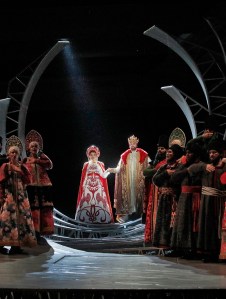
VENERA GIMADIEVA (QUEEN OF SHEMAKHA) AND TIM MIX (KING DODON) PHOTO CREDIT: KEN HOWARD FOR SANTA FE OPERA, 2017

Cockerel involves an odd, both beguiling and baffling combination of dramaturgical registers such that it’s a challenge to stage the work outside its Russian context, which boasts a rich performance tradition of Rimsky’s operas (despite or even because of the composer’s posthumous hurdles with Soviet cultural authorities).

The framework is standard-issue fairy-tale: in a land long ago, King Dodon hopes to put an end to the threat of warfare from beyond his borders and even considers building a wall. As he seeks advice, a mysterious Astrologer presents him with the ideal solution: a beautiful Golden Cockerel that only needs to be perched atop a building to keep watch. It acts as a kind of early-warning system, allowing the King to indulge in his love of sleep and food worry-free.

But when the warning comes, he goes on a pre-emptive war, only to be seduced by his enemy, the Queen of Shemakha. She cajoles him into a marriage to gain his kingdom, and they return to the capital. But the Astrologer had extracted a promise that the grateful Tsar would give him anything he requested. Naturally, the Astrologer now demands the new Queen for himself. The King reacts violently, and the Golden Cockerel fatally pecks him.

That’s just the scaffolding. Infused into the fairy-tale story line are elements of political satire, allegory, Orientalism, and intoxicating late Romanticism. The Golden Cockerel even became an inspiration for modernist trends thanks to the Paris production by Sergei Diaghilev’s Ballets Russes company in 1914, which put a distancing wedge between the music and story by keeping the singers to the sides while dancers enacted the roles.

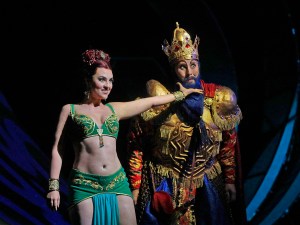
Director Paul Curran and the creative team accentuate the satirical elements with a kind of broad comedy that wouldn’t be out of place in a Saturday Night Live skit.  Gary McCann (responsible for the set and costumes) imprisons Tsar Dodon in a fat suit, his jello-y bulges on display when he snoozes in his long red underwear (though he is hilariously undersized for a throne many times too big for him).
Near the culmination, this master of blustering incompetence appears decked out in a modern suit with a flaming red tie (yes, that‘s the blowhard he’s meant to evoke, tho Dodon possesses certain charming aspects that undo the implied comparison). His new Queen is wearing a smart white pantsuit. 

The clowning and pratfalls grow a bit tiresome, however, and make for a dragging first act. In the second, when Dodon heads off to the Queen’s neighboring land and is engaged by her entrancing musical and choreographic come-on, the shtick really begins to wear thin.

By way of compensation, the visuals added something of the missing note of mystery, fantasy, and even potentially sinister undertow. McCann’s costumes, alluding to the Ballets Russes era, exploded with color and folk exuberance, as well as the trendy Orientalism of that period. Enhanced by Paul Hackenmueller’s lighting, his set design relied on a large wavy metal curve and Constructivist-inspired swirls (a way of paying homage to the opera’s Modernist connections).

The curve was used for Driscoll Otto’s projections, whose beautifully intriguing imagery included opulent patterns and disturbingly surreal dreamlike sequences — dreams and the psyche figure heavily in the story — though the projections for the Golden Cockerel itself were surprisingly unimpressive (and difficult to see because of the angling of the large curve). During last night’s performance (July 28), a dramatic lightning storm provided perfectly counterpointed timing for the dark “invasion” scene, into which the Queen of Shemakha enters, Kundry-like, ready to disarm the enemy with her own brand of warcraft.

The cast ranged from adequate to wonderful. After Eric Owens bowed out of the assignment, baritone Tim Mix took on the role of King Dodon. He showed a delightful sense of comic timing and sang with musical intelligence but lacked power and needed depth. As his main general Commander Polkan, bass Kevin Burdette was scene-stealingly funny, a very effective character singer who gets a nasty comeuppance.  

As Dodon’s sons, who end up slaughtering each other in battle, Richard Smagur and Jorge Espino underscored the fatal hereditary mix of arrogance and idiocy. Singing offstage, Kasia Borowiec lent her lovely soprano to the Cockerel’s (a-little-too-repetitive) crowings. (The Cockerel is conceived as a female role in the tradition of so many other ornithological characterizations, despite the bird’s sex.)
GC3

VENERA GIMADIEVA (THE QUEEN OF SHEMAKHA) AND TIM MIX (KING DODON) PHOTO CREDIT: KEN HOWARD FOR SANTA FE OPERA, 2017

The star of the evening was the Russian soprano Venera Gimadieva in the virtuosic role of the Queen of Shemakha. Rimsky lavishes his most alluring, exquisitely ornamented music on her (including in the number “Hymn to the Sun”). Aside from some lingering insecurities with intonation, Gimadieva handled her gorgeous coloratura with nuance and panache, executing some breathtakingly tapered notes. She also showed graceful and arresting stage presence, a delightful foil in her dancing to the fat-footed, bloated King as she wraps him around her finger. 

Also superb was alto Meredith Arwady as Amelfa as a loyal royal servant, a substitute Mom to the King whose voice by itself is like a character, immense, sturdy, amber, and richly reverberant in the astonishingly low notes Rimsky writes for the part.

He also writes a double-take-inducing high E for the high-flying tenor Astrologer, who frames the opera as an it’s-just-make-believe-after-all mise-en-abyme. Barry Banks, brandishing moody sunglasses and an Andy Warhol air, suggested a hint of the eerie, E.T.A. Hoffmann-esque in his portrayal, contributing another layer that otherwise tended to be sacrificed in favor of the satirical.

Actually, there was another star of the evening: conductor Emmanuel Villaume, who coaxed consistently expressive, multi-hued, luminous playing for Rimsky’s scintillating score. He clearly treasures its shimmering beauties and gave the musicians time to indulge in the soloistic writing, but judiciously, and in ways that enhanced the theatricality onstage.  

If you go: Santa Fe Opera’s production of The Golden Cockerel by Nikolai Rimsky-Korsakov continues through Aug. 18. Information and reservations here.

Review (c) 2017 Thomas May — all rights reserved

Filed under: review, Santa Fe Opera

The Apple of His Eye: Review of The (R)evolution of Steve Jobs

RSJ

EDWARD PARKS (STEVE JOBS) AND JONAH SORENSON (YOUNG STEVE JOBS) PHOTO CREDIT: KEN HOWARD FOR SANTA FE OPERA, 2017

My review of the new Mason Bates/Mark Campbell opera is now out on Musical America:

SANTA FE, N.M.—“Hope or hype? … Score or snore?” Early into The (R)evolution of Steve Jobs, the snappy questions pour out in rapid-fire succession from an ensemble attending the first public announcement of the iPhone in 2007.

continue   

Filed under: American opera, Mark Campbell, Mason Bates, Musical America, review, Santa Fe Opera

Vancouver Bach Festival 2017

Banner_BachFest

Last summer, Early Music Vancouver inaugurated an annual Bach Festival, and this year’s edition focuses on the 500th anniversary of Martin Luther’s Protestant Reformation.

A number of prominent Seattle-based artists are heading north to perform: Stephen Stubbs, Byron Schenkman, and Tekla Cunningham. The festival’s 14 concerts run  August 1-11, 2017 (most of them at Christ Church Cathedral downtown).

Along with music by J.S. Bach, the program spans the historical spectrum from Renaissance polyphony, Latin American Baroque, 18th century opera to Romantic composers, along with contemporaries like Philip Glass featured on  cellist Matt Haimovitz’s “Overtures to Bach” concert.

The complete lineup:

Overtures to Bach
August 1 at 6pm and 9pm
Renowned as a musical pioneer, Canadian cellist Matt Haimovitz performs four of Bach’s beloved Cello Suites preceded by new commissions written by composers including Philip Glass and David Sanford that anticipate, reflect, and transform the originals.

Schumann Dichterliebe and Brahms Four Serious Songs
August 2 at 1pm
Internationally acclaimed Canadian baritone Tyler Duncan and pianist Erika Switzer,  playing an original 19th century fortepiano.

Songs of Religious Upheaval: Byrd, Tallis, Tye – Music from Reformation England
August 2 at 7:30pm (Pre-concert talk 6:45pm)
Cinquecento sings  music of William Byrd, Thomas Tallis, and Christoper Tye
Lutheran Vespers: Songs for Troubled Times
August 3 at 1pm
Eleven Vancouver-based performers offer a complete Lutheran vespers written to provide comfort and consolation following the Thirty Years’ War and its aftermath
Bach’s Italian Concerto
August 3 at 7:30pm (Pre-concert talk 6:45pm)
The French Overture and the Italian Concerto performed by harpsichordist Alexander Weimann.  Swiss baritone and founding musical director of Gli Angeli Genève Stephan MacLeod joins Weimann for cantatas  by Handel and  Bach
Conversions: Mendelssohn, Moscheles, and Bach
August 4 at 1pm
Fortepianist Byron Schenkman & cellist Michael Unterman perform works by Mendelssohn and Moscheles, two Jewish artists who converted to Christianity to conform to social norms.
Handel in Italy: Virtuosic Cantatas
August 4 at 7:30pm (Pre-concert talk 6:45pm)
Terry Wey and Jenny Högström perform cantatas and love duets by Handel from his early Italian period, along with a duet by Agostino Steffani (one of Handel’s mentors)
Playing with B-a-c-H: Sonatas for Violin by Telemann, Pisendel and J.S. Bach
August 8 at 1pm
Baroque violinist Tekla Cunningham performs a solo Bach partita, a Pisendel
solo sonata, and two solo Telemann fantasias
Before Bach: “The Fountains of Israel” by Johann Schein (1623)
August 8 at 7:30 pm (Pre-concert talk 6:45pm)
European vocal ensemble Gli Angeli Genève sing Johann Schein’s Israelis Brünnlein
Bach for Two Flutes
August 9 at 1pm
Janet See and Soile Stratkauskas play Baroque flutes, with Christopher Bagan on harpsichord
Heavenly Love: Sacred Arias for Counter-Tenor
August 9, at 7:30pm (Pre-concert talk 6:45pm)
Alex Potter sings music by Buxtehude, Schütz, Purcell, and Strozzi
Bach Transcriptions – Victoria Baroque Players
August 10 at 1pm
Bach’s trio sonatas for organ transcribed for chamber ensemble

Music of Missions and Mystery: Latin American Baroque
August 10, at 7:30pm (Pre-concert talk 6:45pm)
Pacific MusicWorks and director Stephen Stubbs
J.S. Bach St. John Passion at the Chan Centre
August 11, at 7:30 pm (Pre-concert talk 6:45pm)
The Pacific Baroque Orchestra, the Vancouver Cantata Singers, and a cast of seven soloists led by Alexander Weimann

To complement the artist lineup, EMV will offer an array of thought-provoking film screenings and expert talks

Filed under: Bach, festivals, music news

Archive

Enter your email address to follow this blog and receive notifications of new posts by email.