
Filed under: Lucerne Festival, Mahler

July 7, 2016 • 12:00 pm Comments Off on Happy 156th, Gustav Mahler
Filed under: Lucerne Festival, Mahler
July 4, 2016 • 11:59 pm Comments Off on Seattle Chamber Music Society’s 35th Summer Festival
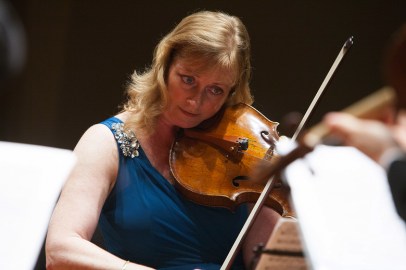
Cynthia Phelps is a regular participant in the Seattle Chamber Music Society’s Summer Festival.
Tonight the 2016 edition of the Seattle Chamber Music Society Summer Festival begins, with James Ehnes and his colleagues fresh from a Beethoven quartet marathon in Seoul. My preview has been posted on the Seattle Times website:
“Chamber music is about being able to trust your colleagues,” says violist Cynthia Phelps. That’s what enables the risk-taking that’s essential for this intimate musical medium, she explains. “And the chance to live and work together during the Summer Festival is a wonderful model for building that trust.”
Filed under: chamber music, James Ehnes, Seattle Chamber Music Society
July 4, 2016 • 12:48 am Comments Off on Happy Fourth of July!
July 3, 2016 • 5:54 am Comments Off on Happy 101st, Randolph Hokanson!
Yesterday’s birthday recital was incredible. Here’s the “set list” Mr. Hokanson played:
Mendelssohn/Three Songs without Words
Schubert/Two Impromptus (G-flat and E-flat major)
Schumann/Two Fantasiestücke Op. 12 (Des Abends and In der Nacht)
Hokanson’s own compositions: two new songs: “Elegy” (Tennyson) and “Nightingales” (Robert Bridges)
Brahms Two Op. 119 Intermezzi (B minor and C major)
Chopin Mazurka in A minor Op. 59, no. 1
Debussy “Beau Soir” in Heifetz transcription
Albeníz tango in Kreisler transcription
Gershwin “It Ain’t Necessarily So” and Prelude for Piano 3 transcriptions by Heifetz
Guest soloists: mezzo Sarah Mattox and violinist Marjorie Kransberg-Talvi
 Randolph Hokanson with pianist Judith Cohen – a day before he turned 100 (photo by Thomas May)
This is a belated birthday salute, as Mr. Randolph Hokanson’s actual birthday happened on 22 June. He’s now into his second century. Today I’ll be attending a recital by Mr. Hokanson. In honor of the occasion, here’s a profile I wrote a couple of years ago about this remarkable pianist (also at work as a composer these days):
“I’ve seen it all!” announces Randolph Hokanson before losing himself in a mischievous gale of laughter. With someone else, you might be tempted to indulge that as hyperbole. With Hokanson, who was born in 1915 in Bellingham, it’s tempting to take it literally.
This gifted pianist and teacher has witnessed almost a century of not just ceaseless but accelerating change: epochal shifts in technology, in education, in how music and the arts are valued.
Filed under: Uncategorized
July 2, 2016 • 12:08 pm 3

Randolph Hokanson with pianist Judith Cohen – a day before he turned 100 (photo by Thomas May)
This is a belated birthday salute, as Mr. Randolph Hokanson’s actual birthday happened on 22 June. He’s now into his second century. Today I’ll be attending a recital by Mr. Hokanson. In honor of the occasion, here’s a profile I wrote a couple of years ago about this remarkable pianist (also at work as a composer these days):
“I’ve seen it all!” announces Randolph Hokanson before losing himself in a mischievous gale of laughter. With someone else, you might be tempted to indulge that as hyperbole. With Hokanson, who was born in 1915 in Bellingham, it’s tempting to take it literally.
This gifted pianist and teacher has witnessed almost a century of not just ceaseless but accelerating change: epochal shifts in technology, in education, in how music and the arts are valued.
Filed under: anniversary, pianists
June 30, 2016 • 8:31 am Comments Off on Let There Be Light
Filed under: John Luther Adams
June 28, 2016 • 10:53 am Comments Off on SF Opera Carmen: Bieito’s U.S. Debut as Gockley’s Swansong

Irene Roberts (Carmen) and Brian Jagde (Don José) ©Cory Weaver/San Francisco Opera
My review of Calixto Bieito’s Carmen — his official U.S. opera debut, in a production revived at San Francisco Opera — has now been posted on Musical America (behind paywall):
SAN FRANCISCO—An icon of iconoclasm, Calixto Bieito has been alternately demonized and deified for the challenges his stagings pose to business as usual. Kudos to San Francisco Opera, in this final hurrah from outgoing general director David Gockley, for becoming the first North American company to give the Catalan director’s work a platform. “Carmen,” which both opened and will close SFO’s 2016 summer season (with a free “opera at the ballpark” live simulcast on July 2), marks Bieito’s absurdly belated U.S. opera debut — a dozen years after his Abduction From the Seraglio at the Komische Oper Berlin sparked outrage and international headlines.
Filed under: Calixto Bieito, directors, review, San Francisco Opera
June 25, 2016 • 4:15 pm Comments Off on Tuning Up!
My preview of Seattle Symphony’s upcoming festival of American music, from Charles Ives to Julia Wolfe and John Luther Adams:
“There are as many sides to American music as there are to the American people,” Leonard Bernstein remarked in one of his popular Young People’s Concerts devoted to the topic “What Is American Music?”
“Maybe that’s the main quality of all — our many-sidedness. Think of all the races and personalities from all over the globe that make up our country. We’ve taken it all in,” he said.
Bernstein broadcast that message almost six decades ago in 1958. Since then the musical landscape has become vastly more diverse, many-sided and multi-layered. The old-fashioned image of the melting pot seems quaint compared to the dazzling, complex intersections and border crossings that make today’s musical scene so vibrant and self-aware.
Filed under: American music, Ludovic Morlot, Rhapsody, Seattle Symphony
June 22, 2016 • 10:38 am Comments Off on Brahms 1
This is going to be a good concert:
Filed under: Brahms, Michael Tilson Thomas, San Francisco Symphony
June 20, 2016 • 10:15 am Comments Off on Verdi at His Most Ambitious
My essay for San Francisco Opera’s program: Don Carlo, part of the final trio of operas in David Gockley’s farewell season:
“Don Carlos has really thrilled him. I think that this drama, instinct as it is with real passion, is just what he needs,” reported Léon Escudier, Verdi’s French publisher, after a trip to visit the composer in 1865.
He was sounding Verdi out on some possible topics for a fresh commission from the Paris Opéra. Another idea that aroused Verdi’s interest was King Lear—a project he had long hoped to realize—but Verdi opted for Don Carlos, a historical tragedy by Friedrich Schiller (1759–1805), as more suitable for treatment in the French grand opera style.
Filed under: essay, San Francisco Opera, Verdi
 Arts & Culture Stories from NPR
 MEMETERIA by Thomas May