“You must not find symbols in everything you see. It makes life impossible.”
(Salome)
“The world is a stage, but the play is badly cast.” (Lord Arthur Savile’s Crime)
“Life is much too important a thing ever to talk seriously about it.”
(Lady Windermere’s Fan)
“The public have an insatiable curiosity to know everything, except what is worth knowing.” (The Soul of Man Under Socialism)
“It is perfectly monstrous the way people go about, nowadays, saying things against one behind one’s back that are absolutely and entirely true.”
(The Picture of Dorian Gray)
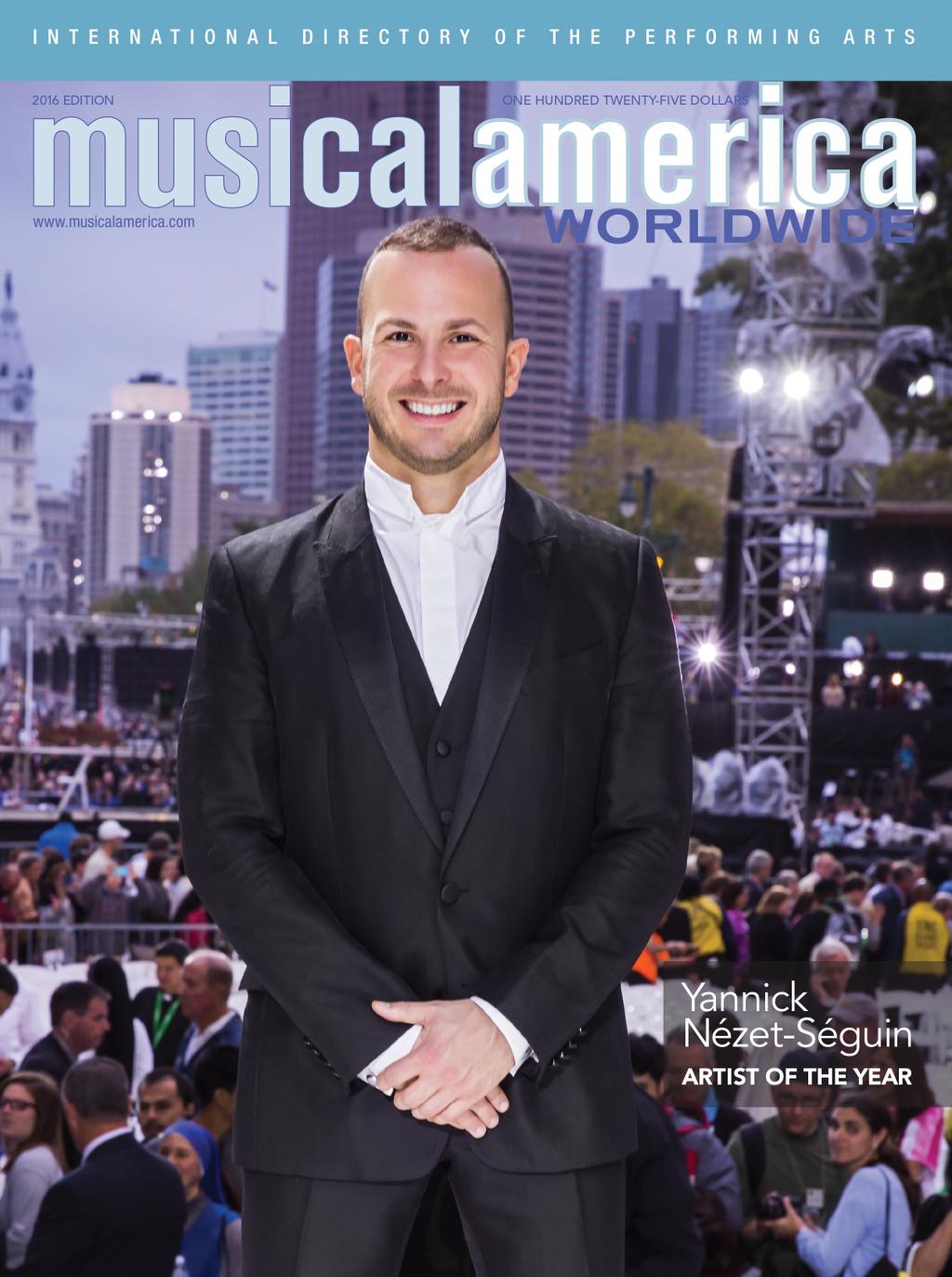
On December 8 Carnegie Hall will host a ceremony honoring the following winners of the 2016 Artist of the Year categories determined by Musical America (to which I’m a contributing writer):
–Yannick Nézet-Séguin as overall Artist of the Year
–Tod Machover as Composer of the Year
–Jennifer Koh as Instrumentalist of the Year
–Mark Padmore as Vocalist of the Year
–Boston Modern Orchestra Project as Ensemble of the Year.
Reviewing Maurizio Pollini’s recent Carnegie Hall recital, Anthony Tommasini captures what makes the 73-year-old pianist’s Chopin so unique:
The high point came after intermission, with Mr. Pollini’s revelatory account of a later Chopin work, the Polonaise Fantaisie in A flat. This enigmatic 13-minute piece is like a free-roaming, pensive fantasy from which a dark yet snappy polonaise tries to emerge. Ambiguity was exactly the quality Mr. Pollini, long admired for his Chopin, emphasized in his fascinating performance.
The opening alternates short flourishes of majestic chords with curious strands of lacy lines that trail up the keyboard. Is some kind of march about to begin? Or is the music already consumed with self-reflection? It’s both at once, as Mr. Pollini’s playing suggested. Hearing this performance, I realized as never before that every time the dancing elements of the polonaise emerge, the themes are quizzical, the harmonies wayward.
There’s no shortage of “upstart crows” when it comes to Shakespeare studies: scholar-mavericks who challenge the self-appointed gatekeepers in academia. And it’s no surprise that (after discounting the obvious crackpots) many of these turn out to offer little more than half-baked theories that crumble under closer scrutiny.
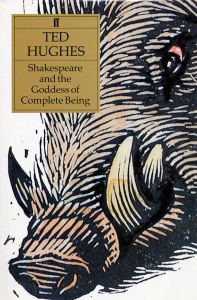
But one of the most significant unconventional readings of Shakespeare of recent years belongs to a class of its own: the poet Ted Hughes’ Shakespeare and the Goddess of Complete Being. Is this a truly paradigm-shifting vision or an absurdly reductive idea that sacrifices too much to in pursuit of a “hedgehog” theory?
In his long introduction, Ted outlined the religious and psychological conflict caused by the Calvinist Puritan suppression of Old Catholicism in which the goddess of earlier pagan beliefs still flourished. The religious aspect of this conflict…
Tannhäuser has returned to the Met. Here’s my essay for the Met’s program:
Wagner never completely came to terms with Tannhäuser. On the
evening of January 22, 1883, less than a month before his death, he
ended a conversation with his wife Cosima by playing the Shepherd’s
Song and Pilgrims’ Chorus on the piano. In her diary entry for that day, Cosima quotes her husband lamenting that, “he still owed the world a Tannhäuser.”
Even if Wagner was merely referring to a production suitable for Bayreuth
(where the opera would be posthumously introduced under Cosima’s direction
in 1891), he remained anxious long after Tannhäuser’s premiere in 1845 abouthow to improve what he had created.
This anxiety bordered on obsession: Tannhäuser stands alone among the canonical Wagner operas as a continual “work-in-progress” over which the composer restlessly fretted, rethinking its premises on the occasion of each new production and periodically subjecting it to revision.
Last night Columbia University’s Miller Theatre presented the opening of its John Luther Adams concert trilogy celebrating JLA as this year’s Schuman Award winner.
Together these three concerts are presenting JLA’s trilogy of large-scale memorials to his parents and to his musical parent (Lou Harrison). Last night Steven Schick conducted ICE in a luminous performance of Clouds of Forgetting, Clouds of Unknowing: music you wish would never have to come to an end.
Especially notable was the sustained realization of the sheer sensuousness of JLA’s voicings, so deftly counterbalanced with the abstract structure of the piece.
Extraordinary Listening: A John Luther Adams Trilogy
“Music is not what I do. Music is how I live. It’s not how I express myself. It’s how I understand the world.”
—John Luther Adams
One among many moments of dazzling clarity in the writings and reflections of John Luther Adams, this artistic credo points to a composer deeply rooted in the American maverick tradition of figures like Lou Harrison, John Cage, and Morton Feldman: figures who have operated outside the business-as-usual conventions of making and thinking about music.
The intrepid flutist Paul Taub — a terrific force for new music in Seattle — is planning to present a program of five new commissions of works for chamber music and flute. The event is planned for 20 November at Seattle’s Chapel Performance Space.
The composers in the lineup are Tom Baker, Andy Clausen, David Dossett, Jessika Kenney, and Angelique Poteat. They’ve been asked to write pieces for an ensemble of flute (Taub) as well as clarinet (Laura DeLuca), cello (Walter Gray), contrabass (Joe Kaufman), piano (Cristina Valdes), and percussion (Matthew Kocmieroski).
Given Paul’s credentials as a passionate and effective new music advocate — he’s also a member of the adventurous Seattle Chamber Players — this program should be well worth attending.
Here’s some more from the press release on the criteria for this project:
Composers Tom Baker, Andy Clausen, David Dossett, Jessika Kenney and, Angelique Poteat have been chosen to participate in this project because of the high artistic quality of their work, the diversity of their styles, the varied stages of their career trajectories, and above all, because their music truly speaks to the public.
The variety of musical styles is a key element of the project. Baker and Kenney are well-established “mid-career” composers, with impressive resumes and works that have been played internationally. Poteat, in her late 20s, is emerging as a significant voice in the Seattle and national music world, with recent pieces commissioned by the Seattle Symphony. Emerging composers Dossett and Clausen (whose band The Westerlies has taken the jazz world by storm), are recent college graduates (Cornish College of the Arts and the Juilliard Jazz Program). The composers’ musical styles are varied and contrasting, with influences as diverse as jazz, electronics, Persian modes, classical music and improvisation.
My latest review of Ludovic Morlot and the Seattle Symphony is now live on Musical America (behind a paywall).
Here I cover the first two programs of the season that recently began (Beethoven’s Fourth Symphony and Mahler 1 in the first, Strauss’s Don Quixtore and Brahms’s Third Symphony in the second):
Now in his fifth season as the Seattle Symphony Orchestra’s music director, Ludovic Morlot has hit a sweet spot. The momentum he initially brought to the SSO has not slackened…
Seeing the excellent production of A View from the Bridge currently running at Seattle Rep, I was reminded of Arthur Miller’s genius for distilling his themes and situations into pared-down forms that are unrelentingly direct.
But the straightforwardness is deceptively simple: Miller’s plays make their stunning impact with the resonance of myth and archetype. Seattle Rep’s production certainly delivers that one-two punch: directed by Braden Abraham, the pacing is as tightly wound as the boxing lesson Eddie Carbone gives Rodolpho. (It’s fascinating to contrast Miller’s emulation of Greek tragedy with that of Eugene O’Neill or of his contemporary Tennessee Williams.)
Mark Zeisler’s gruff but not uncharming Eddie sounded the right note of insecurity that is the character’s fatal flaw (a bit overdetermined, perhaps, in Miller’s hint of a homoerotic attraction to Rodolpho in addition to Eddie’s jealousy over his niece Catherine — but Zeisler downplays the former in any case).
In much of the first act (does anyone perform the original free-verse one-act version anymore?) it seemed some of the audience wanted to defang what was making them uncomfortable about Eddie by trying to view the play as a comedy — Eddie as an Archie Bunker type they could easily mock. But Miller is no sit-com, and fortunately the isolated outbursts of giggles and snickering soon died out.
Amy Danneker makes a compellingly conflicted Catherine, gradually finding her way toward self-determination, with prodding from her Aunt Bea (played with great sympathy by Kristen Potter). Frank Boyd brings an interesting mix of passion, goofiness, and naivete, to Rodolpho. As his brother Marco — and fellow “submarine” (hidden illegal immigrant), Brandon O’Neill hides his simmering desperation uncomfortably until it inevitably comes to a boil at the play’s climax.
Leonard Kelly-Young is all gruff 1950s noir as the lawyer Alfieri, Miller’s take on the ancient chorus. Yet his final speech, about “settling for half,” delivers possibly the play’s most searing moment: “And so I mourn him — I admit it — with a certain…alarm.”
But back to the mythic/archetypal aspect of Miller’s dramaturgy. At the same time, View is deeply rooted in its 1950s setting, politically, socially, culturally. This fusion of place and realism with the archetypal reminded me of Edward Hopper, as did the superb work of the design team: Scott Bradley’s sets, Rose Pederson’s costumes, Geoff Korf’s lighting.
And that combination of realism and archetypes of course brings to mind the verismo aesthetic. So it’s no surprise View has been made into an opera (in fact, more than once): most famously, into a work of American verismo by William Bolcom.
One of the several reasons André Previn’s opera A Streetcar Named Desire is so unsatisfying, in my opinion, is the superfluous prospect of translating Tennessee Williams’s theater, inextricable from his language, to this medium. But Miller offers a composer more genuinely operatic possibilities.
Reviewing Lyric Opera of Chicago’s world premiere production of the Bolcom opera in 1999, the critic Philip Kennicott makes some thought-provoking observations:
If you believe what seems to be a growing consensus in American opera–that pursuing stylistic and dramatic originality is a dead end–then this can be judged a truly great American opera. Bolcom mixes it up–barbershop quartets, jazz, Broadway flourishes and Puccini–creating an unapologetic and dizzying stylistic mix. Had this opera been written while Bernstein was at his peak, reviewers would have proclaimed a new genius to rival the master.
If you believe that new opera need offer only a good evening of musical entertainment, stylistic and musical originality be damned, then Bolcom’s opera will seem like a mongrelized family portrait of the last century of operatic history.
[…]
Bolcom … seems to argue that this opera isn’t just more mix-it-up postmodernism but a genuine American verismo work that just happens to have been written in 1999 (and is meant to sound like 1955).
I expect that many listeners will have exactly the same reaction to this paradox of late-20th-century opera–is it really indistinguishable from the music theater we love from an earlier era?–as I did. They will enjoy it yet question the artistic integrity behind it.
Nonetheless, Bolcom’s new work has a feeling of tragic grandeur to it, and the Lyric Opera production spares no effort to underscore it.