MEMETERIA by Thomas May

Music & the Arts

Déjà Vu

Updated with some more comments.

Thomas May's avatarMEMETERIA by Thomas May

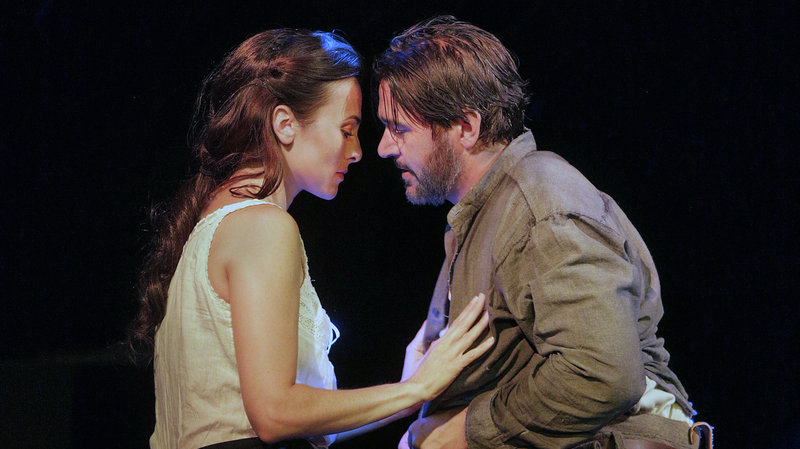
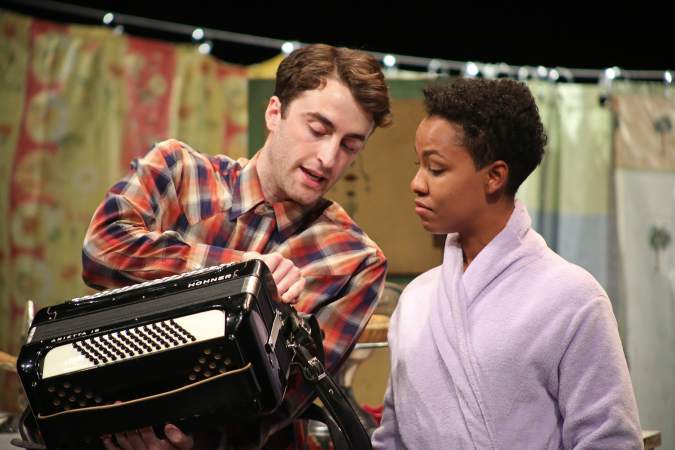
Two Women by Marco TutinoTwo Women by Marco Tutino
San Francisco Opera’s world premiere last night of Two Women by the Italian composer Marco Tutino raises interesting and important issues about making opera today. I intend to get into this more substantially after dealing with some crushing deadlines….

Joshua Kosman’s extensive review expertly nails the key problems with this opera, as well as its larger aesthetic implications:

But Tutino — along with General Director David Gockley, who commissioned the work from him on the recommendation of Music Director Nicola Luisotti — has also taken this opportunity to mount a rather forceful esthetic argument. In its strongest form, the claim is that the history of 20th century music has been a nightmare that we need to wake up from, and that the path to redemption lies in a wholesale return to the ancient traditions.
[…]
Ultimately, such pleasures as “Two Women” can provide are the…

View original post 1,027 more words

Filed under: Uncategorized

On High

vertigo.jp

Filed under: photography

In the Distance

IMG_2508

Filed under: photography

Déjà Vu

Two Women by Marco Tutino

Two Women by Marco Tutino


San Francisco Opera’s world premiere last night of Two Women by the Italian composer Marco Tutino raises interesting and important issues about making opera today. I intend to get into this more substantially after dealing with some crushing deadlines….

Joshua Kosman’s extensive review expertly nails the key problems with this opera, as well as its larger aesthetic implications:

But Tutino — along with General Director David Gockley, who commissioned the work from him on the recommendation of Music Director Nicola Luisotti — has also taken this opportunity to mount a rather forceful esthetic argument. In its strongest form, the claim is that the history of 20th century music has been a nightmare that we need to wake up from, and that the path to redemption lies in a wholesale return to the ancient traditions.
[…]
Ultimately, such pleasures as “Two Women” can provide are the comfortable pleasures of familiarity. The piece is nominally new, yet it feels like a long-lost and not as successful cousin to “Tosca” or “Cavalleria rusticana.”

Anne Midgette dissects the failings of Two Women in her insightful Washington Post review:

Two Women” maintains a near-constant level of melodramatic musical intensity….But the opera neglects to flesh out any of these characters, and this robs the surging score of much of the effect it’s trying so earnestly to convey. When the figures are one-dimensional, it’s hard to get involved.
[…]
It’ s important not to lose sight of the bigger picture in the case of “Two Women,” as well. This opera may be a dud, but it is much better to try new opera than stick to the overly familiar.

UPDATE [19 June 2015]
Some more thoughts on Two Women. Having the opportunity to see SF Opera’s current production of Berlioz’s The Trojans probably intensified my negative reaction to Tutino’s new opera, since the plight of women under the stress of wartime is a theme shared by both. The magnificent Berlioz production, featuring a first-rate cast, a compelling vision from stage director David McVicar, and some of the best work I’ve ever heard from Donald Runnicles and the SFO orchestra, was a genuine privilege to experience.

The multiple rape scenes in Two Women, by contrast, come across essentially as part of “the plot”: moments that crudely intend to push buttons and elicit reactions without the libretto or the music doing the work needed to make them effective. The result is something closer to tabloid journalism.

Much of the attention has been focused on the shortcomings of Tutino’s score, but I think the poorly crafted libretto is even weaker, betraying signs of decision-by-committee. It’s easy to see how the intention was to elicit emotional reactions similar to Puccini’s “E lucevan le stelle” or “Addio fiorito asil.” Yet the libretto treats these like a paint-by-numbers project rather than allow them to emerge organically from the dramatic moment: so much so that, for example, the “flame-flower” image symbolizing the fragile love blossoming in winter between Michele and Cesira becomes risibly manipulative. (At one point I found myself playing the “Let’s spot the Tosca game as if I were watching an operatic a Where’s Waldo.)

There’s even a scene of uneasy humor at the start of the second act — you can imagine the meeting where someone said, “We need some comic relief!” — which draws clumsily on Puccini’s scherzando, satirical moments (think of the Sacristan in Tosca). As the weasely informant Sciortino betrays Michele, his mother scurries nervously about, promising to satisfy her guests with a tasty home-cooked meal. And as with quite a few other passages of the score, the music just vamps away, trying to tell us how we should react to the clumsy dramaturgy.

I’ve only rarely experienced a world premiere where the critical near-consensus seemed so obvious and immediately apparent. Two Women doesn’t express or elucidate the emotions meant to be triggered by the drama: it tells the audience what those emotions should be by mimicking over-familiar parallel moments from Puccini and other verismo classics, with a dash of generalized film score vocabulary and other bits and pieces from the repertoire.

When I was first seriously discovering music as a teenager, I had the temerity to claim I could be a composer because I was able to produce music in the style of composers I admired. Thankfully the scales fell from my eyes pretty soon and I realized the arrogance of this mistake. Which isn’t to say all music should be “original.” I don’t buy into the modernist fallacy of radical originality either. But I believe there is a fundamental difference between shameless imitation to manipulate an audience’s comfort zone and genuine creativity.

I additionally want to make clear that this is NOT about the choice of a “conservative” style. Samuel Barber long since proved that writing in a conservative tonal idiom is hardly incompatible both with original musical ideas and having something genuine and honest to say. So any attempt to champion Two Women as an embrace of the audience forsaken by 20th-century composers is, frankly, a red herring and overlooks the fatal shortcomings of a manipulative, derivative opera.

Despite the failure of both libretto and score, SF Opera has gone out of its way to present Two Women with excellent production values, assembling an impressive cast. Anna Caterina Antonacci (who also sings Cassandra in The Trojans on her “free” nights) is the linchpin as the courageous, spirited Cesira – a dynamo of acting and vocal passion.

If only the opera actually delineated any of its characters in depth! And given Tutino’s failure to explore the relationship between the actual two women in question – mother Cesira and her daughter Rosetta – the considerable talents of Sarah Shafer in the latter role are lamentably underused. Still, Shafer movingly conveys the final stages of Rosetta’s transformation following the violence and trauma she has endured.

Dmitri Pittas brings his ardent tenor to the pedestrian music he is given as the fearless idealist Michele. Mark Delavan has to play a cardboard baddie as the rapist/collaborator/fascist/betrayer/liar etc. etc. Giovanni. He does sing well. (Another critique: Tutino’s libretto, which was co-written with Fabio Ceresa and “adapted from a script by Luca Rossi,” absurdly whitewashes the historical role of the Italians and their relationship to Hitler’s Germany in WWII. Characters like Giovanni and Sciortino are presented as the “bad apples” among an otherwise terrified and subjugated populace in this turning-point year of the war of 1943. Yeah, right….)

Nicola Luisotti conducts with a palpable belief in the score, somehow rendering its gestures with an actual sense of passion. (Tutino turns out to be a skilled orchestrator, even if he leans too heavily in one scene on xylophone-drum sonorities.) The production gains a lot from director Francesca Zambello’s attentive eye and sense for pacing. She makes the most of what she can from this predictable dramaturgy, and Peter Davison’s sets work beautifully, integrating film projections of scenery and historical footage. Is it any surprise that these documentary images of people uprooted, refugees fleeing the bombing of their cities, are far more moving than the “new” opera in which they’re embedded?

Filed under: aesthetics, music criticism, new opera, San Francisco Opera

Latin: Quo Vadis, Quo Vasisti?

Thomas May's avatarMEMETERIA by Thomas May

latin

The history of Latin as a world language, in Jürgen Leonhardt’s excellent account, involves a surprisingly diverse range of topics — many of which have an ongoing relevance that extends far beyond the use of Latin for educational purposes: the effects of globalization (ancient and contemporary) on the development of a language, the “diglossia” of literary and spoken languages, the interplay of emerging European nationalism with the status of Latin (not as linear as you might expect), the unexpected twists and turns of canon formation — and dissolution (likewise not a simple linear development). And, ultimately, the issue of cultural extinction and the inaccessibility of a vast fund of accumulated knowledge.

Indeed, the book is replete with information that seems even counterintuitive. The entire corpus of extant ancient Latin literature from the Roman period, for example, comprises “less than 0.01% of all extant Latin texts.” This is because Latin continued…

View original post 1,183 more words

Filed under: Uncategorized

“May It Return to the Heart!”

MISSA+1

This week brings the San Francisco Symphony’s performances with Michael Tilson Thomas of the Missa Solemnis of Beethoven — a work that certainly belongs to my top-ten list of all time.

Following a trial run in Los Angeles in January, it’s being given as a “multimedia staged event”, complete with scenic, lighting, and video design; James Darrah is the director.

Of the earlier run in January, Mark Swed had this to say about MTT’s relationship with the Beethoven score:

In the grandest sense, this “Missa Solemnis,” with all its attendant baggage, is a kind of mission statement for MTT. He sets out to unpack a complicated artistic and musical construct, to reveal its workings and to treat it as a large-scale act of discovery.

The Missa Solemnis held intense personal significance for its composer as well: “Von Herzen — Möge es wieder — Zu Herzen gehn!” (“From the heart –- may it return to the heart!” wrote Beethoven on the copy of the score he presented to its dedicatee, his pupil and friend Archduke Rudolf.

For its public “premiere” in Vienna, three of the Missa‘s movements were given as part of the grand concert of 7 May 1824 that also unveiled the Ninth Symphony. (The secular context brought objections to performing the entire Missa.)

Next week MTT and the SFS continue their Beethoven Festival with a recreation of an earlier “marathon concert”: the one on a cold December night in 1808, when Beethoven premiered his Fifth and Sixth Symphonies, and Fourth Piano Concerto in a program that also included a concert aria, three movements from his other Mass setting (the Mass in C major), a piano fantasy, and the Choral Fantasy, that fascinating precursor to the Ninth.

Filed under: Beethoven, choral music, directors, San Francisco Symphony

À la Recherche de l’Espace Perdu: Leo Saul Berk at the Frye

Wind Jangle, 2015 Aluminum, fishing line, weights; courtesy of Leo Saul Berk

Leo Saul Berk: Wind Jangle, 2015
Aluminum, fishing line, weights; courtesy of Leo Saul Berk

There’s a house west of architecture-rich Chicago, in Aurora, that was scorned by other residents when it was built back around the middle of the last century: the so-called Ford House, designed for Albert and Ruth Van Sickle Ford by the maverick architect, painter, and composer Bruce Goff. With its dramatic geometrical accents and manipulation of light and space, along with its use of recycled World War II materials like Quonset huts, Ford House is a testament to the idiosyncratic, visionary imagination of the Kansas-born Goff.

Ford House also happens to be the dwelling in which the Seattle-based artist Leo Saul Berk spent part of his childhood. Structure and Ornament, Berk’s first major solo museum show, distills his memories of the wondrously unconventional environment in which he grew up. The resulting works, now on view at the Frye Museum, take the form of sculpture, video, and photography, along with two site-specific installations.

Leo Saul Berk: Clinkers, 2012. Duratrans, sculptural light box. 76 x 64 5/8 x 3 3/4 in. Frye Art Museum, 2013.002.

Leo Saul Berk: Clinkers, 2012. Duratrans, sculptural light box. 76 x 64 5/8 x 3 3/4 in. Frye Art Museum, 2013.002.

Some of Berk’s pieces involve fanciful recreations of particular details from Ford House: “recreations” in the sense of attempts to recapture the visual poetry, say, of the setting sun as perceived through the semitransparent glass cullet windows positioned in Goff’s walls of coal masonry, which cause it to cast a green glow. (Berk’s backlit true-to-scale photograph is titled Clinkers.)

Other pieces are more tangentially related riffs on the impressions the house made on Berk growing up — impressions he’s been contemplating again over the last few years. This reengagement with Ford House led Berk to strike up a friendship with its current owner, the architectural historian Sidney K. Robinson. “Going back” to it both physically and in emotional terms has intensified Berk’s curiosity about the enduring impact his former home left on his artistic development.

My favorite among the loosely related fantasies is a video piece inspired by Berk’s visit to re-explore these roots. He was initially grossed out by a film of calcium deposits lining the bathtub, but when he filled it with water and then pulled the plug, a dancing cosmos of starlike detritus emerged, spotlit by the skylight directly overhead, before vanishing down the drain’s black hole.

Less effective is a sculpture in which Berk uses modern technology to try to “update” Goff’s vision, creating a miniature model of the central dome that had been the architect’s original plan. (The original specs proved too complex to execute.)

One piece, Berk’s homage to Goff’s organizing concept of a birdcage dome, gives the exhibit its title: the plywood-and-acrylic Structure and Ornament is both spikily abstract and mesmerizingly quirky — and in fact remarkably fragile, says Berk, for all its defiant severity.

Leo Saul Berk: Structure and Ornament (installation view), 2014. Plywood and Acrylic. 120 x 213 x 59 in. Courtesy of the artist. Photo: Mark Woods

Leo Saul Berk: Structure and Ornament (installation view), 2014. Plywood and Acrylic. 120 x 213 x 59 in. Courtesy of the artist. Photo: Mark Woods

And the concept of structure and ornament — construed by some modernists as at odds or even incompatible — feeds into larger concerns, according to Frye director Jo-Anne Birnie Dansker.

Berk’s responses to Ford House, she writes, “propose a modernity that honors visionary, utopian dreams of the past in which light, color, structure, material, ornament, poetry, and music could ignite a spiritual force that would unify the arts in harmony with nature and transform individuals and the social and cultural life of a nation.”

Structure and Ornament continues at the Frye Museum until 6 September, along with a series of exhibits on Andy Warhol and ideas of portraiture. Admission is free.

(c) 2015 Thomas May. All rights reserved.

Filed under: architecture, art exhibition, Frye Museum, preview

All the World’s a World

IMG_2437

Filed under: photography

Portrait Portrayals

There’s a feast of exhibits that have just opened at Seattle’s Frye Museum for the summer. I’ve just posted on the Structure and Ornament show from local artist Leo Saul Berk. Meanwhile, a series of small-scale exhibits explores the concept of the portrait, of self-portrayal and presentation.

Two of these exhibits represent polar opposites from the image-obsessed Andy Warhol. In an alcove-like room you can see the contents of Warhol’s Little Red Book #178 — examples from the tens of thousands of Polaroids he snapped to document his work and life in the 1970s. #178 is one of the collections Warhol organized into red Holson Polaroid albums. It contains nineteen pictures featuring such friends and collaborators as Jane Forth and Michael Sklar. Each is displayed in a separate frame.

These ephemera sometimes capture a revealing moment, sometimes seem too posed, and at times are even outright failures. But Warhol wanted to document it all. They emanate a ghostly presence that’s fascinating to compare to the glib instant-click instant gratification of our smartphone selfies.

Andy Warhol. Andy Warhol and Unidentified Woman, 1970. Polacolor Type 108. 4 1/2 x 3 3/8 in. Gift of The Andy Warhol Foundation for the Visual Arts, Inc., 2014.002.18. © 2015 The Andy Warhol Foundation for the Visual Arts, Inc. / Artists Rights Society (ARS), New York. Photo: Richard Nicol

Andy Warhol. Andy Warhol and Unidentified Woman, 1970. Polacolor Type 108. 4 1/2 x 3 3/8 in. Gift of The Andy Warhol Foundation for the Visual Arts, Inc., 2014.002.18. © 2015 The Andy Warhol Foundation for the Visual Arts, Inc. / Artists Rights Society (ARS), New York. Photo: Richard Nicol

Snapshots of fleeting moments versus the studied gaze of the Screen Tests: the Frye is showing a collection of 12 of the latter, made between 1964 and 1966 at the Factory. The reference to Hollywood auditions to check out an actor/actress’s potential motion picture charisma is tongue in cheek.

Warhol’s rolls of 16mm black and white film (using an entire 100-foot roll for each subject) are intended as a goal in themselves, their slow motion prolonging the self-conscious projections of self chosen by each subject. Notes the Frye’s description:

During the 1960s, these films were rarely shown in public, but were often screened at The Factory. Some of the Screen Tests were used by Warhol in projects such as “Thirteen Most Beautiful Women” and “Thirteen Most Beautiful Boys.” Programs of individual Screen Tests were also projected as part of the light show for “Up-Tight” and the “Exploding Plastic Inevitable,” Warhol’s 1966–67 multi-media happenings. For these events, The Velvet Underground and Nico provided live accompaniment; the Screen Tests were filmed without a soundtrack.

Along with the young Bob Dylan, the screen tests gathered here are of personalities like Susan Sontag, Dennis Hopper, Lou Reed, and Edie Sedgwick (transferred to digital files). See them in succession and try to decide who’s more self-conscious at trying to seem unselfconscious…

Maybelle, Thomas Eakins (1898); oil on canvas

Maybelle, Thomas Eakins (1898); oil on canvas

Work your way through this Warholiana and then head to American Portraits: 1880-1915, an intriguing selection from the Frye’s original collection of art focused on that turning-point era.

The angle here is one of Frye Director Jo-Anne Birnie Danzker’s specialties: the influence of developments by German artists in particular in the late 19th/early 20th centuries on their American peers. The selection here considers works by John White Alexander, William Merritt Chase, George Luks, and Frank Duveneck, all of whom studied and spent time in Germany. Also included are portraits by ex-patriate artists Charles Sprague Pearce and John Singer Sargent and the “Ashcan School” maverick Robert Henri.

Birnie Danzker has placed Eakins’ strikingly naturalistic portrait of Maybelle Schlichter (wife of the boxing referee he painted in his famous Taking the Count) in a position that immediately catches the eye as you cross over from the Warhol Screen Tests. She notes that the subject portrayed by Eakins uncannily anticipates the unguarded character found in some of Warhol’s work — the glamour of the real.

Filed under: Andy Warhol, art exhibition, Frye Museum

Shadow Shape

shadowshape

Filed under: photography

Archive

Enter your email address to follow this blog and receive notifications of new posts by email.