MEMETERIA by Thomas May

Music & the Arts

A New East-West Polyphony

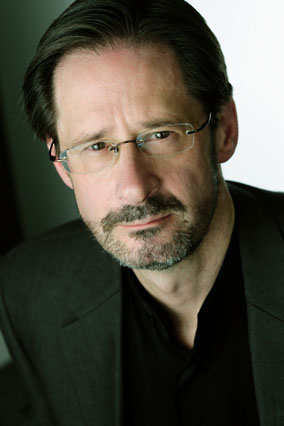
Condcutor Fawzi Haimor

Conductor Fawzi Haimor; photo by Kelly Newport

The Summer 2015 edition of SYMPHONY (the quarterly magazine published by the League of American Orchestras) was timed to be available for the League’s annual conference (which just took place in Cleveland). The contents have now been published online as well.

This issue of SYMPHONY contains my feature on composers who are drawing on their Arabic, Turkish, and Iranian roots to enrich America’s orchestral life.

Along with the much-in-demand Mohammed Fairouz — who has even been featured on MSNB’s Morning Joe (click here: http://www.msnbc.com/morning-joe/watch/composer-and-journalist-team-up-for-opera-447080003746) — I discuss the contributions of such composers and/or performers as Fawzi Haimor, Mariam Adam, Mehmet Ali Sanlıkol, Kinan Azmeh, Kareem Roustom, Karim Al-Zand, Malek Jandali, and Reza Vali.

There are many more: this is only the start of a conversation about an exciting phenomenon. You can read my story here (in pdf format):

A New East-West Polyphony-Summer 2015

The entire Summer 2015 issue of SYMPHONY is available here.

Filed under: American music, essay, League of American Orchestras, Mohammed Fairouz, programming, symphonies

Glas Reflections: Akropolis Performance Lab

Joseph Lavy; photo (c)  Joe Patrick Kane

Joseph Lavy; photo (c) Joe Patrick Kane

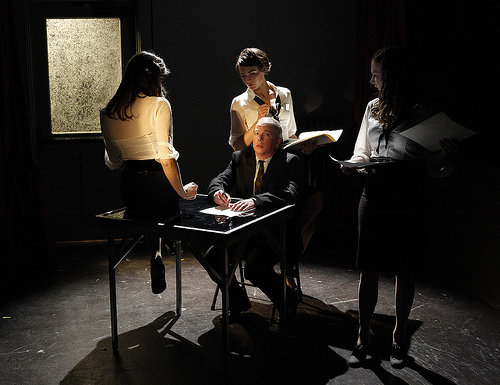
It takes a little more effort than usual if you want to arrange to see the current offering from Akropolis Performance Lab: but then, APL is hardly your regular evening of theater. Founded by Joseph and Zhenya Lavy in 2000, APL draws inspiration from the experimental legacy of Jerzy Grotowski and the like. And that bit of extra effort, in my opinion, is certainly worth making.

Now playing at APL is a peculiarly fascinating piece titled The Glas Nocturne. Instead of relying on conventional marketing, APL has allowed news of the production to spread by word of mouth and social media — in fact they’ve generated buzz by keeping the performance location “undisclosed” to the public.

You have to visit their website and express interest in being one of ten (max) lucky audience members to be invited for a given performance, which APL describes as “a speakeasy-styled adventure.” (It’s up to the invitees to choose whether to make a donation as well.) As of today, my understanding is that the run has been extended until 7 June.

The Glas Nocturne is co-artistic director Joseph Lavy’s dramatic adaptation of the scandal-causing, much-abused novel Doktor Glas, which Swedish writer Hjalmar Söderberg published in 1905. Lavy and Annie Paladino are the show’s co-directors. The novel, written as a first-person narration/confession, revolves around the ethical dilemma the eponymous physician faces when a beautiful young patient — with whom Dr. Glas has fallen in love — confesses her disgust for her repulsive older husband, the Reverend Gregorius. And, as Margaret Atwood remarks in her introduction to an English translation of Söderberg’s novel, the tormented narrator knows all too well that he’s “the last person on earth who should have been a doctor.”

The scene is of course set for a murder, but that’s only one of the issues confronted in Lavy’s fine-spun, suspenseful condensation of the novel’s musing on moral codes, eros, the longing for transcendence (Dr. Glass’s first name is Tyko — as in Tycho Brahe), and the oppression of women.

The resulting 90-minute monologue mixes Freudian psychology with the painfully refined decadence of Huysmans — all garnished with a taste of Ingmar Bergman-tinged despair. It makes for a dangerously riveting cocktail. (And if you do go, and are served one of Lavy’s personally crafted “Norwegian Blonde” cocktails after the performance, don’t be surprised if you eye the tempting potion with a barely perceptible tiny shiver of anxiety.)

Physical acting is a crucial aspect of Grotowski’s theatrical technique, and Joseph Lavy builds a good deal of his character interpretation from non-verbal cues and gestures: the way he washes his face in a pitcher of freshly poured water, convulses in an agony of sexual despair, or — most chillingly of all — indicates his faked reading of a grave heart condition when Dr. Gregorius pays him a visit.

Joseph Lavy; photo (c)  Joe Patrick Kane

Joseph Lavy; photo (c) Joe Patrick Kane

As for the text, Lavy commands the art of transition in gating the audience through Dr. Glas’s abrupt mood swings, his high intelligence leavening the potential heaviness with the kind of black humor Dostoevsky exploits in Notes from the Underground. Like many a narcissist, Dr. Glas is also an artist manqué, and his odes to nature and childhood are strewn with just enough self-consciousness to inject a slight note of parody.

Punctuating Lavy’s ruminations and rituals is the musical commentary supplied by an ensemble of women. Their “choral” interpolations give voice to the soundtrack of Dr. Glas’s raving mind, for which Zhenya Lavy has devised a neat succession of traditional Scandinavian folk songs and a handful of piano nocturnes she herself plays.

Much of the fun comes from sharing this experience on such on intimate level, with a very small group of fellow guests. Is it just coincidence that another of my most resonant theatrical experiences of late in Seattle involved an audience of at most 20 viewers?

At any rate, I’m now hooked and can’t wait to see APL’s next major production, which is reported to be an original work based on the Faust myth as retold by Marlowe, Goethe, and Thomas Mann (Ecce Faustus). Stay tuned to see this in February 2016.

If you miss the run of The Glas Nocturne, APL plans to bring the piece back for periodic showings over the course of the next year (with showings planned in October and in December as well).

September promises a remount of their re-worked version of Pomegranate & Ash. And APL additionally offers a series of quarterly Sunday Salons — the next one is planned for July 26.

The Glass Nocturne, adapted by Joseph Lavy and co-directed by Lavy and Annie Paladino, plays until June 7. Information on how to apply for an invitation here.

(c) 2015 Thomas May – All rights reserved.

Filed under: review, theater

Primal Ooze: María Irene Fornés at New City Theater

 George Catalano, Mary Ewald, and Tim Gouran in Fornes's Mud; (c) Anya Kazanjian

George Catalano, Mary Ewald, and Tim Gouran say grace in Fornes’s Mud; (c) Anya Kazanjian

Theater done New City style tends as a rule to be remarkably intimate: its current production of MUD is staged with an unflinching up-closeness. With just one row of seats that can accommodate 20 audience members tops, you’re positioned on the same level as the performance space, separated only by a few feet and a fine mesh screen from MUD‘s primal misery.

Written in the early 1980s by María Irene Fornés (now 85) — who collaborated several times with New City in the late 1980s/early 1990s — this grimly concentrated one-act drama spans but a little over an hour yet feels as exhaustive as a classical Greek tragic trilogy in New City director John Kazanjian’s searing production.

The simple-looking but intricately detailed set co-designed by Nina Moser and Kazanjian is a claustrophobic hovel, a roughhewn, comfortless, rural outpost in which Mae (New City co-founder Mary Ewald) longs for “a decent life.” There she ekes out a caged existence with her mysteriously ailing “mate” Lloyd, who had been adopted into the family by Mae’s deceased father as a younger boy. Lloyd’s arrested development has made him a bitter parasite on Mae’s drudgery, and he stinks with resentment against her attempts to improve herself through education.

Into this dire menage enters the more refined-seeming Henry (George Catalono), whose relative (but in fact quite limited) literacy and manners suggest a beacon of civilized hope for Mae. She takes Henry on as her new lover, while the further demoted Lloyd stews in bitterness, rage, and self-pity. Nina Moser’s costumes draw maximal impact from the contrast of Henry’s modest suit and tie with Lloyd’s dirt-encrusted bare feet and soiled rags.

Mae has staked her hopes on an illusion, though, and Henry doesn’t fail to disappoint with his petty behavior when Lloyd steals his money to buy desperately needed medicine. Rendered an invalid following a sudden accident, Henry soon becomes an additional drain on Mae’s resources — even less articulate than the brutish Lloyd. Fornés’ script, filled with poetry of a severe, forlorn beauty, draws metaphorical connections between animals and these hapless humans (making memorable use of an image of the shelter-seeking hermit crab).

Kazanjian gets his superb cast to fathom the many angles of this dark parable by the Cuban-born Fornés, including its registers of black humor. Gouran play Lloyd as a sulking American Caliban but finds variety in a character who can too easily come across as a nasty stereotype. Physical gestures juxtapose his listless impotence in the first scenes against Lloyd’s savagely dancing joy over his rival’s downfall. Catalono brings out Henry’s self-important pomposity as well as his rage over being driven to rage by Lloyd’s theft — Henry knows this undoes his facade.

Mary Ewald is one of the too-little-sung gems of Seattle acting. I was deeply impressed by her portrayal of Hamlet at New City last fall — a prince tormented by his tendency to idealize — and she is a legendary interpreter of avant-garde roles. Ewald sets the tone for the shades of despair and longed-for hope with which Fornés structures her play. Her Mae is trapped but determined not to play the role of victim. She declares that she intends to “die clean” in a hospital. “in white sheets” — not in the filth Lloyd seems content to fester in. All of which intensifies the horror of the otherwise rather predictable denouement.

With snapshot-like black-outs punctuating each of Mud‘s brief 17 scenes, Lindsay Smith’s lighting — along with Smith’s sound design of elegant snippets from J.S. Bach — creates a subtle distancing effect that is crucial to Kazanjian’s production. For all the Dust Bowl social realism of its surfaces, Mud comes across not as documentary critique but as a dark modernist myth of struggle and abandon.

Mud, by María Irene Fornés, until June 13 at New City Theater, 1406 18th Ave., Seattle; tickets here.

(c)2015 Thomas May — All rights reserved.

Filed under: review, theater

Beneath Lighted Coffers

Andy Akiho; photo by Aestheticize Media

Andy Akiho; photo by Aestheticize Media

The National Symphony Orchestra’s program this weekend, conducted by Manuel López-Gómez, is titled Rhythms of the Americas. It will include the world premiere of a new Concerto for Steelpan by the composer and percussionist Andy Akiho, who was recently named winner of the The Lili Boulanger Memorial Fund.

Here’s a taste of what to expect from Andy’s new concerto. Inspired by the Pantheon in Rome, he has given the piece an evocative title: Beneath Lighted Coffers:

When the National Symphony undertook its first international concert tour under Music Director Christoph Eschenbach’s leadership in June 2012-playing at venues across the Americas-the Republic of Trinidad and Tobago was among its destinations. The NSO performed a concert in honor of the 50th anniversary of the Republic’s independence from the United Kingdom, and the following day Music Director Christoph Eschenbach was presented with a steelpan by the Prime Minister in gratitude. A tuned percussion instrument made of sheet metal that was invented in Trinidad and Tobago in the 20th century, the steelpan is a fitting symbol for the Republic’s independence from colonial domination. At that occasion Maestro Eschenbach announced that the NSO would commission a concerto for this marvelously versatile instrument.

continue reading

Filed under: National Symphony, new music, percussion, program notes

Colonnade Forest

colonnade.jog

Filed under: photography

Bell Ringing

bells

Filed under: photography

Berlioz’s The Trojans: “A Virgilian Opera on the Shakespearean Plan”

My essay on San Francisco Opera’s upcoming new production of Berlioz’s Les Troyens is now available online:

“For the last three years I have been tormented by the idea of a vast opera,” wrote Hector Berlioz at the end of the first edition of his Memoirs, in 1854. This oblique reference to the still-to-be-written The Trojans suggests that the composer, then just 50 years old, intuited the difficulties awaiting him. “I am resisting the temptation, and trust I shall continue to resist it to the end.”


It wasn’t birth pangs per se he feared. Within an astonishing two years (1856–58), Berlioz composed both the text and the music for The Trojans, working with intense focus as he sustained a high pitch of inspiration. What he feared was the agony of getting his work produced— a struggle that, sadly, turned out to be even more bitterly disappointing than he foresaw. Fortunately, the impulse to create The Trojans proved strong enough to override his early anxieties. However improbably ambitious an undertaking, Berlioz’s magnum opus at the same time represents the inevitable culmination of his life and thought as an artist.

If the stakes seemed impossibly high for Berlioz, the same could be said of his source material. Virgil himself allegedly complained to the Emperor Augustus that he must have been “mad” to have undertaken the Aeneid. According to tradition, the dying poet (he lived from 70–19 BCE) indicated that he wanted the manuscript to be burned, for it lacked his finishing touches. Not only was Virgil competing directly with the Homeric epics venerated as the foundation of literature (to his contemporary Romans, Homer was a quasi-divine poet, already several centuries older than Shakespeare is in relation to ourselves): with the Aeneid he attempted nothing less than to rewrite the national narrative. By depicting the sufferings and victories of the Trojans, Virgil’s epic aimed to make sense of a period of cataclysmic social and political transformation.

continue reading [in pdf format]

Filed under: Berlioz, essay, San Francisco Opera, Virgil

Grand Army of the Republic Cemetery: 25 May 2015

GAR

The GAR Cemetery in Seattle, Washington was platted in 1896. It is located on the north and of Capital Hill in Seattle. The cemetery land is covered with grass, maple and oak trees and is fenced by tall shrubbery, which does not make it easily visible from the street. The cemetery is maintained by the Seattle Parks Department and the Friends of the GAR Cemetery Park.

Filed under: photography

Orpheus Ascending: Mohammed Fairouz’s New CD

Tomorrow, Tuesday 26 May, brings the NY premiere of “Sadat” — one of the works featured on this release. The Mimesis Ensemble will perform at Carnegie Hall: http://www.mimesisensemble.org/may-26-2015/

Thomas May's avatarMEMETERIA by Thomas May

follow-poet

Mohammed Fairouz’s Follow, Poet is among the most inspiring CDs I’ve encountered in quite a while. For one thing, it documents two recent works by a composer who brings to the new-music scene not just a fresh voice but a powerful intellect and — most significantly — an unclouded vision of art’s potential for our jaded age. A vision that is ambitious without being naive.

Fairouz, still just south of 30, has already channeled his imagination into an astonishing gamut of genres, from intimate chamber works to concertos and major-scale symphonies (four to date!), choral pieces, and opera and other theater works. And with Follow, Poet, he is the youngest composer in the history of Deutsche Grammophon to have an entire album devoted to his works.

Such ample gifts could easily run aground with compromised or even downright hackwork production just to fulfill the commissions that seem to…

View original post 780 more words

Filed under: Uncategorized

Congratulations to Lucerne Festival

A nice new feather in Lucerne Festival’s cap:

Classical:NEXT! has awarded its Innovation Award jointly to LF’s Ark Nova and Southbank Centre’s The Rest is Noise Festival.

Rotterdam/Lucerne, 23 May 2015

Today the mobile concert hall project known as LUCERNE FESTIVAL ARK NOVA has received the Innovation Award as part of the international conference Classical:NEXT. An international selection committee comprising music writers and bloggers from a total of 14 countries nominated 21 projects fromaround the world for innovation in the field classical music and for setting trends. Some 2000 participants from the three previous editions of the conference chose the two winning projects via an online vote. Both the ARK NOVA and The Rest is Noise Festival presented by Southbank Centre in London took first prize. Michael Haefliger, the Executive and Artistic Director of LUCERNE FESTIVAL, accepted the honor on Saturday in Rotterdam during the award ceremony.

The LUCERNE FESTIVAL ARK NOVA is the first-ever mobile and inflatable concert hall and was initiated by Michael Haefliger together with the star Japanese architect Arata Isozaki and the British artist Anish Kapoor, as well as the Japanese agency Masahide Kajimoto. The basic idea was to use art with a strong social commitment to bring comfort and hope to people living in the Tōhoku Region while reconstruction continues of the areas affected by the catastrophic earthquake on 11 March 2011. The Ark Nova was implemented for the first time in Matsushima in the fall of 2013. This project has attracted international attention for its spectacular artistic form as well as for its multifaceted programs featuring both international and local musicians. Japanese artists as well as an array of international stars performed here in 2013, and the opening event featured a youth orchestra conducted by Gustavo Dudamel. A total of 10,000 people visited the events held at the Ark Nova in its first year alone. In its second year the Ark Nova was erected in Sendai, Japan, and it proved once again to be extremely successful. An ensemble of soloists from the LUCERNE FESTIVAL ORCHESTRA performed there in the fall of 2013 and again in November 2014. For the fall of 2015 another Ark Nova music festival is planned for the Tōhoku Region in Japan.

The Classical:NEXT Innovation Award was launched to recognize innovative international projects in the field of classical music, as Classical:NEXT’s director Jennifer Dautermann explains:

‘This award aims to give international recognition
to the people who are doing the most to push
things forward with daring yet intelligent, effecti
ve and successful ‘out-of-the-box’ thinking, planning
and action.’
Among those on the nominating selection committee are Alex Ambrose (WQXR, USA), Jessica Duchen (UK), Moritz Eggert (Germany), Rudolph Tang (China), and Luis Suñén (Scherzo,Spain).

Filed under: Lucerne Festival, music news

Archive

Enter your email address to follow this blog and receive notifications of new posts by email.