Filed under: photography

May 26, 2015 • 9:00 am 3
My essay on San Francisco Opera’s upcoming new production of Berlioz’s Les Troyens is now available online:
“For the last three years I have been tormented by the idea of a vast opera,” wrote Hector Berlioz at the end of the first edition of his Memoirs, in 1854. This oblique reference to the still-to-be-written The Trojans suggests that the composer, then just 50 years old, intuited the difficulties awaiting him. “I am resisting the temptation, and trust I shall continue to resist it to the end.”
It wasn’t birth pangs per se he feared. Within an astonishing two years (1856–58), Berlioz composed both the text and the music for The Trojans, working with intense focus as he sustained a high pitch of inspiration. What he feared was the agony of getting his work produced— a struggle that, sadly, turned out to be even more bitterly disappointing than he foresaw. Fortunately, the impulse to create The Trojans proved strong enough to override his early anxieties. However improbably ambitious an undertaking, Berlioz’s magnum opus at the same time represents the inevitable culmination of his life and thought as an artist.
If the stakes seemed impossibly high for Berlioz, the same could be said of his source material. Virgil himself allegedly complained to the Emperor Augustus that he must have been “mad” to have undertaken the Aeneid. According to tradition, the dying poet (he lived from 70–19 BCE) indicated that he wanted the manuscript to be burned, for it lacked his finishing touches. Not only was Virgil competing directly with the Homeric epics venerated as the foundation of literature (to his contemporary Romans, Homer was a quasi-divine poet, already several centuries older than Shakespeare is in relation to ourselves): with the Aeneid he attempted nothing less than to rewrite the national narrative. By depicting the sufferings and victories of the Trojans, Virgil’s epic aimed to make sense of a period of cataclysmic social and political transformation.
continue reading [in pdf format]
Filed under: Berlioz, essay, San Francisco Opera, Virgil
May 25, 2015 • 3:16 pm Comments Off on Grand Army of the Republic Cemetery: 25 May 2015
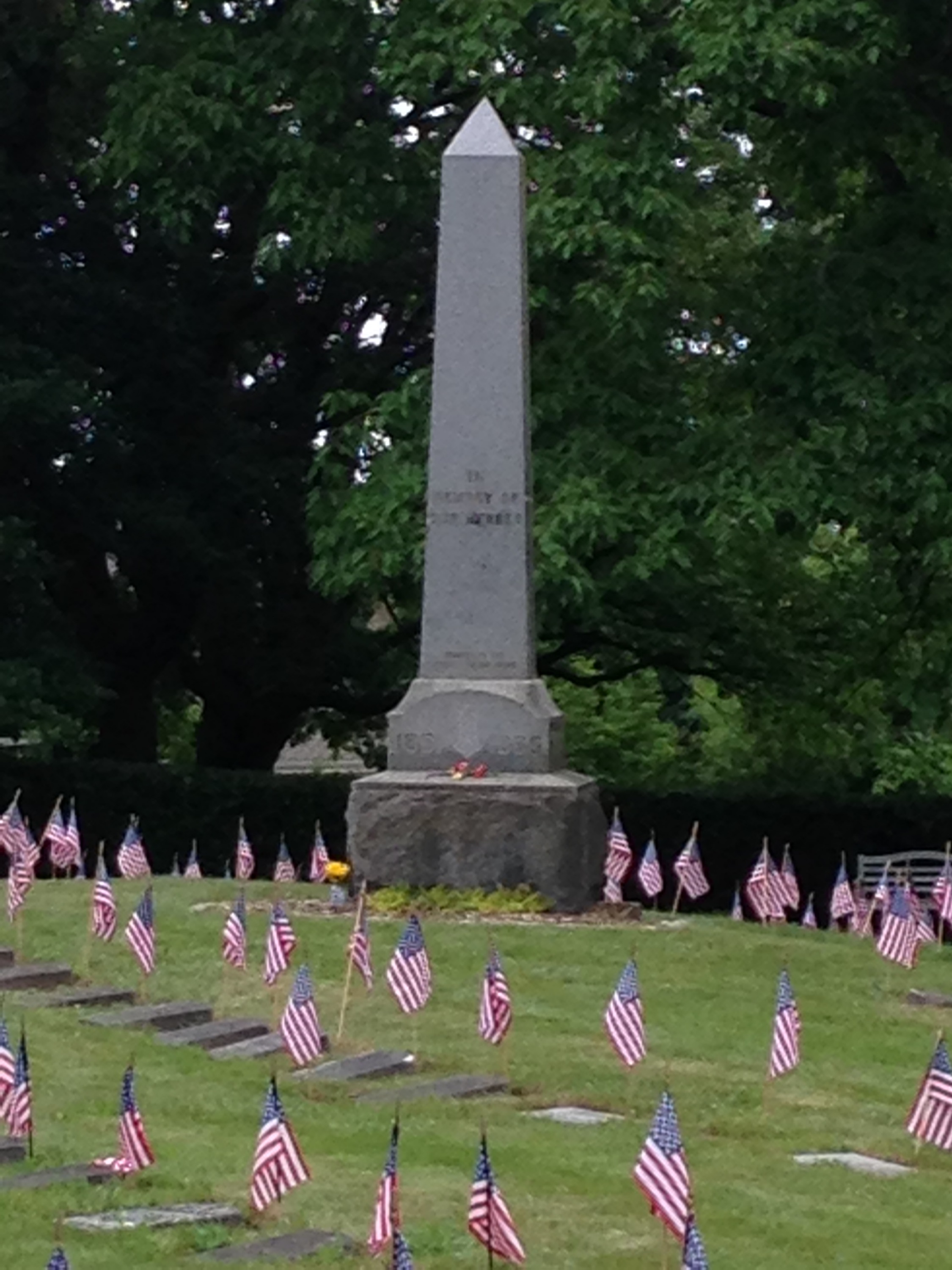
The GAR Cemetery in Seattle, Washington was platted in 1896. It is located on the north and of Capital Hill in Seattle. The cemetery land is covered with grass, maple and oak trees and is fenced by tall shrubbery, which does not make it easily visible from the street. The cemetery is maintained by the Seattle Parks Department and the Friends of the GAR Cemetery Park.
Filed under: photography
May 25, 2015 • 10:23 am Comments Off on Orpheus Ascending: Mohammed Fairouz’s New CD
Tomorrow, Tuesday 26 May, brings the NY premiere of “Sadat” — one of the works featured on this release. The Mimesis Ensemble will perform at Carnegie Hall: http://www.mimesisensemble.org/may-26-2015/
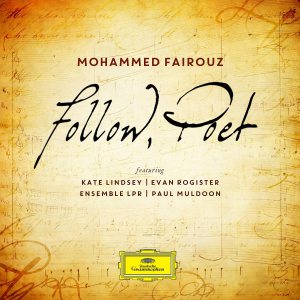
Mohammed Fairouz’s Follow, Poet is among the most inspiring CDs I’ve encountered in quite a while. For one thing, it documents two recent works by a composer who brings to the new-music scene not just a fresh voice but a powerful intellect and — most significantly — an unclouded vision of art’s potential for our jaded age. A vision that is ambitious without being naive.
Fairouz, still just south of 30, has already channeled his imagination into an astonishing gamut of genres, from intimate chamber works to concertos and major-scale symphonies (four to date!), choral pieces, and opera and other theater works. And with Follow, Poet, he is the youngest composer in the history of Deutsche Grammophon to have an entire album devoted to his works.
Such ample gifts could easily run aground with compromised or even downright hackwork production just to fulfill the commissions that seem to…
View original post 780 more words
Filed under: Uncategorized
May 24, 2015 • 9:44 am Comments Off on Congratulations to Lucerne Festival
A nice new feather in Lucerne Festival’s cap:
Classical:NEXT! has awarded its Innovation Award jointly to LF’s Ark Nova and Southbank Centre’s The Rest is Noise Festival.
Rotterdam/Lucerne, 23 May 2015
Today the mobile concert hall project known as LUCERNE FESTIVAL ARK NOVA has received the Innovation Award as part of the international conference Classical:NEXT. An international selection committee comprising music writers and bloggers from a total of 14 countries nominated 21 projects fromaround the world for innovation in the field classical music and for setting trends. Some 2000 participants from the three previous editions of the conference chose the two winning projects via an online vote. Both the ARK NOVA and The Rest is Noise Festival presented by Southbank Centre in London took first prize. Michael Haefliger, the Executive and Artistic Director of LUCERNE FESTIVAL, accepted the honor on Saturday in Rotterdam during the award ceremony.
The LUCERNE FESTIVAL ARK NOVA is the first-ever mobile and inflatable concert hall and was initiated by Michael Haefliger together with the star Japanese architect Arata Isozaki and the British artist Anish Kapoor, as well as the Japanese agency Masahide Kajimoto. The basic idea was to use art with a strong social commitment to bring comfort and hope to people living in the Tōhoku Region while reconstruction continues of the areas affected by the catastrophic earthquake on 11 March 2011. The Ark Nova was implemented for the first time in Matsushima in the fall of 2013. This project has attracted international attention for its spectacular artistic form as well as for its multifaceted programs featuring both international and local musicians. Japanese artists as well as an array of international stars performed here in 2013, and the opening event featured a youth orchestra conducted by Gustavo Dudamel. A total of 10,000 people visited the events held at the Ark Nova in its first year alone. In its second year the Ark Nova was erected in Sendai, Japan, and it proved once again to be extremely successful. An ensemble of soloists from the LUCERNE FESTIVAL ORCHESTRA performed there in the fall of 2013 and again in November 2014. For the fall of 2015 another Ark Nova music festival is planned for the Tōhoku Region in Japan.
The Classical:NEXT Innovation Award was launched to recognize innovative international projects in the field of classical music, as Classical:NEXT’s director Jennifer Dautermann explains:
‘This award aims to give international recognitionto the people who are doing the most to pushthings forward with daring yet intelligent, effective and successful ‘out-of-the-box’ thinking, planningand action.’Among those on the nominating selection committee are Alex Ambrose (WQXR, USA), Jessica Duchen (UK), Moritz Eggert (Germany), Rudolph Tang (China), and Luis Suñén (Scherzo,Spain).
Filed under: Lucerne Festival, music news
May 22, 2015 • 12:44 pm Comments Off on New Music from Bryce Dessner
Getting commissioned to write a percussion piece to be paired with your mentor David Lang’s the so-called laws of nature is a pretty impressive vote of confidence. And the result was Bryce Dessner‘s enchanting Music for Woods and Strings (2013), commissioned by Carnegie Hall.
This piece has just been released on Sō Percussion’s new album. Dessner, also known as the guitarist for The National, describes the “chord stick” process he devised for the work: “Using sticks or violin bows, the players can sound either of two harmonies, or play individual strings, melodies, and drone tremolos.” This “hybrid dulcimer” sound, which he likens to “chord hockets,” shows the inspiration of American folk song tradition in its warmly layered rhythmic counterpoint.
The Los Angeles Philharmonic will premiere Dessner’s latest piece, Quilting, as part of the Next on Grand Festival of contemporary American composers, which has just gotten under way (with John Adams to lead a program on Tuesday.
A couple years ago, Dessner compiled a list of his own favorite contemporary works for BoingBoing, including both Adams’s Shaker Loops and John Luther Adams’s For Lou Harrison. I approve the man’s taste.
Filed under: American music, Bryce Dessner, David Lang, John Adams, John Luther Adams, Los Angeles Philharmonic, new music
May 21, 2015 • 10:02 am 2

2nd-century mural from Teotihuacan, Mexico, depicting a person emitting a speech scroll from his mouth (via Wikipedia)
Fascinating New Yorker article by Judith Thurman on dying languages:
Linguists acknowledge that the data are inexact, but by the end of this century perhaps as many as fifty per cent of the world’s languages will, at best, exist only in archives and on recordings…. If the historical rate of loss is averaged, a language dies about every four months.
[…]
[T]he loss of languages passed down for millennia, along with their unique arts and cosmologies, may have consequences that won’t be understood until it is too late to reverse them.
[…]
If peripheral languages are to survive, they will have to find a way to coexist with what Bob Holman calls the “bully” languages.
Filed under: language
May 20, 2015 • 9:49 am Comments Off on “Musik ist eine heilige Kunst”
After Kate Lindsey’s superb performance as The Composer in Seattle Opera’s Ariadne auf Naxos, I just can’t get Strauss’s music out of my head.
Hugo von Hofmannsthal: “He who wishes to live must surpass himself, metamorphose, forget. And yet, persist, not forget, be faithful – that is what everyone’s dignity means.”
Filed under: Kate Lindsey, Seattle Opera, Strauss
 Arts & Culture Stories from NPR