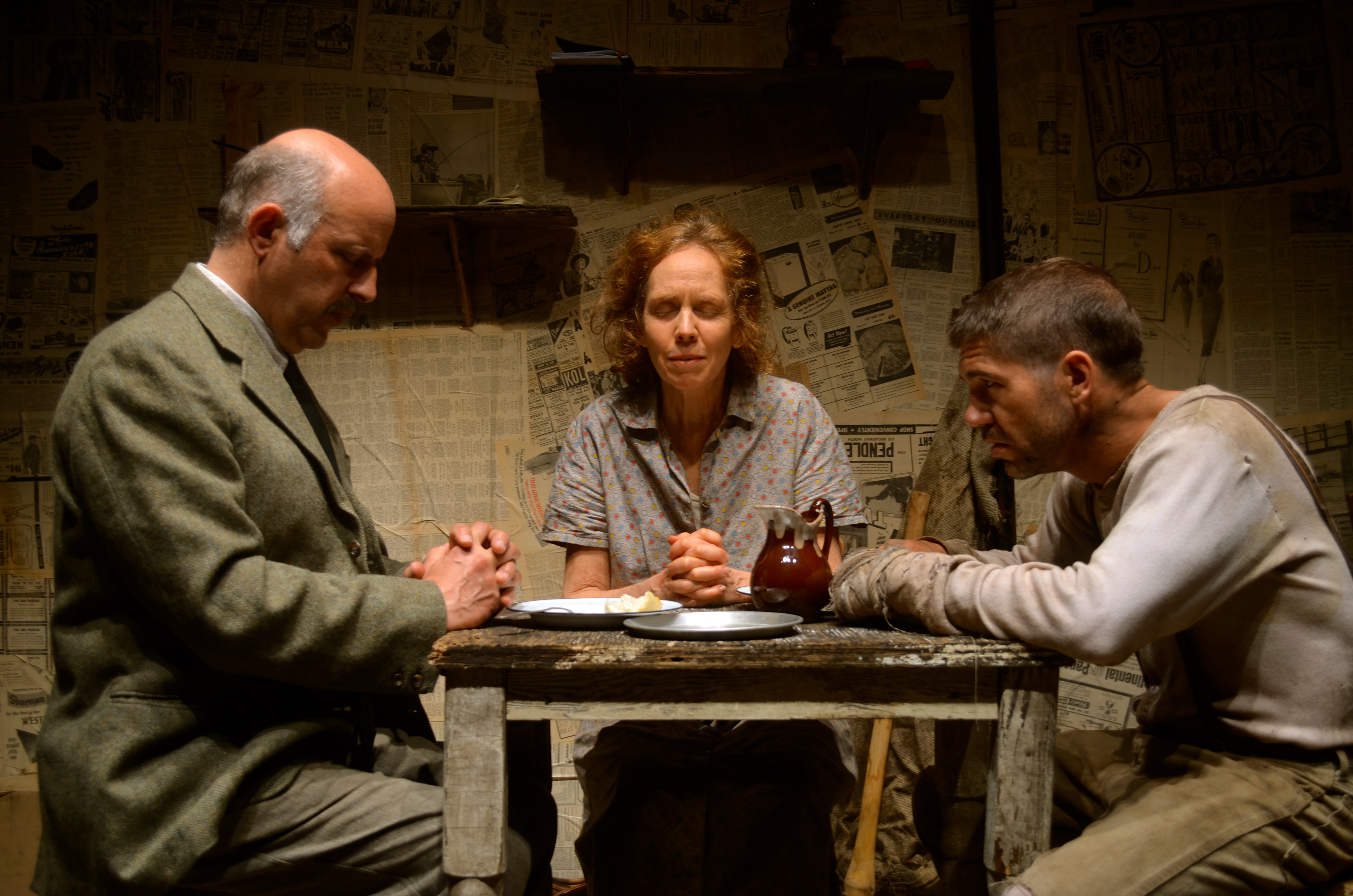
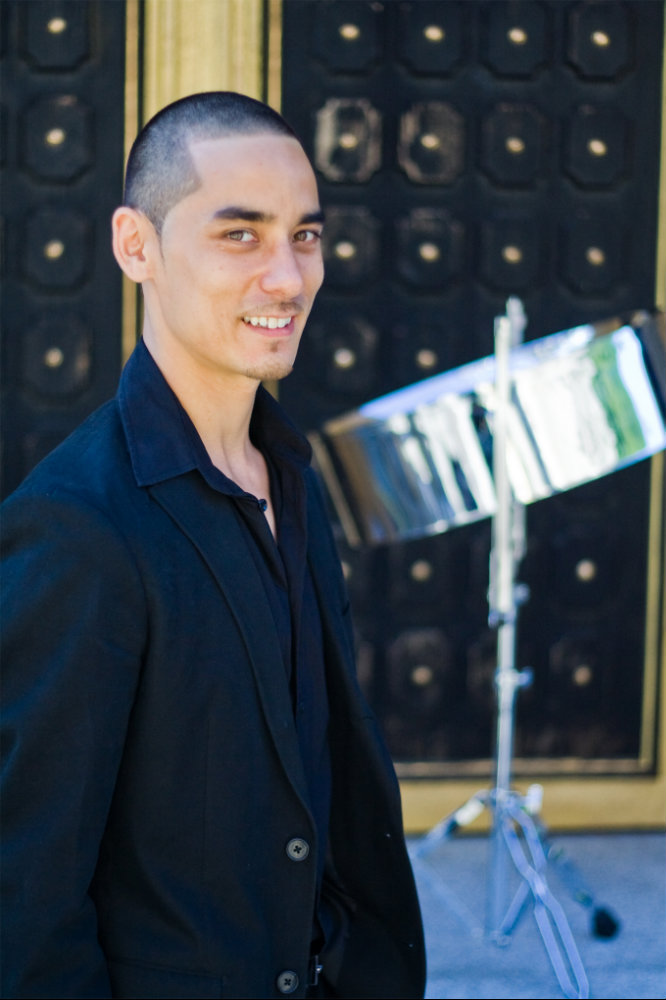
Joseph Lavy; photo (c) Joe Patrick Kane
It takes a little more effort than usual if you want to arrange to see the current offering from Akropolis Performance Lab: but then, APL is hardly your regular evening of theater. Founded by Joseph and Zhenya Lavy in 2000, APL draws inspiration from the experimental legacy of Jerzy Grotowski and the like. And that bit of extra effort, in my opinion, is certainly worth making.
Now playing at APL is a peculiarly fascinating piece titled The Glas Nocturne. Instead of relying on conventional marketing, APL has allowed news of the production to spread by word of mouth and social media — in fact they’ve generated buzz by keeping the performance location “undisclosed” to the public.
You have to visit their website and express interest in being one of ten (max) lucky audience members to be invited for a given performance, which APL describes as “a speakeasy-styled adventure.” (It’s up to the invitees to choose whether to make a donation as well.) As of today, my understanding is that the run has been extended until 7 June.
The Glas Nocturne is co-artistic director Joseph Lavy’s dramatic adaptation of the scandal-causing, much-abused novel Doktor Glas, which Swedish writer Hjalmar Söderberg published in 1905. Lavy and Annie Paladino are the show’s co-directors. The novel, written as a first-person narration/confession, revolves around the ethical dilemma the eponymous physician faces when a beautiful young patient — with whom Dr. Glas has fallen in love — confesses her disgust for her repulsive older husband, the Reverend Gregorius. And, as Margaret Atwood remarks in her introduction to an English translation of Söderberg’s novel, the tormented narrator knows all too well that he’s “the last person on earth who should have been a doctor.”
The scene is of course set for a murder, but that’s only one of the issues confronted in Lavy’s fine-spun, suspenseful condensation of the novel’s musing on moral codes, eros, the longing for transcendence (Dr. Glass’s first name is Tyko — as in Tycho Brahe), and the oppression of women.
The resulting 90-minute monologue mixes Freudian psychology with the painfully refined decadence of Huysmans — all garnished with a taste of Ingmar Bergman-tinged despair. It makes for a dangerously riveting cocktail. (And if you do go, and are served one of Lavy’s personally crafted “Norwegian Blonde” cocktails after the performance, don’t be surprised if you eye the tempting potion with a barely perceptible tiny shiver of anxiety.)
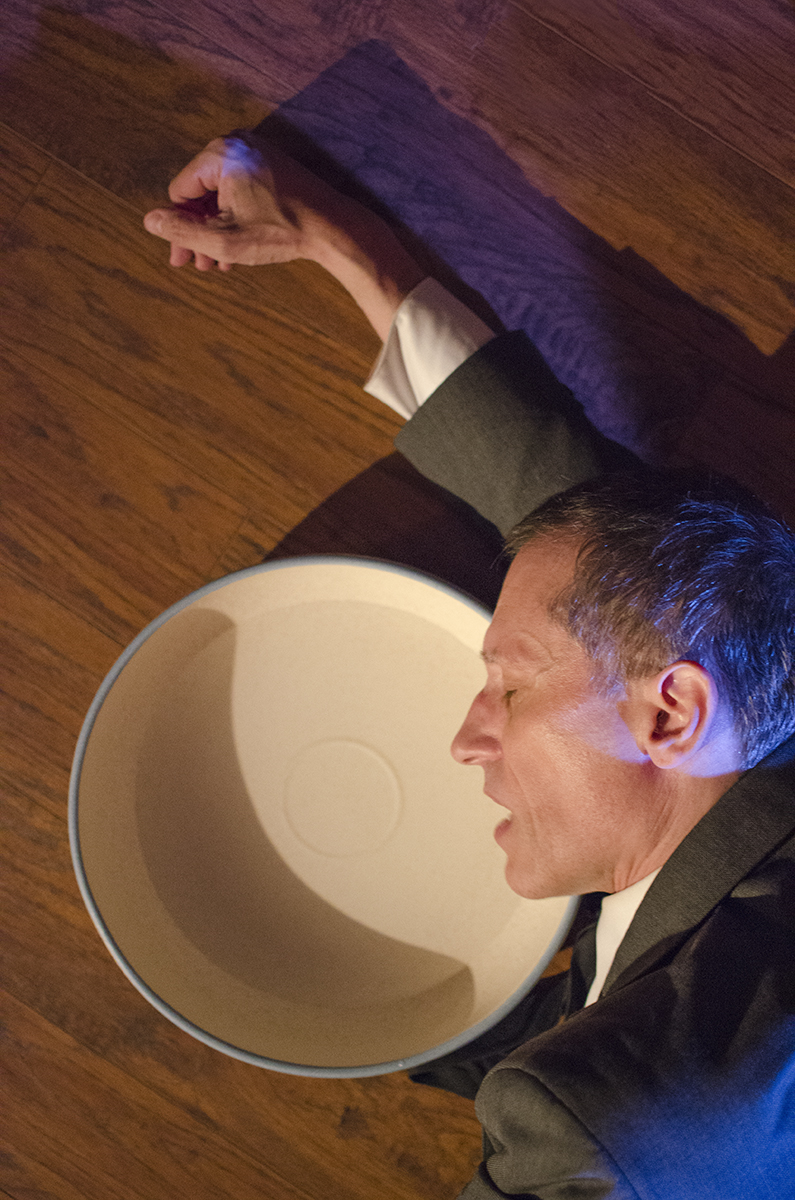
Physical acting is a crucial aspect of Grotowski’s theatrical technique, and Joseph Lavy builds a good deal of his character interpretation from non-verbal cues and gestures: the way he washes his face in a pitcher of freshly poured water, convulses in an agony of sexual despair, or — most chillingly of all — indicates his faked reading of a grave heart condition when Dr. Gregorius pays him a visit.
Joseph Lavy; photo (c) Joe Patrick Kane
As for the text, Lavy commands the art of transition in gating the audience through Dr. Glas’s abrupt mood swings, his high intelligence leavening the potential heaviness with the kind of black humor Dostoevsky exploits in Notes from the Underground. Like many a narcissist, Dr. Glas is also an artist manqué, and his odes to nature and childhood are strewn with just enough self-consciousness to inject a slight note of parody.
Punctuating Lavy’s ruminations and rituals is the musical commentary supplied by an ensemble of women. Their “choral” interpolations give voice to the soundtrack of Dr. Glas’s raving mind, for which Zhenya Lavy has devised a neat succession of traditional Scandinavian folk songs and a handful of piano nocturnes she herself plays.
Much of the fun comes from sharing this experience on such on intimate level, with a very small group of fellow guests. Is it just coincidence that another of my most resonant theatrical experiences of late in Seattle involved an audience of at most 20 viewers?
At any rate, I’m now hooked and can’t wait to see APL’s next major production, which is reported to be an original work based on the Faust myth as retold by Marlowe, Goethe, and Thomas Mann (Ecce Faustus). Stay tuned to see this in February 2016.
If you miss the run of The Glas Nocturne, APL plans to bring the piece back for periodic showings over the course of the next year (with showings planned in October and in December as well).
September promises a remount of their re-worked version of Pomegranate & Ash. And APL additionally offers a series of quarterly Sunday Salons — the next one is planned for July 26.
The Glass Nocturne, adapted by Joseph Lavy and co-directed by Lavy and Annie Paladino, plays until June 7. Information on how to apply for an invitation here.
(c) 2015 Thomas May – All rights reserved.
Filed under: review, theater