My essay on Tan Dun’s Water Passion, which is being performed next weekend by Grant Gershon and the LA Master Chorale, is now live:
In 2013 the peripatetic Tan Dun traveled to the Thomaskirche in Leipzig to conduct his Water Passion in the very space in which J.S. Bach had introduced the St. Matthew Passion nearly three centuries ago (most likely in 1727). The gesture underlined the kind of cross-cultural counterpoint that lies at the heart of the Chinese composer’s oratorio.
The full title reads Water Passion after St. Matthew, yet Tan also models his work on his reading of Bach’s monumental precedent. It might even be titled Water Passion after St. Matthew after Bach — the second “after” being taken in its double sense of “according to” and “postdating” (for a contemporary world).
Mohammed Fairouz’s Follow, Poet is among the most inspiring CDs I’ve encountered in quite a while. For one thing, it documents two recent works by a composer who brings to the new-music scene not just a fresh voice but a powerful intellect and — most significantly — an unclouded vision of art’s potential for our jaded age. A vision that is ambitious without being naive.
Fairouz, still just south of 30, has already channeled his imagination into an astonishing gamut of genres, from intimate chamber works to concertos and major-scale symphonies (four to date!), choral pieces, and opera and other theater works. And with Follow, Poet, he is the youngest composer in the history of Deutsche Grammophon to have an entire album devoted to his works.
Such ample gifts could easily run aground with compromised or even downright hackwork production just to fulfill the commissions that seem to be piling up from all sides. (Alas, not an uncommon phenomenon.) But start listening to the song cycle Audenesque, one of the gems featured on Follow, Poet, and you find yourself in the hands of an artist who crafts the musical equivalent of a page-turner: the first song sets the stage for W.H. Auden’s masterful elegy In Memory of W.B. Yeats with a gripping blend of musical images, a mix of restless churning and numb melancholy.
In place of mere accompaniment or wallpaper “illustration” of Auden’s own images, Fairouz builds a sound world that vividly engages with the elegy’s aesthetic agenda, which is organized into three stages as three separate but interlinked songs. First is the despairing indifference of the “real world” in response to the artist’s death, followed by a reflection on the actual difference poetry can make. The elegy culminates in the moving breakthrough of renewal in the third song, with its promise of “the healing fountain.”
Fairouz’s music beautifully amplifies the oracular-in-the-ordinary tone characteristic of Auden. An additional layer enriches the cycle by bridging Auden’s elegy with the present era as Fairouz appends a fourth song, his setting of the late Irish poet Seamus Heaney’s Audensque.
Auden paid homage to Yeats as the exemplary poet, and Heaney’s poem feelingly, and with humor, eulogizes fellow poet Joseph Brodsky (who died in 1996 — on the same date on which Yeats had died). The music forges still another link in this chain of connection, becoming the composer’s elegy for Heaney (the poet had befriended Fairouz near the end of his life).
In a short booklet essay, the conductor/musicologist Leon Botstein provides an eloquent appraisal of Fairouz’s musical pedigree and approach. You can hear the sensibility he shares with Samuel Barber (the unforced lyricism, with its elegiac undertow), Kurt Weill (the accessibility that nevertheless forces you to listen actively, without the crutch of easy sentiment), and Gustav Mahler (the narrative punch, along with the pointed details of Fairouz’s chamber orchestration); an arresting harmonic pattern at the climax of the Auden poem meanwhile casts its Philip Glass-like spell. Yet the perspective Fairouz brings to his influences is strongly individual, never sounding eclectic.
The other musical work is Sadat, a chamber ballet being released here ahead of its stage premiere (to be given in late May 2015 by the Mimesis Ensemble at Carnegie Hall). Cast in five brief but representative scenes, Sadat distills a portrait of the slain Egyptian leader Anwar Sadat.
Like Audenesque, the wordless ballet score manifests the theatrical and narrative instincts that figure so prominently in Fairouz’s compositions. Whether the scene is of public mourning or an intimate encounter between the young army officer and his fiancée, a minimum of musical gestures is needed to establish the atmosphere.
Sadat‘s chamber orchestration centers around a characterful array of tuned and untuned percussion (including highly colorful writing for xylophone). Fairouz’s use of these instruments alludes more directly to the Middle Eastern sound world that contributes important elements to the Arab-American composer’s palette — he even calls for the sound of a shofar — though similar gestures are subtly present in his scoring of Audenesque as well.
The performances are sympathetic, alluring, dramatically crisp. Evan Rogister leads the Ensemble LPR, a group of 14 musicians associated with New York’s admired “alternative” performance venue, Le Poisson Rouge. With its warmth, variety of colors, and flexibility, Kate Lindsey’s mezzo is ideally suited to Fairouz’s vocal writing. His lines trace their own musical sense while remaining alert to the sounds and rhythmic life of the words.
Follow, Poet is also the inaugural release in an innovative series — Return to Language — that Elizabeth Sobol, the president of Universal Music Classics, has launched to explore the synergy between music and words.
To that end, the album includes separate tracks of the Pulitzer Prize-winning poet Paul Muldoon reciting the poems set to music by Fairouz, along with a couple of brief excerpts from speeches by President John F. Kennedy extolling the power of poetry.
“I believe in cultivating a respect and love for depth of language and reflection and expression, even in the age of Twitter and YouTube, when some of that seems in danger of being eroded,” says Sobol. “And it has always been the interrelatedness of literature and music that has touched me most deeply in art — the exponential power of storytelling when you join words and music.”
It’s a highly laudable effort that deserves to have a widespread audience — and the choice of music by Mohammed Fairouz to kick it off shows that UMC is on the right track.
Here’s the more-complete version of my Los Angeles Philharmonic essay on Michel van der Aa’s remarkable cello concerto, Up-close, which gets its West Coast premiere in the Green Umbrella series next week:
Regular followers of the Los Angeles Philharmonic will have encountered the work of Michel van der Aa before, but Up-close has intensified his profile, particularly in North America, thanks to the acclaim it earned last year, when it received the mega-prestigious Grawemeyer Award for Music Composition. Written in 2010 on a commission from the European Concert Hall Association and the Dutch Performing Arts Fund for the Amsterdam Sinfonietta and the Argentine cellist Sol Gabetta – who premiered it in Stockholm in March 2011 – Up-close represents nothing less than a thorough reimagining of the concerto genre to mirror the way our high-tech, wired era shapes and compartmentalizes perceptions of reality.
In honor of Haydn, one of the greatest of the greats, who “may” have been born on this date in 1732, give or take a few days. For its 2015 Summer Festival, which focuses on the theme of “humor” (in the widest possible sense), the Lucerne Festival will open with a program pairing Haydn and Mahler (Bernard Haitink will conduct the Lucerne Festival Orchestra): specifically, Mahler 4 and Haydn’s Symphony in C, (“Il distratto,” aka “Der Zerstreute”), which originated as incidental music for the stage. I’m going to be listening closely to a lot of Haydn in the near future as I prepare program essays for the Festival.
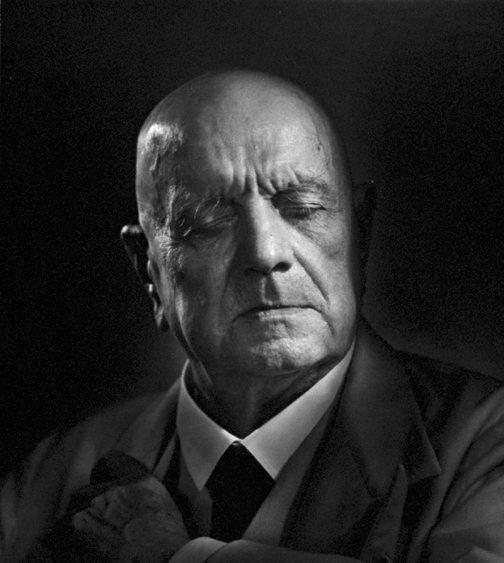
My review of the final program in Seattle Symphony’s just-completed Sibelius Festival is now live at Musical America. The program included Symphonies 5-7. It’s a subscriber site with a paywall, so I can’t post more than the teaser here:
SEATTLE—-At the beginning of his journey through the seven symphonies of Jean Sibelius, Thomas Dausgaard hinted at the big picture Seattle Symphony audiences could expect: “These works are about a search for the essentials…
With the strings leaning in to one of the most powerfully orchestrated C major chords of the 20th century, the Seattle Symphony’s ambitious Luminous Landscapes Sibelius Festival has reached its conclusion. (There’s also a curious Nachtisch to this week’s final program: after the orchestra players cleared the stage on Thursday, we were treated to a mini-recital of nine Sibelius lieder, with soprano/pianists Maria Männistö and Christina Siemens alternating roles.)
For fellow music lovers (and Sibelius completists) who’d been present for all three programs this past month, there was an added sense of satisfying closure that was maybe, just maybe, a bit reminiscent of being with a Ring audience at Seattle Opera as the final chord of Götterdämmerung fades out.
On Sunday you can listen to the entire marathon via the KING FM Seattle Symphony Channel, KING FM 98.1’s new collaborative project with the SSO. On March 29 the marathon starts at 12:01 a.m. with a looping 24-hour stream of the seven symphonies, the Violin Concerto (with soloist Pekka Kuusisto), and Finlandia — all with Thomas Dausgaard conducting, recorded live from the past month’s performances.
And a glance at San Francisco Symphony’s recent “Creation” program, which included the composer’s fascinating, brief tone poem Luonnotar.
We’re still early in this 150th anniversary year honoring Sibelius. The birthday itself falls in December — which somehow seems just right for a composer so associated with Northern landscapes. Many orchestras have therefore planned Sibelius-related programs for the coming season as well. But the Seattle Symphony is the only U.S. orchestra to have performed an entire Sibelius symphony cycle back-to-back to mark the anniversary. It’s been a genuinely laudable artistic milestone for the ensemble.
There’s a lot more reflection on Pierre Boulez to come this year — including an entire day that Switzerland’s Lucerne Festival is devoting to his work on 23 August — but today marks the official 90th birthday of the French master.
Here’s a roundup of some recent commentary on Boulez and his inarguable impact on musical life in our time:
Ultimately I think Boulez is a great optimist, despite the shadows that coloured his early years. In the end what he believes is simple: today’s music has to be different from the music of the past.
That’s a natural thing. Western music continues to evolve and transform and change. And those that don’t agree, well … they’re wrong!
America can’t be discovered out of nothing. In Boulez’s music you immediately hear everything that he has come into contact with – and that is an enormous amount. Even Bach.
The tie between heart and brain characterizes Boulez’s music. “I claim the right for music to have many levels of perception,” he told DW in 2003. “Works […] that take time to solve are the works that remain in your memory for a long time.”
For those who carp about Boulez’s conducting activities allegedly having taken his attention away from composition – they generally seem not to like his music very much, so it is not immediately clear why they should care – the Notations should stand as a rebuke. Boulez himself has owned that he would have been unable to compose the pieces without the experience of conducting Wagner and Mahler. With every listening, that claim becomes more and more unarguable. The virtuosity in orchestral writing is staggering, in its way as much so as that of Ravel, or indeed Mahler.
Boulez’s style is explosive. He detonates a germ of an idea and, like a seed, it grows a sonic forest. The common fallacy is that pieces as highly and intricately structured as these require technical understanding. But you don’t need to be a botanist to be stirred by a field of wild flowers.
My development really went backwards through time. I got to know Berg, I got to know Webern, I got to know Schönberg … and then I got to know Mahler. It was totally reversed – because there was no tradition whatsoever.
My review of the second program of the Seattle Symphony’s Sibelius Festival has now been posted on Musical America. MA is a subscriber site, so I’m limited to posting the link here:
The Seattle Symphony has been on a winning streak of synchronicity when it comes to favorably timed good news. Last year [Musical America Composer of the Year] John Luther Adams’s…
continue reading (The full review appears behind Musical America‘s subscriber paywall.)
Wonderful program over the weekend from Pacific MusicWorks: “An American Tune,” which was aimed at recapturing the sound of vernacular American music — through songs and instrumental pieces — from the nineteenth century.
The program was beautifully curated and beautifully, at times movingly, executed. For this occasion Stephen Stubbs exchanged his lute for a couple guitars. The recent Grammy Award-winner and artistic director of PMW conceived the program for a chamber-size group of colleagues. Stubbs was joined by Tom Berghan on banjo (Berghan was a lute duet partner from Stubbs’ early days in Seattle), mandolinist John Reischman of the Jaybirds, violinists Tekla Cunningham and Brandon Vance, and soprano Catherine (Cassie) Webster.
As a model, Stubbs decided to apply the ideas and practical skills of the “historically informed performance practice” movement, to which he’s devoted his career, to the wealth of musical traditions that were hybridized and became popular in America of the nineteenth century: the American of the expanding frontier, of the Civil War, of the parlor and the fairground.
Stubbs remarks that the skills of the early music movement evolved “to cope with filling in the blanks where notational records were incomplete and the aural traditions broken or hopelessly confused” — ergo, he realized, these skills “were the very ones that had a chance of penetrating the original spirit and sound of the vast panorama of ‘lost’ American music.”
And vast it is. For this program, instead of looking to European institutional models like the orchestra or other fixed ensembles — which many “classical” American music programs attempt to do — the idea was to focus on the following areas: the popular song model established by Stephen Foster, a gathering of songs associated with the Lincoln years, music of the frontier from the era of westward expansion, and American folk song in the specific form of the murder ballad subgenre. These sets were interspersed with instrumental numbers exemplifying the American folk fiddling tradition characteristic of Appalachia.
Stubbs et al. performed to a capacity audience in the Nordstrom Recital Hall at Benaroya (while the second program of the Sibelius Festival, acoustically secure and sealed off, was at the same time booming under Thomas Dausgaard’s baton in the big hall below). In place of the sentimental tinge of nostalgia that a familiar tune like “My Old Kentucky Home” usually evokes, it was intriguing to hear this in the context of lesser-known vocals and instrumentals. Webster’s soulful phrasing and timbre made it easy to fill out a throughline connecting singing styles of the era and popular idioms today. The quintet of plucked and bowed strings added a wealth of colors and expressive nuances.
Notoriously, Foster also wrote for black-face minstrel shows, represented here by the songs “Nelly Bly” and “Angelina Baker.” “This … unsettling phenomenon,” notes Stubbs “…was too pervasive to ignore. To take only the positive side into account, it was a vehicle for the influence of African music, dance, and instruments (particularly the banjo) to put down widespread and permanent roots in our musical culture.”
Richard Millburn’s “Listen to the Mockingbird,” we learned, was held in high regard by Lincoln. It’s a wistful song of a beloved who has died young: the mockingbird sings over her grave, is “still singing where the weeping willows wave.” The synergy between the ensemble and Webster reached fever pitch in the lengthy cowboy song “The Buffalo Skinners.” They also gave a haunting account of the murder ballad “Two Sisters/The Wind and the Rain” (a tune which left its mark on Bob Dylan’s “Percy’s Song”).
In preparing the four-part setting for violins and guitar of the Mormon hymn “Come, Come, Ye Saints,” “with the banjo taking an ornamental approach to the melody,” Stubbs writes that they experienced an “aha moment”:
The connection to the early seventeenth century sound of the English “broken consort” was immediate and unmistakable. In the earlier context, plucked and bowed strings provide the harmonic framework while the solo lute decorates the melody — this is the earliest form of specifically orchestrated music in the European tradition, and here it is again in a hymn from Utah!