MEMETERIA

Icon

Arts writing by Thomas May

To Moscow, Moscow, Moscow!

ThreeSisters

About 10-15 years ago, it seemed one of the big trends around Chekhov productions was to ratchet up the comedy. All that tristesse and Russian pathos had become so clichéd that directors tried to outdo one another in getting audiences to laugh — too often by hard-hitting with effects that were more vulgar sit-com-y than Chekhovian non-sequitur (Kulygin’s “nonsense”).

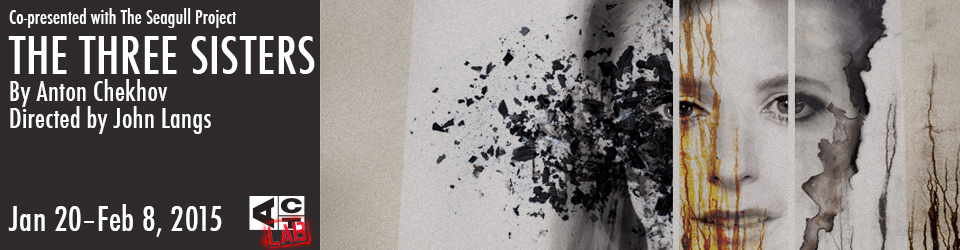
So it intrigued me to notice some of the audience bafflement during intermission at last night’s preview of The Three Sisters in a new production by the Seagull Project soon to open at ACT Theatre. “It sounds like theater of the absurd,” insisted the woman next to me. “You can’t keep it straight what they want!”

Not humor and laughs, but frustration over the confusion of tone — which is exactly what makes Chekhov, and in particular The Three Sisters, such a formidable challenge to direct. Not the relaxed “plotlessness,” but the matter of tone For all the self-congratulation we hear about how our we “break down barriers” nowadays, so many are still glued to obvious genre distinctions: is it supposed to be a comedy? a tragedy? avant-garde? (I sensed similar reactions recently to Seattle Shakespeare’s Measure for Measure, that notorious “problem play.”)

For me, the two characters who most successfully establish real Chekhovian ambiguity in John Langs’s thoughtful production (using Carol Rocamora’s translation) — though the director relies a bit too much on leitmotivic tics that turn characters into caricatures — are CT Doescher’s poignantly resigned but cheerful Tusenbach and the intelligent, suave, but gently bitter Vershinin of David Quicksall.

Julie Briskman comes closest to getting the Chekhov chiaroscuro as the oldest sister, Olga. Her mood swings feel more integrated and organic, whereas they come across as merely “quirky” in several other characters’ portrayals. Alexandra Tavares’ Masha is especially compelling in her “stolen moment” of brief happiness with Vershinin. Sydney Andrews conveys the woozy longing of Irina as a young woman on the cusp of adulthood in the first act; her later development still seems to be a work in progress. John Abramson’s captures the proto-Uncle Vanyan angst of their brother Andrey Sergeevich as he tries to put up a bold front in the face of his crushing disappointments.

Hannah Victoria Franklin plays up Natalya’s bossy boorishness and her independent streak, but the class resentment that fuels her seems lost in translation. Recently seen doing good work in New City Theater’s Hamlet, Brandon J. Simmons takes a more straightforwardly comic approach as Kulyigin but gives his pomposity an awkward edge that pays off well in his final scene with Masha.

Langs is particularly good at organizing this talented cast in the larger ensemble scenes; he’s not able to solve the complex issues of Chekhov’s tempo and pacing from these to intimate encounters — but this will probably improve as the production matures. He neatly frames the play with marching scenes featuring the army arriving at and then departing from the provincial garrison town where the Prozorov family languishes. They stomp in to the beating of a big bass drum, automatons ready for the call of duty; but at they end we see them marching in silent slow motion far upstage — and can imagine them heading straight for the trenches of the First World War.

Among the delights of this production are the design elements: Jennifer Zeyl’s birch-framed set with tricky Chekhovian seasonal changes beautifully established by Robert J. Aguilar’s lighting. Robertson Witmer’s soundscape brings out the full range of Chekhov’s “score” — in this play whose subtexts include a major role for sounds: the forest echoes, a flock of birds passing, the wind, the magic of the spinning top given as a gift to Irina by the aging army doctor Chebutykin (such a powerful symbol of frenzied but futile action).

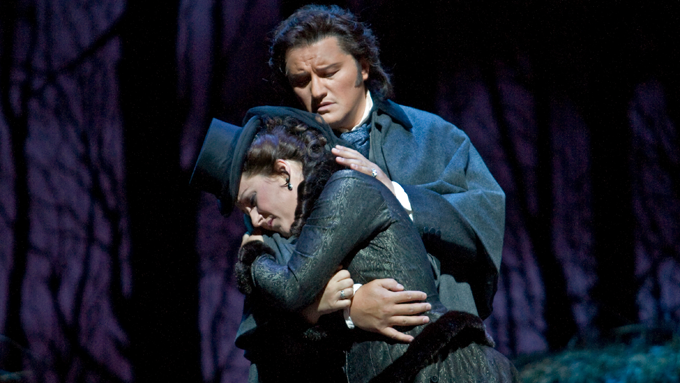
There’s another Chekhovian music in Péter Eötvös’ gorgeous opera distilled from the play:

Filed under: Chekhov, directors, opera, review, theater

St. Lawrence String Quartet at 25

Tonight the SLSQ gives the world premiere of John Adams’s Second String Quartet at Stanford.

Here’s a clip of the SLSQ playing the second movement from Adams’s First Quartet:

Thomas May's avatarMEMETERIA

SLSQ

One of my favorite string quartets is celebrating its 25th anniversary with a typical overdrive of crative activity. Here’s my recent portrait of the St. Lawrence for Stanford Arts:

“It’s a great time both to be playing in a string quartet and to be writing string quartets,” remarks Geoff Nuttall, first violinist and cofounder of the St. Lawrence String Quartet (SLSQ). He’s thrilled about how both pursuits—those of the recreative performing artist and of the composer who creates from scratch—will be fused in three distinctive ways during the course of the SLSQ’s upcoming season at Bing Concert Hall.

continue reading

View original post

Filed under: chamber music, commissions, John Adams, string quartet

Ah, Richard Strauss

OSA

A warning in the lobby for OPERA San Antonio’s recent new production of Salome by Richard Strauss. Directed by Candace Evans, it starred Patricia Racette in her stage role debut.

Filed under: opera, Richard Strauss

Sigmund Shakespeare

Measure
Steven Pinker has published a thought-provoking essay titled “Shakespeare: One of the First and Greatest Psychologists”.

Pinker focuses specifically on the scene in which Isabella pleads to the puritanical interim authority Angelo to spare her brother Claudio’s life in Measure for Measure (which is currently playing in a Seattle Shakespeare production directed by Desdemona Chiang):

Isabella compares the administration of an idealized divine justice with the all-too-fallible human justice. She reminds us that humans are capable of meting out patently cruel and pointless punishment judgments with complete confidence they are doing the right thing.

Aside from Shakespeare’s ceaselessly relevant “universality,” Pinker points to how uncannily spot-on he is with regard to the findings of contemporary psychologists:

Worse still, we humans are the last to notice our own limited nature. In seven words, Shakespeare sums up a good portion of the findings of modern psychology: “most ignorant of what he’s most assured.”

A recurring discovery of social and cognitive psychology is that human beings are absurdly overconfident in their own knowledge, wisdom, and rectitude. Everyone thinks that he or she is in the right, and that the people they disagree with are stupid, stubborn, and ignorant.

People reliably overestimate their own knowledge, and misjudge their own accuracy at making predictions. A common theme of both Shakespeare and modern social psychology is the human species’ overconfidence.

On the Bard’s use of his psychological insight to intensify the drama:

These two perspectives — that of the perpetrator or scientist, and that of the victim or moralist — color every analysis of human behavior. And here, we see Shakespeare suddenly flipping from one to the other for dramatic effect.

Filed under: directors, Shakespeare

The Tales of Hoffmann at the Met

Bart Sher’s Tales of Hoffmann production is returning to the Met this week.

Here’s my essay on Offenbach’s fascinating, problematic masterpiece for the Met Playbill (starts on p. 35 [pdf format]):

Les Contes d’Hoffmann is a most unusual swan song. In its formal ambition
and psychological scope, the opera represents a striking makeover.
Jacques Offenbach hoped to reinvent himself as an artist, proving that he
was capable of more than the wickedly satirical but lightweight brand of lyrical
theater on which his reputation had been built. And Hoffmann did secure his
place in the operatic pantheon, although the truncated version through which it first became known made a jumble of Offenbach’s original vision.

continue reading

Filed under: directors, essay, Metropolitan Opera

Wild Thang

alamo-squirrel

Filed under: photography

New San Francisco Opera Season Announced

Lucia di Lammermoor

Lucia di Lammermoor

Now this is one to get genuinely excited about. Some of my favorite highlights for this final season under general director David Gockley:

–U.S. debut of director Calixto Bieito with his post-Franco-set Carmen

–double bill of Gordon Getty’s Usher House and Claude Debussy’s La Chute de la Maison Usher

–the David McVicar production of Meistersinger

–Jiří Bělohlávek conducting Janáček’s Jenůfa

–new Lucia di Lammermoor production to be directed by Michael Cavanagh

–Stephanie Blythe and Gerald Finley in Sweeney Todd

–return of Verdi’s seldom-seen Luisa Miller

The full complete release is here (pdf).

Filed under: music news, San Francisco Opera

Symmetry

symmetry

Filed under: photography

Another Wagner Comedy

No, Die Meistersinger is not Wagner’s only comic opera. Ahead of Seattle Shakespeare Company’s new production of Measure for Measure, here’s a taste of the German’s operatic take on this “problem comedy.”

Reviewing a production of The Ban on Love at Glimmerglass Festival back in 2008, the critic Philip Kennicott remarked that this youthful outing “is 99 percent a study in everything the mature Wagner is not.”

Kennicott goes on to note:

Wagner turned away from so much of the spirited energy he let loose in “Liebesverbot.” When it premiered in 1836, he stood, briefly, for free love and revolution and the creative destruction of the collective libido. By the end of his life, in 1883, he viewed sexuality as a kind of sickness, and his final work, “Parsifal,” celebrated a monkish cult of men devoted to celibacy and arcane religious rituals.

[…]

“Liebesverbot” is fascinating — not because Wagner discarded its musical and ethical worldview, but because he would spend his life thrashing its remnants out of himself.

Filed under: Shakespeare, Wagner

The Moon at the Top of the Stair

moon-stairs

Filed under: photography

Archive

Enter your email address to follow this blog and receive notifications of new posts by email.