


Filed under: photography

November 3, 2014 • 9:32 am Comments Off on A San Francisco Halloween
October 31, 2014 • 11:30 am Comments Off on Handel’s Witty, Urbane, Subversive Art: Staging Partenope
One more chance to see this Partenope production: on Sunday afternoon. If you’re in the Bay Area, try to catch this — it’s worth it.
Filed under: Uncategorized
October 28, 2014 • 12:01 am Comments Off on Dazed, Confused, and Lovestruck: Twelfth Night at Seattle Shakespeare

Jay Myers as Orsino and Allie Pratt as Viola. Photo by John Ulman.
“Why, this is very midsummer madness!” exclaims Countess Olivia in the middle of Twelfth Night — just as the whirligigs of the plot against Malvolio start cranking away. Olivia’s normally uptight steward has been set up to believe his boss is suddenly overcome with uncontrollable passion for him and is putting on a display that makes for one of the most outrageously funny scenes in all Shakespeare.
But Malvolio’s (David Quicksall) crazed behavior is easily matched by the antics indulged in by Olivia herself (Elinor Gunn) in Seattle Shakespeare Company’s deliriously unconventional new production, which opened this past weekend and which plays through Nov. 16 at the Center Theatre at Seattle Center. Visiting director Jon Kretzu approaches Twelfth Night as if it were a vastly elaborated version of the nocturnal spell cast in the Bard’s decade-earlier A Midsummer Night’s Dream. Just about everyone seems to wander about in a woozy haze of confused, mismatched desire.
Filed under: directors, review, Shakespeare
October 27, 2014 • 9:43 am Comments Off on The Rake’s Revels: Don Giovanni Parties It Up in Seattle
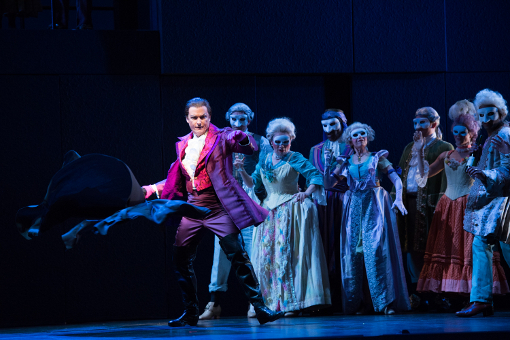
Photo (c) Elise Bakketun
Mozart’s drama about the legendary rake’s egress launches the first season under Seattle Opera’s new general director, Aidan Lang. However, the production originated here in 2007, and the current revival had of course been scheduled well in advance. In other words, it makes no statement about the new Lang era but is instead a reverberation of the Speight Jenkins years.
This production mines the comic possibilities inherent in the essentially picaresque, stop-start narrative pieced together by Da Ponte. The Overture, with its apocalyptic opening section introducing a cheerful, buffa main course, has always posed a musical conundrum, the solution to which, as in Tristan und Isolde, remains deferred until the end of the opera. Yet in Seattle’s McCaw Hall, those foreboding first chords have the effect rather of parentheses, of a statement that’s easily shunted aside until the topic comes up again, in rather nonsequitur fashion, during the grand finale.
Filed under: Mozart, review, Seattle Opera
October 25, 2014 • 9:56 am Comments Off on Purcell Meets Bartók in LA

Tonight brings the opening of Los Angeles Opera’s curious pairing of Purcell’s Dido and Aeneas with Bluebeard’s Castle by Bartók.
The Australian-born, Berlin-based director Barrie Kosky (intendant at the Komische Oper Berlin) has brought his staging of the double bill for Oper Frankfurt to LA.
In a recent Opera News profile, Kosky explained the connections he’s come to see between these two one-act operas:
“Both pieces are about arrival and departure in different ways. Both operas have a couple and the complexities of love in different ways as the central element of the pieces. And the third thing is, both pieces have a degree of sadness and melancholia running through them.”
Here’s a very brief introduction to the evening by LA Opera’s CEO Christopher Koelsch:
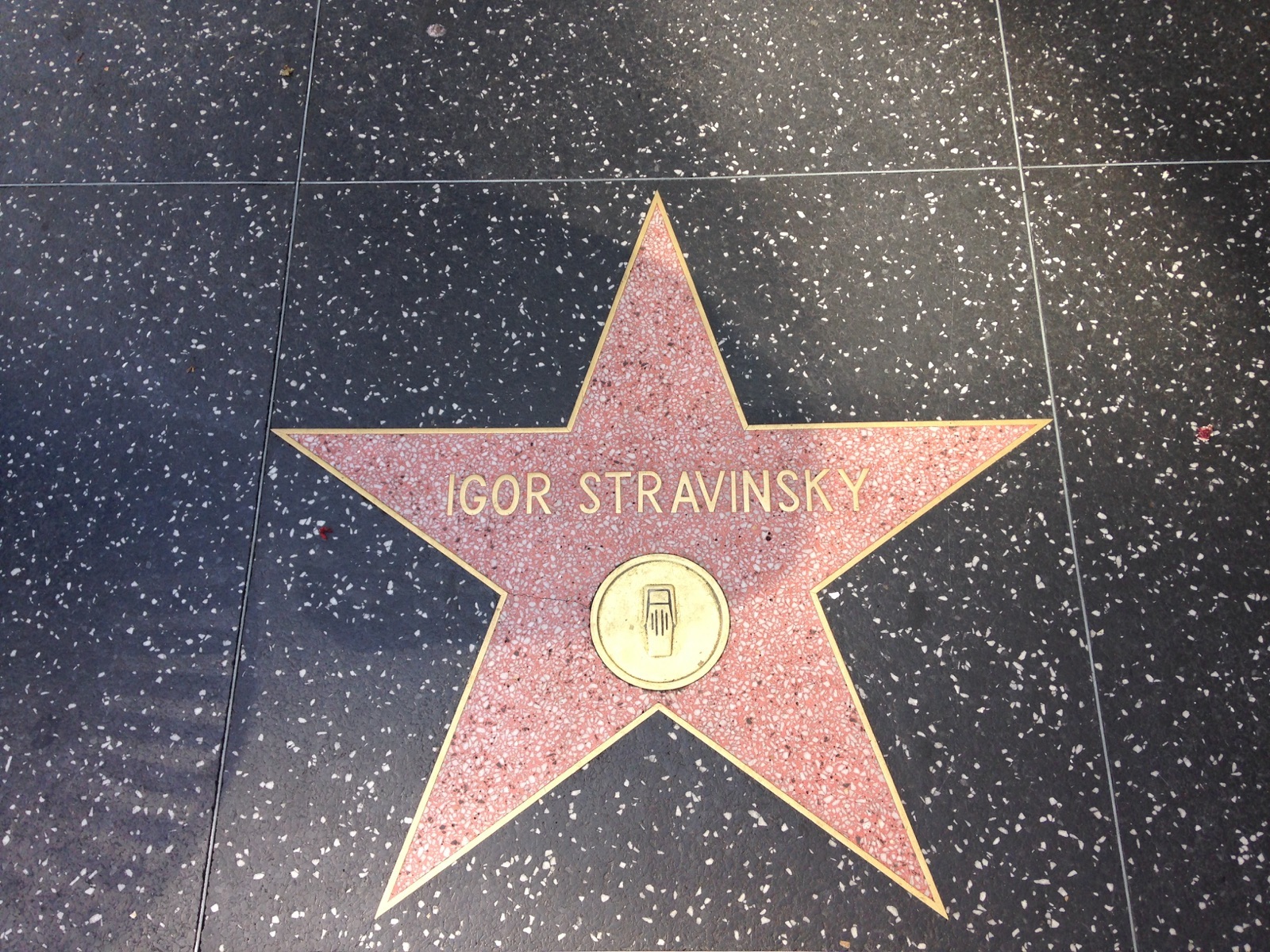
October 22, 2014 • 9:27 am Comments Off on Life with the Stars
Filed under: photography, Stravinsky
October 20, 2014 • 9:17 am Comments Off on The Death of Klinghoffer

Tonight John Adams’s opera The Death of Klinghoffer opens at the Met. Here’s the full program as a pdf, including my program note.
And here’s another introductory essay I wrote for the Met.
Filed under: American opera, John Adams, Metropolitan Opera
October 16, 2014 • 5:37 pm Comments Off on The Death of Klinghoffer at the Met
Reposting this since the opening is just few days away.

Here’s my recent essay for the Metropolitan Opera’s Season Book on the most controversial opera of the season:
Behind the Headlines
In the world of opera, it’s common for a new work to take some time to establish its place in the repertoire. Just think of Così fan tutte, written in 1790 but largely ignored until the mid-20th century, or Les Troyens, which didn’t reach the United States until more than a century after its composition. A generation has passed since the 1991 premiere of John Adams’s second opera, The Death of Klinghoffer, but for the most part the work is still known solely by its controversial reputation. Apart from that original production, only two other full stagings have been seen in the U.S., and both of these took place within the past three years (at Opera Theatre of Saint Louis in 2011 and Long Beach Opera in spring 2014).
View original post 2 more words
Filed under: Uncategorized
 Arts & Culture Stories from NPR


