MEMETERIA

Icon

Arts writing by Thomas May

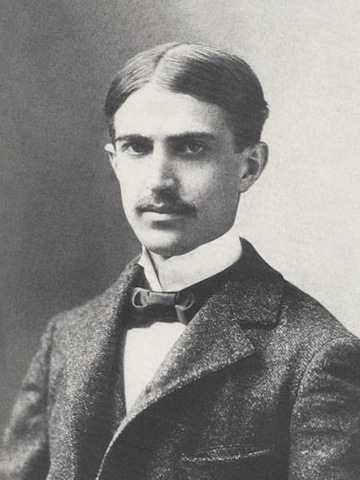
War Time: Stephen Crane

Stephen Crane, c. 1896

Stephen Crane, c. 1896

Reviewing Paul Sorrentino’s Stephen Crane: A Life of Fire, Thomas Powers observes:

Something had changed in Crane since the publication of ‘The Red Badge of Courage.’ It can be seen in all of the Cuban pieces but most clearly in ‘War Memories,’ a partly fictionalised account as long as a novella. In it, along with much else, Crane describes the fate of Dr John Gibbs, a naval surgeon shot in the night when guerrillas attacked Crane’s detachment at Guantánamo:

‘I heard somebody dying near me. He was dying hard … The darkness was impenetrable. The man was dying in some depression within seven feet of me. Every wave, vibration, of his anguish beat upon my senses. He was long past groaning. There was only the bitter strife for air which pulsed out in a clear penetrating whistle with intervals of terrible silence … I thought this man would never die. I wanted him to die. Ultimately he died. At that moment the adjutant came bustling along erect among the spitting bullets. ‘Where’s the doctor?’ … A man answered briskly: ‘Just died this minute, sir.’ Despite the horror of this night’s business, the man’s mind was somehow influenced by the coincidence of the adjutant’s calling aloud for the doctor within a few seconds of the doctor’s death. It – what shall I say? It interested him, this coincidence.’

Crane had caught a clear glimpse of what he was seeking, the thing beyond ordinary experience. It wasn’t just the death of Gibbs, but the coincidence, and the man’s interest in the coincidence, despite the horror of the night’s business. The change in the writing, the ‘maturing’ noticed by Conrad, is the addition of Crane himself, what he is feeling and experiencing – ‘no longer a cynic. I was a child who, in a fit of ignorance, had jumped into a vat of war.’ He is not only describing war but using himself as an instrument to calibrate the quality and effects of war. Over time this has become a principal technique for writing about war and other extreme experience, widely used by writers as different as Salinger in ‘For Esmé – with Love and Squalor’ and Michael Herr writing about Vietnam in ‘Dispatches.’

Filed under: biography, book recs

Step by Step

At the foot of Mt. Pilatus.

At the foot of Mt. Pilatus.

Filed under: photography

Intermission

IMG_1220

From the terrace of the KKL in Lucerne.

Filed under: photography

A German Maverick: Lachenmann’s Concertini


Getting to encounter the latest crop of Lucerne Festival Academy students is always inspiring, but tonight’s concert included an especially thrilling discovery. With the composer in the house, the Academy players performed Helmut Lachenmann’s Concertini, which was given its world premiere at Lucerne nine years ago.

In a brief interview with Mark Sattler, the Festival’s new music dramaturg, Lachenmann made some very interesting observations, his Swabian accent reinforcing the no-BS, down-to-earth perspective of this genuine German maverick. He noted the difference between safe, unchallenging “listening” (when we’re looking for the same old dependable emotional reactions in a piece of music) and actively “observing” a musical landscape — which also leads us to observe something about ourselves. And he declared he doesn’t think of himself as a poet but as someone working with instruments and sounds as “objects.”

The phrase “risk-taker” gets thrown around a lot in new music circles, to the point of irrelevance, but Lachenmann is a great model for the guts behind that overused label. Though they are several universes apart, in a way his attitude reminds me of the radicalism of Harrison Birtwistle.

About the aesthetic principle in works like Concertini, Lachenmann writes:

From the beginning I have been concerned not just with ‘noisiness’ and alienation but with transformation and revelation, with real ‘consonance’ in the widest sense, so that rhythm, gesture, melody, intervals, harmony — every sound and everything sounding — is illuminated by its changed context.

The concertante arrangement allows an ever-shifting balance between accompanying, disguising, covering, uncovering, counterpointing, how and where transformation occurs, every aspect of this ad hoc collection of sound categories: explorers in a self-perpetuating labyrinth, yet fixed in a rigid time-frame; searching an overgrown garden for …

Filed under: composers, education, new music

Lucerne Festival Teasers


You can get frequent glimpses of the happenings at this summer’s Lucerne Festival — where “Psyche” is the leitmotif theme for the programming — on their YouTube channel. Some recent samples:

–Andris Nelsons and the Lucerne Festival Orchestra in the Brahms Third Symphony

–Barbara Hannigan

–Unsuk Chin

Filed under: conductors, music festivals

Back in Lucerne

IMG_1133

Feels like being back home.

Filed under: photography

Seattle Mayor’s Arts Awards 2014: Stephen Stubbs

Congratulations to Stephen Stubbs, one of today’s recipients of the Mayor’s Arts Awards in Seattle.

Thomas May's avatarMEMETERIA

Stephen Stubbs Stephen Stubbs

My profile of Stephen Stubbs, one of this year’s recipients of the Mayor’s Arts Awards in Seattle, is now live on City Arts:

When he was coming of age in his native Seattle in the 1960s, Stephen Stubbs experienced a sea change in popular music that glorified the image of the troubadour. Countless musicians picked up a guitar, accompanying themselves to songs intended to be authentic, from the heart.

Stubbs was among them—only the instrument he was plucking was a lute. At Nathan Hale High School, Stubbs had belonged to a madrigal choir, which stoked his curiosity about Renaissance music.

continue reading

View original post

Filed under: Uncategorized

William Tell at the Edinburgh International Festival

My review of William Tell, given a concert performance by Gianandrea Noseda and the Teatro Regio Torino at Edinburgh’s Usher Hall, is now live on Bachtrack:

A conspiracy theorist might ponder whether the programming of William Tell during the final week of the 2014 Edinburgh International Festival, the day after the Salmond-Darling Scottish independence debate on the BBC, was intended as a propaganda move in support of the “yes” campaign.

Certainly the fervour of the opera’s grand finale, as the Swiss rise up in triumphant revolt against their hated imperial overlords, is so palpably rousing as to make one at least question the commonplace assumption of Rossini’s indifference to political matters.

And in a coincidence sure to fuel our conspiracist’s fantasies, the Milanese censor gave the green light for the opera’s staging at La Scala – several years after its 1829 première in Paris – only on condition that the setting be changed to Scotland, with the protagonist restyled as “Guglielmo Vallace”, and a name change from Gualtiero to “Kirkpatrick”.

continue reading

Filed under: conductors, opera, review, Rossini

Free Market

Free Market

Free Market

Filed under: photography

The Latest from Martin Amis

Amis

Last night I attended the reading by Martin Amis at this year’s edition of the Edinburgh International Book Festival. I haven’t had a chance yet to get to his latest novel, The Zone of Interest — from which Amis read an extended excerpt — but it sounds a good deal more substantial than Time’s Arrow from 1991, which also concerns the Holocaust.

Last night’s interview with Alan Taylor, editor of The Scottish Review of Books, included discussion of what drew Amis to such a bottomlessly grim subject, the virus of ideology vis-à-vis religion (and its contemporary manifestations, e.g., Isis), the insights of Primo Levi as a survivor, the writing process, the novelist’s famous “war against cliché” (with a brief excursion into Joyce, recapping some themes from his essays — such as a reading of Ulysses as essentially “about cliché”), and a brief tribute to Christopher Hitchens (by way of a joke that surely would have been more effective when stretched out in Hitchens’s characteristic manner).

There were some very thought-provoking reflections on the nature of evil, the terrible historical “fusion” that led to Hitler and the Nazis, and the impossibility of finding an “explanation.” Amis stated, “What I do reject is the claim that it’s easy to understand — that this kind of brutality and fanatical hatred is simply atavistic human nature at its root, waiting to come out.”

The subject was not one he “decided on,” Amis explained, referring instead to Nabokov’s notion of the “throb” — the moment of recognition an artist gets when it becomes clear that “here is something I can write a novel about.”

In his review, Taylor ventures that The Zone of Interest might be Amis’s “greatest book”:

What Amis has achieved through fiction is to illuminate that which history can only hint at. By and large, we do not know what those who prosecuted the genocide in the first half of the 1940s thought or felt. Their testimonies were compromised, their accounts self-serving, designed to save their skins or excuse the inexcusable. Like Doll, Rudolph Hoss, who was in command of Auschwitz for three years and who presided over the extermination of a quarter of a million people, was insensitive, apathetic and obsessed with notions duty and efficiency. Killing had no effect on him. Everything could be explained by quoting numbers. Amis puts us where we would rather not go, into the head of someone like him, someone emotionally dead, to whom life is actually meaningless.

Filed under: book recs, novelists, Uncategorized

Archive

Enter your email address to follow this blog and receive notifications of new posts by email.