MEMETERIA by Thomas May

Music & the Arts

Will Get Fooled Again: Verdi’s Humanist Farewell

Giuseppe Verdi

Giuseppe Verdi

At least we know Giuseppe Verdi was a Libra. But no one knows for sure whether his actual birthday 200 years ago was October 9 or 10 — and why shouldn’t he get two birthdays in this year celebrating his legacy?

For my own little tribute, here’s an essay I just wrote for Los Angeles Opera’s upcoming production of Falstaff:

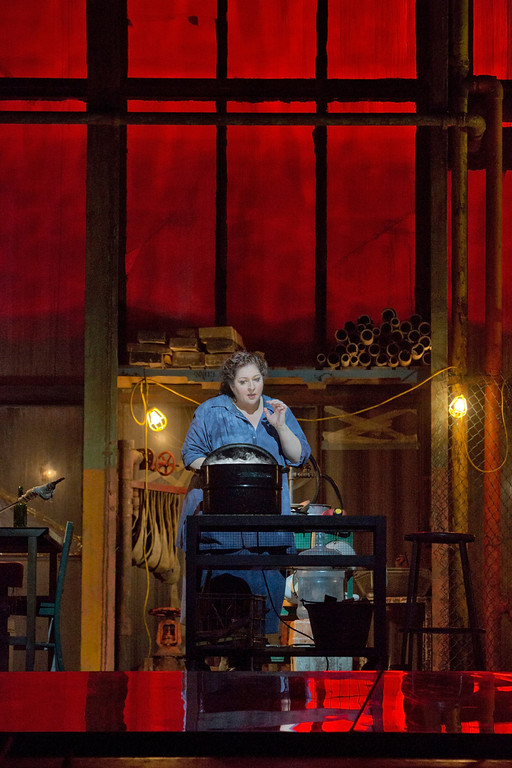
Whoever laughs last, laughs best—or, in the more elegant formulation by Arrigo Boito, author of Falstaff’s libretto: Ma ride ben chi ride / La risata finale. And in more than half a century of writing for the stage, Verdi has the last laugh with the ultimate joke: a fugue, that emblem of a fuddy-duddy, old-fashioned, academic, Teutonic sensibility, a virtual non-sequitur vis-à-vis the Italian operatic tradition he had inherited.

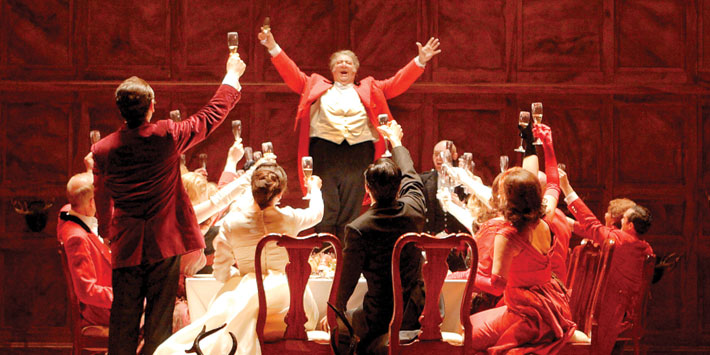
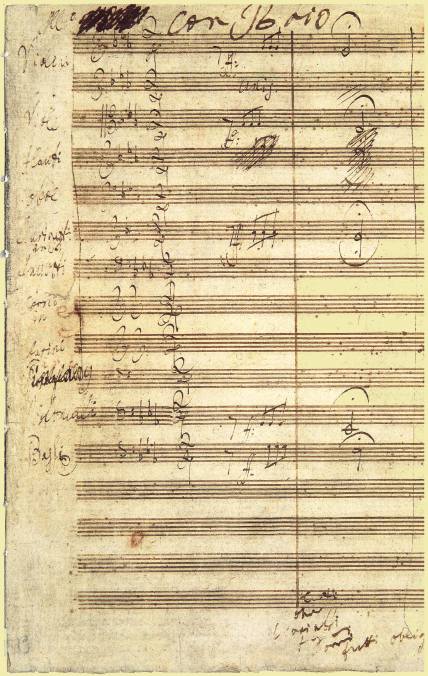
Yet the fugal capstone to Falstaff is a perfect and ingenious choice, theatrically and musically. After Sir John has been punked and had his drubbings, he’s the one who leads off the fugal chain reaction, as the entire ensemble joins to celebrate our shared humanity. Itamar Moses’ 2005 play Bach at Leipzig attempted to dramatize the fugue’s inherent theatricality—the way it wrests reconciliation from entanglement—but Verdi’s merry pranksters buoyantly sail free of any regrets, proving the power of his art to set the world right (at least for the illusory moments until the house lights come back on). Jester and jest become one. The rigorous form morphs into a bubbly champagne, ending with the orchestra’s zippy final chords. If Verdi alludes to the choral setting-things-straight culmination of Don Giovanni, he also seems to hint at the clear blue skies of Mozart’s “Jupiter” Symphony—albeit his is a punch-drunk Jove.

continue reading

Filed under: opera, Verdi

Alan Ayckbourn in Seattle with Sugar Daddies

Ayckbourn_copyright_Tony_Bartholomew

My recent interview with Alan Ayckbourn for Crosscut.com is up. Here’s a fuller version with some extra material that got cut in editing:

Since 1976, ACT Theatre has produced ten plays by Alan Ayckbourn – and that’s just a fraction of the 74-year-old English playwright’s catalogue. But this fall’s production of Sugar Daddies (2003) brings Seattle not only the honor of a North American premiere, but the presence of Sir Alan himself in his West Coast debut as a director. (He was knighted in 1997.)

Like most of his work, “Sugar Daddies” premiered at the Stephen Joseph Theatre in Scarborough (on the coast in North Yorkshire). Ayckbourn has maintained close ties there since early in his career, writing for its theatre-in-the-round configuration – a staging style he prefers. He stepped down as artistic director at the end of 2008 but lately appears to be busier than ever at the SJT with his projects as visiting director.

Ayckbourn’s breakthrough hit came with the London production in 1967 with Relatively Speaking, a fresh, hilariously constructed twist on the well-worn gag of lovers caught in a web of mistaken identity. (“The critics were shocked to see French windows instead of the kitchen sink – it seemed slightly reactionary,” he jokes.) Here already was the characteristic Ayckbournian touch, with its preoccupation with role playing and marital discontent. Some claim him to be one of “the world’s most-performed living playwrights,” though Ayckbourn’s own website points out “there is actually no plausible way to prove this statement.”

But what sets him apart is that his undeniably widespread – and sustained – popularity goes hand in hand with his untiring experimentation with theatricality and stagecraft.

And while he is usually thought of first and foremost as a comic master, Ayckbourn’s plays have become significantly more complex over time. Sugar Daddies in particular mingles satire and clever dialogue, taking a dark slant on a youth and beauty meets age and power scenario.

Emily Chisholm; photo by Nate Watters

Emily Chisholm; photo by Nate Watters

Set in the contemporary London flat shared by half-sisters Sasha and Chloé, the play explores how they are affected when the younger, naïve Sasha is befriended by the elderly Val (old enough to be her grandfather). His extravagant gifts and nights out to the opera distract her from asking too much about Val’s sinister background – even when she’s warned by Ashley, their one-eyed neighbor and a former cop whose own past connection to Val is veiled in mystery. Ayckbourn’s absurd yet meticulously crafted symmetries resemble a cautionary retooling of Cinderella, where sudden shifts in fortune prove too good to be true.

I met up with Sir Alan during a break from rehearsal to talk about Sugar Daddies, his remarkable career and the future of theatre.

TM: How were you persuaded to come to Seattle – and what made you choose Sugar Daddies in particular to show audiences here the director side of your career?

AA: It has been brewing for some years. When [ACT artistic director] Kurt Beattie came over to visit me in England, he slid me a schematic of the Allen Theatre, which is not so far removed from our own theatre in the round in Scarborough. [The 404-seat Stephen Joseph Theatre.]

The ethos [of ACT] is very close to it. Both are interested in new writing, but are also very egalitarian – not like the old style, where the stage management were below stairs, the actors upstairs. And much more friendly. I’ve gotten asked dozens of times in England, “Why are you going to Seattle?” And I said, “Because they asked me!”

I chose “Sugar Daddies” as a play that hasn’t been done here and that I would like to revisit. From my knowledge of working in the States, it’s the sort of play American actors could embrace. Some of my plays are so English you’d spend most of the rehearsal period explaining the class system. We are doing [Sugar Daddies] as set in England, but nonetheless it’s fairly universal in its concerns.

TM: It’s probably a bit of a surprise to many who love your plays that you actually spend much more of your time on directing than writing. Yet somehow you’ve managed to remain a wildly popular and prolific writer (77 full-length plays and counting).

AA: I’ve had three careers in theatre: I started as an actor and then took, as I call it, the “poison chalice” of directing. Once you feel you’re in control as a director, it’s harder to go back to acting. The directing career developed quite independently from my writing career at first. Then the two almost inevitably merged, but quite later on.

The rehearsal room can be quite a hostile place … if the actors suspect you don’t know what you’re doing. It takes quite a lot of experience before you can confidently handle a whole room of actors – particularly because they are often rather eccentric and extraordinary individuals. I do spend more time in the rehearsal room than at my computer these days.

Over the last few years I’ve tended to direct a minimum of two plays a year, one of which is always a revival from my back catalogue. And I’ll use the revival as a pro forma for the new play. Last year I did a revival of Absurd Person Singular, and on the back of that I wrote a new six-handed play, Surprises [both plays call for 3 men and 3 women].

TM: In a sense, Sugar Daddies is about the art of theatre itself, the way we’re constantly playing roles, whether we are aware or want to or not.

AA: I was fascinated at the way we pretend, we select. It’s best summed up by when you’re very young and you meet a girl and the inevitable moment comes when you want to take her back to meet the parents. And then you’re thinking, “How am I going to look against the backdrop of my parents, who still look at me as 8 years old?” And she’s thinking the same thing: “My whole illusion of myself is going to be shattered.”

People like Sasha respond to other people she senses have an expectation of her. She in turn has an image of old people as being friendly. “Uncle” Val is trying to put a very dark past behind him, and Sasha presents him with an edited version of herself. It’s not a deliberately deceitful thing – though I think, in Uncle Val’s case, it may be. For most of us, it’s a presentation of ourselves, which we sense the other is expecting.

For example: as a director, actors don’t want to meet you socially if you’re rolling drunk. Not that they actually think you are infallible, but they like to assume a state of infallibility. If you go out of your way to encourage that, with a confident manner, it helps.

TM: So no drunk Tweeting once rehearsals have started! But what you describe sounds almost like the same dynamic you show Sasha experiencing. She’s looking for some kind of approval and validation from her Sugar Daddy Val.

AA: It touches on the old Faust legend of selling your soul to the devil. A lot of the play is set up so you’re asking, is she going to go down the path of eternal damnation with Uncle Val or is she going to find a way out? Fortunately, there is a turning point and a momentary glimpse of the monster. It’s not that Sasha doesn’t know about that [part of him], but she chooses not to know about it. The pleas of ignorance – we do a lot of that; it’s a considerable human characteristic.

TM: One recurring idea in critiques of Sugar Daddies is the issue of the play’s tonality. Critics have seemed confused by its mixture and want to have it both ways: a dark, confectionless, yet somehow entertaining play. For the ACT production, you’ve even decided to rewrite the final scene between Sasha and her half-sister Chloé.

AA: Rereading the play, I thought Sasha goes through this experience pretty well unscathed. She escapes with just a singe. I wanted those last few moments to show that there’s part of Uncle Val that’s been left with her. If you’ve supped with the devil, you’ve probably burnt your tongue.

John Patrick Lowrie as ex-cop Ashley; photo by LaRae Lobdell

John Patrick Lowrie as ex-cop Ashley; photo by LaRae Lobdell


Val is probably the most evil character I’ve written. For some reason all my evil characters seem to begin with V: Uncle Val, Vic [Man of the Moment], Vince [Way Upstream]. It’s a strange little motif. The man playing it in Scarborough said, “This must be the most evil man I’ve ever played.” He comes from that old-style East End gangster mode; he’s a capo, a don.

There is a sense that Sasha is refreshingly clear-eyed at the beginning, the “country mouse” who has come into the city, while Chloé is an exaggerated “town mouse” — probably one of those people in the media who are always competing furiously. But she has a sort of mistrust of human nature by the end – something you see in children growing up. Sasha’s not quite the girl she was at the beginning; there is a sort of ruthlessness about her.

TM: Among other modern playwrights, who would you single out as the great “bards” who will last?

AA: I’m a great admirer of David Hare and Alan Bennett. One of the writers that had the most profound effect on me, when I was directing other people’s plays, was Arthur Miller. The great thing about being a writer directing other people’s work is that as a director, you’re more or less compelled to take the play apart in order to put it together again with the actors. You see the mainspring here, the cogs there. Miller was a terrific craftsman and had a brain on him the size of Britain.

I was very lucky I grew up at the crossroads for English drama. So I absorbed a lot of the old-fashioned, well-made plays, and then came [John] Osborne and [Harold] Pinter, who was an enormous influence of me. I even acted in an early production of The Birthday Party, which he directed. He was an extraordinarily unique voice. So I’m influenced by the Chekhovs through to the Pinters really. I was blessed with a double upbringing.

TM: You’ve remained remarkably loyal to theatre as an art form, while so many of your colleagues – not to mention younger writers – have gone over to the commercial payoff of TV, Cable, film. What does the future of theatre look like to you?

AA: There’s a bright curve of new dramatists coming up in England. I do think, because of the non-encouragement of new writers, there’s a danger in our theatres now of [these writers] not addressing the challenges of theatre, but of trying to adapt television and film ideas. I used to sit at my desk and read 3 or 4 plays a week. My heart used to sink if there was a play with 26 scenes: Where’s the conciseness of theatre?

And there is a veering towards monologue, which is quite popular now — not just as a dictate of economics, but a preference of dramatists. When I was teaching, I used to try to point out all the colors of the theatre palette. My mentor Stephen Joseph told me, “Yeah, break the rules, but first of all you’ve got to know what they are!” So he sat me down and made me write a well-made play. At least I’d been through the process, and I’ve been breaking the rules ever since.

Filed under: playwrights, theater

A Little Piece of Mexico

Plaza con la Catedral

Plaza con la Catedral

At the main Civic Center location of the San Francisco Public Library the other day, I chanced upon this exhibit:
A Little Piece of Mexico: The Postcards of Guillermo Kahlo and His Contemporaries. On display is an intriguing range of images from the private collection of San Francisco’s poet laureate Alejandro Murguia. They make it clear why Mexico proved so attractive to photographers and other artists seeking a fresh perspective around the turn of 19th/20th century — like German immigrant Guillermo Kahlo (father of the artist Frida Kahlo).

The enormous new market for postcards left a de facto visual record of Mexico right before the upheaval of the revolution in 1910. These postcards were sold at the tourist sites, of course, but they were also easily obtained at cafes, bookstores, even bus stops. The exhibit’s introduction explains what makes them unique:

Mexico in the early 1900s was practically unknown territory, rich in a diversity of people, customs, and ethnic dresses and a place of conflicts and wars, generals and traitors, beautiful women and dangerous men, stunning landscapes, volcanoes, rivers, baroque architecture and thousand year old pyramids. All of it engaging to the eye and the camera.

As old-fashioned written letters and postcards become increasingly obsolete, these tokens of the past acquire an additional aura that would have seemed so odd when they were just everyday, mass-produced objects.

Tehuana in Full Dress

Tehuana in Full Dress

Filed under: art exhibition

Peter Lieberson’s Final Word: Shing Kham

Peter Lieberson

Peter Lieberson

I can’t believe it’s been over two years since the passing of Peter Lieberson, a truly wonderful human being and a highly gifted artist. He had so much still to say when he left us.

For the posthumous Los Angeles Philhamonic premiere of Peter’s percussion concerto, Shing Kham, I had the unique privilege of being able to write about his final — but unfinished — word as a composer. I’m so grateful to Peter’s widow Rinchen Lhamo and the marvelous percussionist Pedro Carneiro for sharing their memories and insights regarding what Peter was thinking about when he worked on the score up until his untimely death in Tel Aviv on 23 April 2011.

Here’s the note I wrote for the LA Phil’s concerts:

For Peter Lieberson, working on what would be his final composition “was a life-sustaining and joyful activity,” according to the writer Rinchen Lhamo. She adds that it’s likely Pedro Carneiro’s “unique capacities as a percussionist had something to do with this: something brand new for Peter to wrap his mind around.” Lhamo was Lieberson’s wife when he died from complications of lymphoma in April 2011. Although he had been in treatment for some years, she recalls that her husband anticipated being able to complete Shing Kham up until his last bout of illness, which arrived suddenly and unexpectedly. Several other projects on the horizon – including an orchestral song cycle he planned to compose to poems by Lhamo – additionally indicate the resurgence of creative energy that accompanied work on the percussion concerto.

continue reading

Filed under: music news, new music, spirituality

Thomas Dausgaard Joins Seattle Symphony

Thomas Dausgaard (photo: Morten Abrahamsen)

Thomas Dausgaard (photo: Morten Abrahamsen)

Let’s face it: this has been a dreadful week in classical music news. “Not single spies, but in battalions” indeed: the abysmal mismanagement leading to the fiasco in Minnesota, ditto for NYC Opera, now Carnegie Hall on strike. So it’s especially cheering to get this piece of good news. The Danish conductor Thomas Dausgaard has just been named principal guest conductor of Seattle Symphony and will officially take over that post next season. From the press release:

Music Director Ludovic Morlot said, “I’m thrilled to welcome Thomas Dausgaard to the Seattle Symphony family. He is a truly great musician and I know that he will be an asset in further developing our orchestra as a world-class ensemble. I am greatly looking forward to this new artistic partnership.”

“Making music with the Seattle Symphony is an inspirational experience,” commented Thomas Dausgaard. “I feel honoured and thrilled about joining this eminent team, where music’s passion and joy is the language spoken. Thank you Seattle Symphony, Ludovic Morlot and the wonderful audience here for making me feel so welcome.”

Dausgaard’s appointment also marks the first time this post — typically found with many prestigious orchestras – has been created at Seattle Symphony. I have a feeling Dausgaard, 50, will make a powerful creative team with his younger colleague, the 39-year-old Morlot. Dausgaard will be in town for next this week’s concerts. (That was wishful thinking on my part, since I have to miss the concerts this week. Drat. Dausgaard will be conducting a program of Beethoven’s Triple Concerto and Schubert’s “Great” C major Symphony — seriously hate to have to miss this.)

Filed under: music news, Seattle Symphony

Holy Cabooses! Wilder’s The Matchmaker at Taproot

Matchmaker-Pam Nolte2

(Pam Nolte as Dolly Gallagher Levi in Taproot Theatre’s production of The Matchmaker; photo by Erik Stuhaug)

It’s surprisingly easy to mistakenly associate Thornton Wilder’s theater — or at least his most-famous plays — with feel-good, homespun, Norman Rockwell Americana. (Whether that represents a mistaken idea of Norman Rockwell is another question.) A similarly false impression clings to the widespread image of Aaron Copland, who even composed a score for the 1940 film of Our Town and later considered basing on opera on it — though the playwright declined, countering: “I write amusical plays.”

Of course The Matchmaker, a Broadway and West End hit in 1955 after it bombed in its earlier 1938 incarnation as The Merchant of Yonkers, did morph into the musical Hello, Dolly! in the following decade. But the brassy success of the latter — which, admittedly, I’ve never been able to fathom — only reinforced the notion that Wilder’s play is just another charming twist on the happy alliance between romance and the American Dream.

The new production of The Matchmaker currently on the boards at Seattle’s Taproot Theatre is certainly entertaining. But in director Scott Nolte’s version, it also welcomely embraces Wilder’s deft homage to a vanished, rawer era of American theater-making. For the most part, there’s no embarrassed smoothing-over of the popular farce — complete with its own character types — that was already a fossil when Wilder devised this valentine to it.

Matchmaker-hat store

(Asha Stichter and Natalie Moe as Minnie Fay and Irene; photo by Erik Stuhaug)

Apart from an opening scene that drags, this Matchmaker is delightfully paced and benefits from a consistently focused ensemble energy. The renegade store clerk Cornelius Hackl (given an especially winning turn by Robert Hinds) and the scheming, ambitious milliner Irene Molloy (Natalie Anne Moe, channeling the moxie of Gretchen Mol’s Gillian on Boardwalk Empire) make their wide-eyed anticipation plausible when they remark: “The world is full of wonderful things!”

However “amusical” he may have thought his plays, Wilder’s build-up of the confrontations between the tyrannical merchant Horace Vandergelder and his underlings feels genuinely scherzo-like. Nolte makes room for the other concerns Wilder voices through the pleasure-seeking vehicle of his farcical plot.

Matchmaker-clerks

(Robert Hinds and Brad Walker as Cornelius and Barnaby; photo by Erik Stuhaug)

As these characters become entangled in mixed-up or feigned identities and search for mates and fortunes, they muse about the things that really matter to them. Against the backdrop of the Gilded Age and its class differences — effectively telegraphed by Sarah Burch Gordon’s delightful palette of costumes — Mrs. Dolly Gallagher Levi, the matchmaker in question (among other dubious pursuits), realizes it’s time to let go of memories of her late husband and “live among human beings” again: to be “a fool among fools” once more rather than “a fool alone.” Pam Nolte (Scott Nolte’s wife) animates her portrayal of the ever-confident Dolly with a well-calibrated hint of her disappointments.

Along with his humanist touches, Wilder works in a trenchant commentary on the greedy excess to which the drive for material success can lead. “The difference between a little money and an enormous amount of money is very slight, and that, also, can shatter the world,” observes Dolly, who espouses her own economic theory of “spread-it-around” capitalism. “Everybody thinks when he gets rich he’ll be a different kind of rich person from the rich people he sees around him,” Cornelius says. “Later on he finds out there’s only one kind of rich person. And he’s it.”

The point gets rather blunted in Robert Gallaher’s approach to Horace Vandergelder. Instead of the authoritarian, hard-as-nails “monster” who intimidates everyone, secure in his “half million,” Gallaher comes through as too domesticated, even mildly bemused by his sense of superiority.

Matchmaker-Horace

(Robert Gallaher as Horace Vandergelder; photo by Erik Stuhaug)

Brad Walker, on the other hand, makes a memorable impression by playing up his character type as Barnaby Tucker, the naive sidekick to Cornelius in search of “an adventure” on their self-declared day off. So does Kim Morris in her hilarious depiction of the eccentric Miss Flora, the friend of Dolly and Horace’s late wife. During the denouement in her New York house (a surprise for anyone who knows only Hello, Dolly!), Wilder uses Miss Flora to parody treacly sentiments about “true love.”

Mark Lund’s simple sets (including a painted urban backdrop) and sound design transform the small stage area into 1880s New York with a bare minimum of suggestion. The real time change is conveyed through Wilder’s earthy language — spiced at times with clever, Oscar Wilde-like turns of phrase — and the actors’ demeanor, though, and it all plays out as less dated than you might expect.

The Matchmaker, which closes Taproot’s current season, plays through Oct 19 at 204 N. 85th St., Seattle; tickets at 206 781-9707 or online.

–Thomas May (C) 2013 All rights reserved.

Filed under: review, theater

All Eternity To Rest: Mark Mitchell’s Burial

2013-09-20 19.11.05

The hot exhibit in Seattle right now is Burial by Mark Mitchell at the Frye Museum — and it’s unlike anything I’ve seen before. Mitchell is a local legend who moved from the theater world and costuming to fashion design, specializing in wedding gowns and outrageously imaginative costumes worn by burlesque performers — and, most recently, burial clothing and accessories.

2013-09-20 19.15.03

“Burial” presents a collection of these garments for the Other Side: stunningly beautiful ensembles of hand-stitched ornaments, radiant silk organza, ruffles, keepsake pockets, burial shoes and mitts lovingly adorned with knitted ribbons — all cocooning their subjects in their solemn, dignified poses. The closer you look, the more of these details become apparent, and, at the same time, mysterious and opaque. We are told that the vestments have been individualized on the inside, private messages kept secret by the deceased.

2013-09-20 19.17.19

For opening night at the Frye, live models displayed the collection as they lay supine on mirrored glass panels, playing the role of corpses lovingly prepared for burial: “Buried in the earth, incinerated, or at the bottom of the sea, these vestments are intended to degrade readily, leaving nothing behind,” as Mitchell describes his creations. Each of the individual costumes was “inspired by, and created for, the nine muse/models” who presented them. This was the only chance to see them in this “living dead” context: after opening night, until the exhibit closes at the end of October, mannequins were installed to display the “Burial” ensembles.

2013-09-20 19.12.36

Talk about aura: as the continually flowing crowd of spectators milled about, the models, also outfitted in waxy, corpse-like make-up, couldn’t help registering their awareness of these interlopers, no matter how hard they tried to keep eyelids from trembling. The tension was part of the experience — as was the setting, the restaged, busy salon-style display of paintings from the collection of the museum’s founders, Charles and Emma Frye. Cellist Lori Goldston, wearing another gown specially designed by Mitchell, improvised (?) a mournful meditation.

2013-09-20 19.12.13

Mitchell has been keeping a blog on the ongoing evolution of this project. Why devote so much attention to dressing those about to be buried? “People plan for months or years to devise the ideal wedding costume but rarely think of what they’ll wear for life’s ultimate appointment. I use traditional fine-sewing techniques to create garments that honor the deceased with a thoughtful integrity of artistry, design, materials, and workmanship that offer an alternative to the tradition of ‘Sunday Best’ or the uninspired offerings available at this time in the funeral industry.”

1379729497423

Filed under: art exhibition, fashion, Frye Museum, visual art

The Ark Nova Project

Ark Nova

Ark Nova

This is brilliant — and this humanitarian, socially committed project makes me very proud to be associated with the Lucerne Festival (I serve as the English program editor). It’s the brainchild of Intendant Michael Haefliger, the Japanese architect Arata Isosaki, and the Indian-born British sculptor Anish Kapoor: a concert hall that is indeed mobile, designed in a way that makes it quick to assemble and then take apart to move to another location.

It all resulted from the urgent desire to do something to help the victims of the massive earthquake and tsunami in March 2011 that wrought such incredible devastation in northeastern Japan. Most of the world has forgotten that two and a half years on, the local population in the most heavily affected areas is still living in makeshift housing.

In the case of Ark Nova, the idea was to somehow deploy artistic expertise to improve conditions for these people. “With our humanitarian cultural project we want to contribute to the ongoing reconstruction,” says Haefliger. The Ark Nova — “ark” being the German version of the Greek arche for “beginning,” though I also like the verbal resemblance to Noah’s Ark — is meant to provide a venue for desperately needed cultural inspiration, where the local populace can get together as a community.

“We want to bring artists from around the world to Tohoku to restore strength and bring back confidence for the people in the region affected by the disaster in 2011,” explains Isozaki. (The project’s name, I’m told, also refers to an old Japanese proverb, but I don’t know the details.)

Ark Nova interior

Ark Nova interior

Here’s one of the official descriptions of this amazing design:

The shell consists of a PVC-coated polyester tarpaulin of over 2000 square meters. It is 0.63 mm thick and weighs 1700 kg. When inflated, the hall has a volume of over 9000 cubic meters. In the final stage, the maximum expansion is 29 meters wide, 36 meters long, and 18 meters high. Therefore this unique construction offers a space of 680 square meters for a large stage and around 500 seats, allowing for the concept of flexible use for various events appealing to different large audiences. The audience benches are made of wood from cedar trees in the region of the Zuiganji Temple of Matsushima which had been uprooted by the disaster of March 2011. Thus a link will be forged between LUCERNE FESTIVAL ARK NOVA and this place of historical and spiritual significance.

Ark Nova overview

Tomorrow Gustavo Dudamel will be on hand to get the Ark Nova started. He’s going to lead a workshop of local kids, who are forming an ad hoc orchestra. Periodic updates on the project will appear here.

Filed under: architecture, cultural news

Recovering Genius: Pope Francis and Wagner

Pope_Francis_in_March_2013

(Pope Francis in March 2013)

By now, the extraordinary interview Pope Francis gave to fellow Jesuit Fr. Antonio Spadaro, which was recently published in America Magazine, has generated incredible interest on many fronts, from the Pope’s comments on moral priorities and his memorable metaphor of the Church as a “field hospital” to his discussion of art and creativity.

When discussing human understanding, Pope Francis revealed a fascinating perception of Wagner:

When does a formulation of thought cease to be valid? When it loses sight of the human or even when it is afraid of the human or deluded about itself. The deceived thought can be depicted as Ulysses encountering the song of the Siren, or as Tannhäuser in an orgy surrounded by satyrs and bacchantes, or as Parsifal, in the second act of Wagner’s opera, in the palace of Klingsor. The thinking of the church must recover genius and better understand how human beings understand themselves today, in order to develop and deepen the church’s teaching.

Maybe I’m on the totally wrong track here, but I almost notice an echo here of Wagner’s own formulation of the relation between art and religion from the time of Parsifal:

When religion becomes artificial, art has a duty to rescue it. Art can show that the symbols which religions would have us believe literally true are actually figurative. Art can idealize those symbols, and so reveal the profound truths they contain.

The entire interview with Pope Francis, “A Big Heart Open to God,” is in English translation here.

Filed under: aesthetics, religion, spirituality, Wagner

Truth and Beauty

Met opening night 23 Sep  2013

(Met Instagram image of opening night: chandeliers and the crowd on plaza)

Tonight kicks off the new season at the Metropolitan Opera. Here’s my feature for the opening production — one of my favorite operas — Tchaikovsky’s Eugene Onegin:

Scenarios of unrequited love are the stock-in-trade of opera composers, but with Eugene Onegin Tchaikovsky achieved something far beyond another varia-
tion on an all-too-familiar theme. For Deborah Warner, the opera offers “a complete portrait of the human condition, viewed through the frame of the young approaching
life and love for the first time.”


(Letter Scene, Act I: Anna Netrebko in rehearsal for opening)

continue reading

Filed under: Metropolitan Opera, opera

Archive

Enter your email address to follow this blog and receive notifications of new posts by email.