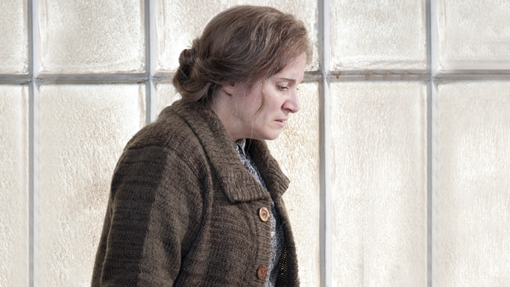
Patricia Racette as Dolores Claiborne; photo by Scott Wall
Dolores Claiborne the new opera by composer Tobias Picker and librettist-poet J.D. McClatchy, opens in just a week at San Francisco Opera. I recently interviewed Picker and McClatchy about their collaboration for my latest SF Opera feature:
The story really matters. That premise may seem self-evident, but there’s a long-standing cliché, at least as far as opera is concerned, that the story is what you have to put up with to get to the music—never mind that Verdi and Puccini obsessed over their choice of subject matter and tormented their librettists whenever it was time to consider a new project for the stage. One of the happy side effects triggered by the American Renaissance in opera that’s been unfolding for the past two to three decades has been to puncture the silly notion that the story is, at best, incidental to the experience.
“For me,” asserts Tobias Picker, “opera is about telling stories in music.”
Kate Molleson advises against uptightness in the concert hall:
The classical music community gives mixed messages. Accessibility is the industry catchword. In some respects, we’ve relaxed into being able to dress how we like and experience concerts as an everybody, everyday event. In others, we’ve come to demand sanctimonious listening environments of silence and absolute stillness. I’d be the last person to advocate stuffiness in the concert hall: there’s nothing more grim than the tut-tuts of an officious crowd. Such a response alienates those not in the know – and if our aim is to welcome new listeners to the fold, we can’t make them feel daft when they get there.
Yet I hate being distracted from great music by careless noise. At worst, it can fundamentally change the fate of a performance, like when Mitsuko Uchida played Beethoven’s Fourth Piano Concerto in Edinburgh last month and was interrupted seconds before the opening chord by a loud clatter. She was visibly startled, had to reposition her hands over the keyboard, and never seemed to fully regain her focus.
We all know about the paradox of the New Media Age: information everywhere, our memories now downloaded onto our phones, instant access to any fact, but…is this overflow of info making us less critical? Just which of those “facts” are actually true?
Nowadays it’s not just the ocean of information that’s the problem: it’s how much bad information is out there, from dangerously misguided “medical” advice to half-baked assertions and those incorrect/half-correct little memettes on which music writers rely far too much — and in the process keep in circulation.
This is where the new media ironically end up working against the diffusion of knowledge. The problem is that certain factoids that sprouted up somewhere eons ago, in a seriously outdated book or note, might have represented the best knowledge back then (or sometimes just a brazen guess), but these end up getting repeated thanks to the laziness of program annotators. Especially once they’ve become enshrined in Wikipedia, there’s an echo chamber effect. Ultimately it’s harder than before for the actual facts to emerge from the clutter.
I recently ran across an example of this while researching a relatively early Mozart piano concerto: the Piano Concerto in E-flat major, K. 271, dating from the composer’s years in Salzburg, in January 1777 (when he just turned 21). It’s still known by the nickname “Jeunehomme” (even though Mozart referred to the French woman for whom he wrote it as “die jenomy”) because the real story somehow fell through the cracks. A French biographer later decided that Mozart — that erratic, fun-and-games speller — was actually writing shorthand for “Jeunehomme,” or perhaps just trying to write the French name down impressionistically.
And that started the little meme about a “mysterious Mlle. Jeunehomme” and her allegedly unexplained trip through Salzburg in 1777. (For some reason, this woman, assumed to have been unmarried according to the scenario, remained half anonymous even while she was performing in the musical capital of the time). Surely she must have been a keyboard whiz to have impressed young Wolferl enough to inspire him to dash off a concerto that, by general consensus, marks an incredible advance in scope, self-confidence, and originality. (The whole thing is actually longer than all those piano concerto masterpieces from the final Vienna decade.)
That’s why the question of which pianist Mozart had in mind for K. 271 — perhaps he just wrote it for himself after all? — isn’t a trivial, pedantic one: this is a genuinely watershed composition. The routine story outlined above was all fine and well until about a decade ago, when the Austrian musicologist Michael Lorenz, in an amazing feat of detective work, discovered that there was a very real musician behind this: Louise-Victoire Jenamy (1749–1812), eldest child of Jean-Georges Noverre, a major figure in the history of French ballet and a very good friend of the Mozarts.
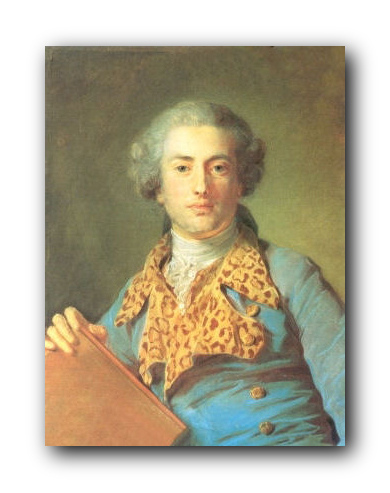
French choreographer and dancer Jean-Georges Noverre, father of the pianist Louise-Victoire Jenamy
Yet to this day it’s still easy to find this outdated explanation repeated over and over. Mozart’s pianist continues to appear in recent program notes as the “elusive Mlle. Jeunehomme” or the faceless “fine pianist” we know only as “Mlle. Jeunehomme.”
Maybe I’m making far too much of what seems to be a minuscule point that doesn’t really merit this attention. It’s not exactly the equivalent of Hitler invading Poland, true enough. But it honestly seems to me there’s more at stake here than an obscure academic footnote. What bothers me is that this is a symptom of the bad info out there that just keeps replicating. When the latest research is so easily accessible via a google search, there’s less excuse than ever not to question received ideas. Ignoring the latest discoveries seems to only underscore the reputation of classical music as mummified, out of touch with the present day.
And there really is an interesting story lurking behind Lorenz’s research. You’d think that a scenario involving a woman pianist who apparently had some kind of solo career in the 1770s would inspire more curiosity. Sure, there were plenty of women students at the time, and Mozart wrote piano sonatas and the like for them, but this is a major standout piece in his own career. I wonder whether any more evidence about Louise-Victoire Jenamy née Noverre will turn up. Seems a ripe topic for a speculative novel….
Meanwhile, enjoy one of today’s great pianists in K. 271:
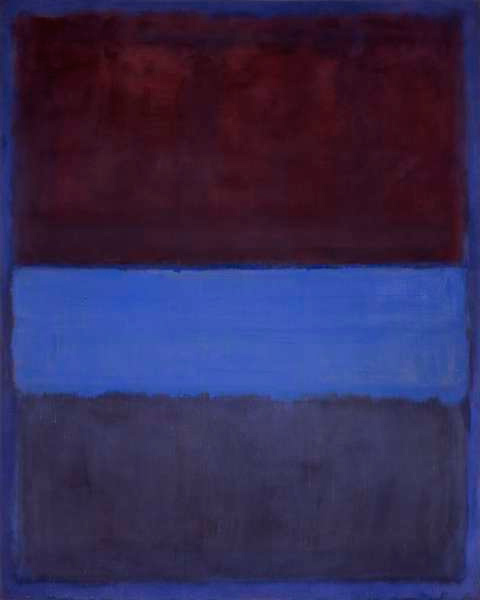
Mark Rothko: No. 61 (Rust and Blood), 1951; LAMOCA
The Florida-based art historian and curator Daniel A. Siedell reflects on art’s spiritual cost in a recent interview with Meaghan Ritchey for The Curator:
Being human means dealing with limitations. I think that the overly romantic idea that somehow creativity only takes place when you’re free of restrictions keeps a lot of good art from entering the world—or, perhaps, it actually prevents a lot of bad work from entering the world…What makes the existence of art in the world so remarkable is that it comes at great cost, sometimes through enormous challenges, but almost always through the slow drip of inconveniences, frustrations, and self-doubt.
This is why I am fascinated by what happens in the studio as the artist devotes her life to making artifacts that have no apparent use in the world, artifacts that are often ignored and misunderstood, especially in the church. Artists lean into that fear that every human being has—that the work we do doesn’t matter.
I’m attracted to artists who, on a daily basis, are making the commitment to be a particular kind of artist, in spite of the challenges and the limitations of their life situation—artists who have the faith to keep doing what they’re doing. They don’t have it all worked out—doubting their sanity and the wisdom of their choices. But in faith, they go to the studio and work. In the process they’re strengthening my faith in art, offering me assurance, and serving as a means of grace to me as I struggle with the wisdom of devoting my life to looking at smelly pigments smeared on a scrap of canvas amidst all of the very difficult challenges and responsibilities in my life.
My new essay on Sergei Prokofiev’s fantastic and way-underplayed Third Symphony is now up on San Francisco Symphony‘s web site for the program Michael Tilson Thomas is conducting next week. Thank you, MTT, for championing this work!
Music depicting the ravings of demonic possession, eroticized spiritualism (or spiritualized eroticism), medieval witchcraft and sorcery, and a convent of nuns whipped into mass hysteria—no, it’s not the score to a Stephen King film but a work that has a decent claim to being Sergei Prokofiev’s operatic masterpiece: The Fiery Angel (Ognenniy angel in Russian). A labor of love—and great frustration—The Fiery Angel also served as the source for his Third Symphony (even including much of its orchestration). Prokofiev wrote that he considered the latter “to be one of my best compositions.”
To prepare for a new essay, I spent some of last week immersed in Ralph Vaughan Williams’s breakthrough composition from 1910, A Sea Symphony – also known as the First Symphony (though he didn’t get around personally to numbering the first three of his nine symphonies).
While it has its weak moments, I wish this work were performed more often, but it’s never really caught on with American audiences, and the score poses a huge challenge for the chorus. By a remarkable coincidence, A Sea Symphony premiered exactly one month after Mahler’s Eighth (that incredible amalgam of medieval Church hymn and the final scene of Faust). Both works represent unclassifiable hybrids of cantata, symphony, and oratorio, taking the “model” of Beethoven’s Ninth to new extremes. And five years before that, Debussy’s La mer was first performed in Paris. (There was also a growing body of sea-oriented compositions by Vaughan Williams’s compatriots.)
For Vaughan Williams, though, the real impetus wasn’t to somehow paint the sea in orchestral-choral terms but, instead, to give shape to the oracular insights he’d gleaned from his immersive reading of Walt Whitman. He chose texts from Leaves of Grass that use the sea to figure the human soul’s yearning for “restless explorations” and the like:
O vast Rondure, swimming in space,
Covered all over with visible power and beauty,
Alternate light and day and the teeming spiritual darkness,
Unspeakable high processions of sun and moon and countless stars above,
Below, the manifold grass and waters,
With inscrutable purpose, some hidden prophetic intention,
Now first it seems my thought begins to span thee.
(Talking about our favorite VW symphonies, my friend Q said, “I think I often want Sibelius to be more pastoral, and Vaughan Williams less so, in the matter of symphonies.”)
What would a composer who was setting out today to write an ambitious work inspired by the metaphorical possibilities of the sea come up with, I wonder? Would it even be possible not to take account of the dire state of the oceans? There’s no escaping it, from the ongoing radioactive leakage at Fukushima to this recent study by Australian scientists concluding that “humans have put so much plastic into our planet’s oceans that even if everyone in the world stopped putting garbage in the ocean today, giant garbage patches would continue to grow for hundreds of years.”
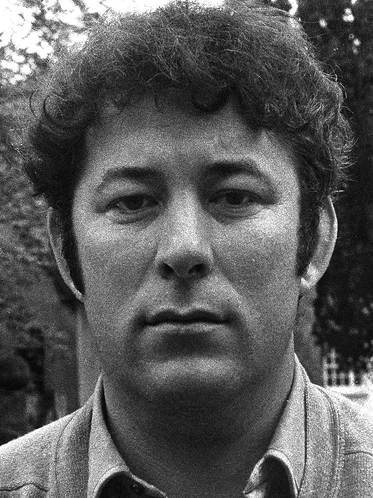
Sad news of the death of Seamus Heaney on Friday. Today his funeral was held at the Church of the Sacred Heart in Donnybrook in south Dublin. Heaney’s final words to his wife, Marie — via text message from his hospital bed — were reported to have been in Latin: “Noli timere” (“Don’t be afraid”).
Heartening to see evidence of a culture where poetry still seems to matter: The Irish Times has been offering widespread coverage of Heaney’s legacy, and, according to The Guardian, at Sunday’s All Ireland Galiec football semi-final between Kerry and Dublin, “more than 80,000 spectators clapped for two minutes in appreciation of Ireland’s national poet.”
In a post for The New York Review of Books, Christopher Benfey recalls what he learned from Heaney, including “the un-teachable part” of writing poetry, the part related to “Lorca’s notion of duende, a mysterious dark fire of inspiration, a demonic rage, which, as I remember, Lorca associated with bullfighting and flamenco.”
“Some poems were like drawings, he used to say, gesturing with a quick downward zigzagging stroke of the pen, and some were like paintings. You were lucky if the poem came quickly, all in one piece. He would often quote Frost, from “The Figure a Poem Makes”: “like a piece of ice on a hot stove the poem must ride on its own melting.”
The continued outpouring of tributes and memories has been remarkable. Here’s a sampling:
Currently on view at the de Young Museum in San Francisco is a must-see retrospective: Richard Diebenkorn: The Berkeley Years (1953-1966) (through September 29). This exhibit of more than 130 paintings and drawings curated by Timothy Burgard is a revelation on many levels.
There are insights to be gained here not just into the narrative of this major artist’s evolution but about the seductions of abstract and figurative painting relative to each other, about the influence of a particular landscape, its aura and light, on those aesthetic choices, and — most intriguingly for me — about an artist’s capacity for self-critique and unexpected leaps.
As you work your way through the context of Diebenkorn’s experiments with light and texture, the sudden reemergence of the human form is haunting, even astounding, upending comfortable notions of the historically inevitable “progress” of 20th-century painting in a way that has relevance for the similar tug-of-war between serialism and tonality among composers of this period.
Even the abstract paintings from the early years in Berkeley reveal an ambiguous attitude toward the “real world.” They are, as the excellent catalogue by Timothy Anglin Burgard, Steven A. Nash, and Emma Acker aptly describes it, “not completely nonobjective, or lacking in references to imagery, real or imagined.”
In Richard Diebenkorn’s own words:
All paintings start out of a mood, out of a relationship with things or people, out of a complete visual impression. To call this expression abstract seems to me often to confuse the issue. Abstract means literally to draw from or separate. In this sense, every artist is abstract … a realistic or nonobjective approach makes no difference. The result is what counts.”
In a substantial and thought-provoking article in The New Republic, Philip Kennicott grapples with the issue of American distrust of “cultural authority” and how it affects the identity crisis suffered by today’s orchestras.
“The problems are financial and cultural, and the two are intertwined,” he observes. This year’s Pulitzer Prize winner for criticism, Kennicott compares the self-questioning undergone by American orchestras to a “protracted and painful Vatican II,” while the failure of the traditional subscription model has put orchestras in the same sinking boat as newspapers in the Internet era. As a last-ditch survival effort, orchestras have been forced to create a new paradigm based on audience segmentation, performing not just classical concerts but presenting a smorgasbord of watered-down “special events.”
But the most paradoxical and distressing result is the utterly generic quality of what most American orchestras now offer. By parsing audience taste to smaller fractions, the concert schedule in Oklahoma looks more and more like the concert schedule in Maine. At the League conference, the mantra was all “local, local, local”—that orchestras will survive only by catering in nuanced ways to their local constituents (not to audiences or listeners or music lovers, who are all passé). But a tendency toward groupthink across the field has led to the repetition of the same solutions, few of them successful or in any way particularly local.
Lenny in 1971, when he was rehearsing his new work Mass to open the Kennedy Center
So today Leonard Bernstein would have turned 95 [97]. If he were Elliott Carter, he’d still have about nine [seven] years left to share his genius with us — and Lord knows the world could desperately use it. I can still feel a pang when I pass by the Dakota on Central Park West; strangely, that Sunday afternoon in October when he died there doesn’t seem so far off.
I got to meet him just once, near the end of his life, when he was touring with the Vienna Philharmonic, conducting a program of Mahler Five paired with the Mozart Clarinet Concerto. I waited patiently afterward to get him to sign the book I happened to have on me — the first volume of Ernst Bloch’s Das Prinzip Hoffnung, which immediately prompted him to set aside his bottomless glass of Ballantine’s scotch and exclaim incredulously, “That’s my favorite book! Do you realize Bloch is the perfect book to go with Mahler?! Unbelievable!” And then he took another deep drag on his endless chain of L&M cigarettes.
Whenever I used to hear about folks who first fell in love with music thanks to the inspiration they found in Leonard Bernstein’s famous Young People’s Concerts, their accounts simultaneously intrigued me and left me feeling a touch jealous. The heyday of the series was before my time, so I never ended up seeing any of them until years later, when they became available on DVD. I can’t help but imagine how much these would have changed my life, too, if I’d had the opportunity to discover them when I was growing up.
Actually, I do have another gift from Lenny for which I remain eternally grateful. I can vividly recall chancing upon some PBS re-broadcast of his legendary Norton Lectures, first delivered at Harvard in the early 1970s and drawing on Noam Chomsky’s linguistic theory of transformational grammar, just around the time music was starting to become a force in my life.
Instantly I was hooked. To judge by what I can still remember from that first viewing — even taking into account the “creative reconstruction” that’s inherent to the process of memory — this encounter was remarkably formative. It didn’t just serve as my first crash course in music history and theory, in how to listen beyond the surface and look for structures and connections, but it even imparted a whole philosophy about music and its capacity to mean, to be at least as significant as everything else I cherished — maybe even more.
“I also believe, along with Keats, that the poetry of earth is never dead,” I remember Lenny declaring in his credo, “as long as spring succeeds winter, and man is there to perceive it.” The way he imparted these observations, as if they were a confidence shared with his prized students, was a perfect example of yet another gift of this impossibly gifted, complicated, multi-layered man — Bernstein as the great teacher and rabbi. He ended with this summing-up:
I believe that our deepest affective responses to these languages are innate ones that do not preclude additional responses that are conditioned or learned. And that all particular languages bear on one another, and combine into always new idioms perceptible to human beings, and that ultimately these idioms can all merge into a speech universal enough to be accessible to all mankind. And that the expressive distinctions among these idioms depend ultimately on the dignity and passion of the individual creative voice.
And finally, I believe that all these things are true, and that Ives’ “Unanswered Question” has an answer. I’m no longer quite sure what the question is, but I do know the answer, and the answer is, “Yes.”
Lenny the polymath: here he conducts and plays solo in one of the most exquisite scores I know, Ravel’s Piano Concerto in G.