Despite the recent government shutdown, this month’s world premiere of george WASHINGTON by the National Symphony went ahead as scheduled. Here’s the essay I wrote for the program:
“I believe all things will come out right at last, but…the people must feel before they will see.” These words of George Washington (1732-1799), observes Roger Reynolds, might serve as the epigraph for his new composition. They occur in the final section of the libretto for george WASHINGTON, which Reynolds carefully selected and assembled from the diaries and letters of the iconic figure. In comparison with Washington’s relatively “wooden” speeches, which represent a “publicly constructed persona” intended to shield his imposing image, these more intimate sources proved to be a wellspring: “I was staggered by his wisdom, his sensitivity, even his ability to be poetic and to make emotively potent statements.”
The priority of experience as the gateway toward true understanding, Reynolds adds, is an idea that recurs in Washington’s writings, but it also expresses the composer’s own goal for the work. He envisioned george WASHINGTON as a multimedia amalgam of orchestral music, narration, visual projections, and computer-processed “surround” sound. All of this elaborate technical apparatus, in the end, is meant to provide an immersive experience that can “provoke the imagination and arouse in the audience some sense of their own relationship to Washington as a human being. It’s not about giving a history lesson but about trying to enter into Washington’s world.”
Yesterday evening Seattle’s Benaroya Hall was the gathering place for a large crowd of musicians, music lovers, friends, and members of a very extended family who were there to commemorate Toby Saks. She died two and a half months ago, just after a particularly successful edition of the annual summer Seattle Chamber Music Society Festival, her baby, had come to an end.
Toby Saks’s legacy as a cellist, educator, festival organizer, champion of new talent, and overall remarkable human being was recalled last night from many different angles. There were moving personal anecdotes from her circle of friends and peers. Most significantly, the event centered around performances featuring a combination of local musicians and others traveling from around the country — over 60 musicians, all told. They made it clear that it is through living music most of all that Toby would want to be remembered.
Quite a few were wearing buttons custom-made with a photo of the cellist smiling and the inscription “I’m Here for Toby.” The official program was framed by excerpts from Toby’s extensive archives — performances restored from reel-to-reel tapes and converted to digital format by her brother, Jay David Saks, a musical producer for the Metropolitan Opera.
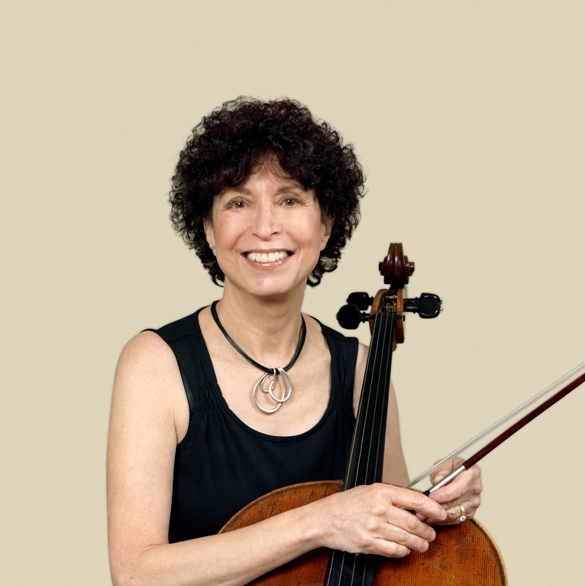
Toby Saks – (c)Seattle Chamber Music Society
One of the restored pieces listed in the program was of the Dvořák Cello Concerto as recorded by Toby at 19 with the Kol Yisrael Symphony Orchestra (in Jerusalem, 1961). Gerard Schwarz, the Seattle Symphony’s conductor laureate, spoke eloquently of the first time he had heard her playing, which happened to be this very work. It took place at the High School of Performing Arts in New York – her alma mater, where Schwarz was then studying – as Toby as en route to participating in and winning the Pablo Casals Competition in Israel.
Schwarz reminded us that Toby was among the very first women cellists of the New York Philharmonic and noted the many ways in which her musicality continued to astonish and inspire him throughout their decades together in Seattle. Schwarz himself led a string orchestra (some Seattle Symphony players with mostly SCMS associates) in a rich-voiced account of the “Elegia” movement from Tchaikovsky’s Serenade for Strings to open the celebration. For all the sense of loss and the meditative, even solemn character of most of the musical selections, that’s exactly what the event was: “This is a celebration of life,” her husband, Dr. Martin Greene, reminded everyone. “It’s not about mourning.”
Greene introduced a video tribute looking back over Toby’s 30 years heading the Chamber Music Festival she had founded in 1982. Her fellow musicians competed to outdo each other with their praise and gratitude for how much she had influenced their lives, their careers, converging on a shared theme of “Mama Tobs” as an insatiably generous and passionate advocate for music. Violinist James Ehnes, who took over as artistic director of SCMS two years ago, described what a vital force she had been, operating a complicated network and interacting with hundreds of musicians through the years. Robin McCabe, director of University of Washington’s School of Music, recalled Toby’s “feisty” vitality and fierce love of her students.
Of the many remarkable musicians who were on hand to perform in Toby’s honor, cellist Robert deMaine’s performance of the Largo from Chopin’s Cello Sonata (with pianist Jon Kimura Parker) struck me as especially heart-felt, to the point that his warmth of phrasing seemed to be speaking directly to Toby – cello to cello, as it were.
A particularly notable moment was the premiere of a new piece, spontaneously composed in memory of Toby Saks by Lawrence Dillon as soon as he learned of her passing. Dillon had gotten to know her only recently in connection with the chamber work he was commissioned to write for this past summer’s festival. His Passing Tones, for three cellos and violin (Ehnes and deMaine, Jeremy Turner, and Andrés Díaz). This compact, elegiac essay carried a poignant reminder of the principles of ensemble and the individual voice, the creative tension between them, that’s at the heart of chamber music making – and about which Toby was so passionate.
Martin Greene introduced the closing number, remarking there could be no better way to end than with a composer his wife especially loved, rendered by an orchestra of her favorite instrument, the cello. And so 19 cellists took the stage, with Schwarz again conducting, to play the arrangement by Heitor Villa-Lobos of Bach’s Prelude No. 8 in E-flat minor from Book One of the Well-Tempered Clavier. A prelude, not a postlude, speaking worlds about the enduring ways in which Toby touched the lives of those around her.
I can’t believe it’s been over two years since the passing of Peter Lieberson, a truly wonderful human being and a highly gifted artist. He had so much still to say when he left us.
For the posthumous Los Angeles Philhamonic premiere of Peter’s percussion concerto, Shing Kham, I had the unique privilege of being able to write about his final — but unfinished — word as a composer. I’m so grateful to Peter’s widow Rinchen Lhamo and the marvelous percussionist Pedro Carneiro for sharing their memories and insights regarding what Peter was thinking about when he worked on the score up until his untimely death in Tel Aviv on 23 April 2011.
Here’s the note I wrote for the LA Phil’s concerts:
For Peter Lieberson, working on what would be his final composition “was a life-sustaining and joyful activity,” according to the writer Rinchen Lhamo. She adds that it’s likely Pedro Carneiro’s “unique capacities as a percussionist had something to do with this: something brand new for Peter to wrap his mind around.” Lhamo was Lieberson’s wife when he died from complications of lymphoma in April 2011. Although he had been in treatment for some years, she recalls that her husband anticipated being able to complete Shing Kham up until his last bout of illness, which arrived suddenly and unexpectedly. Several other projects on the horizon – including an orchestral song cycle he planned to compose to poems by Lhamo – additionally indicate the resurgence of creative energy that accompanied work on the percussion concerto.
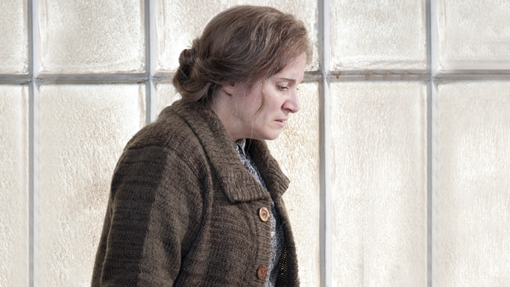
Patricia Racette as Dolores Claiborne; photo by Scott Wall
Dolores Claiborne the new opera by composer Tobias Picker and librettist-poet J.D. McClatchy, opens in just a week at San Francisco Opera. I recently interviewed Picker and McClatchy about their collaboration for my latest SF Opera feature:
The story really matters. That premise may seem self-evident, but there’s a long-standing cliché, at least as far as opera is concerned, that the story is what you have to put up with to get to the music—never mind that Verdi and Puccini obsessed over their choice of subject matter and tormented their librettists whenever it was time to consider a new project for the stage. One of the happy side effects triggered by the American Renaissance in opera that’s been unfolding for the past two to three decades has been to puncture the silly notion that the story is, at best, incidental to the experience.
“For me,” asserts Tobias Picker, “opera is about telling stories in music.”