MEMETERIA

Icon

Arts writing by Thomas May

Dazed, Confused, and Lovestruck: Twelfth Night at Seattle Shakespeare

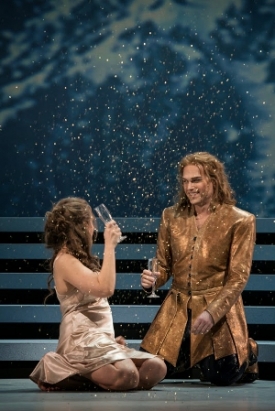
Jay Myers as Orsino and Allie Pratt as Viola. Photo by John Ulman.

Jay Myers as Orsino and Allie Pratt as Viola. Photo by John Ulman.

“Why, this is very midsummer madness!” exclaims Countess Olivia in the middle of Twelfth Night — just as the whirligigs of the plot against Malvolio start cranking away. Olivia’s normally uptight steward has been set up to believe his boss is suddenly overcome with uncontrollable passion for him and is putting on a display that makes for one of the most outrageously funny scenes in all Shakespeare.

But Malvolio’s (David Quicksall) crazed behavior is easily matched by the antics indulged in by Olivia herself (Elinor Gunn) in Seattle Shakespeare Company’s deliriously unconventional new production, which opened this past weekend and which plays through Nov. 16 at the Center Theatre at Seattle Center. Visiting director Jon Kretzu approaches Twelfth Night as if it were a vastly elaborated version of the nocturnal spell cast in the Bard’s decade-earlier A Midsummer Night’s Dream. Just about everyone seems to wander about in a woozy haze of confused, mismatched desire.

continue reading

Filed under: directors, review, Shakespeare

The Rake’s Revels: Don Giovanni Parties It Up in Seattle

Photo (c) Elise Bakketun

Photo (c) Elise Bakketun


Here’s my Bachtrack review of the current Don Giovanni revival in Seattle:

Mozart’s drama about the legendary rake’s egress launches the first season under Seattle Opera’s new general director, Aidan Lang. However, the production originated here in 2007, and the current revival had of course been scheduled well in advance. In other words, it makes no statement about the new Lang era but is instead a reverberation of the Speight Jenkins years.

This production mines the comic possibilities inherent in the essentially picaresque, stop-start narrative pieced together by Da Ponte. The Overture, with its apocalyptic opening section introducing a cheerful, buffa main course, has always posed a musical conundrum, the solution to which, as in Tristan und Isolde, remains deferred until the end of the opera. Yet in Seattle’s McCaw Hall, those foreboding first chords have the effect rather of parentheses, of a statement that’s easily shunted aside until the topic comes up again, in rather nonsequitur fashion, during the grand finale.

continue reading

Filed under: Mozart, review, Seattle Opera

Seattle Symphony’s Dvořák-Fest Begins

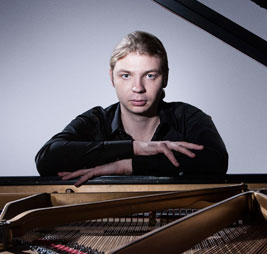
Daniil Trifonov: (c) Dario Acosta

Daniil Trifonov: (c) Dario Acosta

My review of the Seattle Season’s opening concert of the season — including pianist Daniil Trifonov’s spectacular SSO debut — is now live on Bachtrack:

Music by Antonín Dvořák was included on Ludovoc Morlot’s first-ever programme leading the Seattle Symphony, which took place in October 2009. At the time – two years before coming on board as music director – Morlot was a visiting conductor, and he offered the barest sampling of his thoughts on Dvořák (three of the Legends).

continue reading

Filed under: conductors, piano, review, Seattle Symphony

William Tell at the Edinburgh International Festival

My review of William Tell, given a concert performance by Gianandrea Noseda and the Teatro Regio Torino at Edinburgh’s Usher Hall, is now live on Bachtrack:

A conspiracy theorist might ponder whether the programming of William Tell during the final week of the 2014 Edinburgh International Festival, the day after the Salmond-Darling Scottish independence debate on the BBC, was intended as a propaganda move in support of the “yes” campaign.

Certainly the fervour of the opera’s grand finale, as the Swiss rise up in triumphant revolt against their hated imperial overlords, is so palpably rousing as to make one at least question the commonplace assumption of Rossini’s indifference to political matters.

And in a coincidence sure to fuel our conspiracist’s fantasies, the Milanese censor gave the green light for the opera’s staging at La Scala – several years after its 1829 première in Paris – only on condition that the setting be changed to Scotland, with the protagonist restyled as “Guglielmo Vallace”, and a name change from Gualtiero to “Kirkpatrick”.

continue reading

Filed under: conductors, opera, review, Rossini

Prom 40: Haitink and the LSO Trace a Mahlerian Journey through Childhood Innocence

1097-6621-prom40_camilla_tilling_bernard_haitink

Here’s my review for Bachtrack of Bernard Haitink’s Saturday concert with the London Symphony Orchestra (Prom 40):

Having celebrated his 85th birthday this past March, Bernard Haitink continues to demonstrate that he profits from the advantages of age whilst commanding the deftness of a conductor decades his junior. His programme at the Proms on Saturday evening with the London Symphony Orchestra offered musical perspectives on youthfulness and memory by way of Schubert and Mahler, culminating in the songs of innocence and experience of which the latter’s Symphony no. 4 in G major is woven.

continue reading

Filed under: conductors, Mahler, review, Schubert

Seattle Chamber Music Festival Closes on an Elegiac Note

My review of the concluding concert of the 2014 Summer Festival is now on Bachtrack:

The days are starting to grow noticeably shorter in the Pacific Northwest, and the end of the month-long Seattle Chamber Music Society Summer Festival brings yet another wistful reminder that we’re now facing the season’s inexorable downward slope. An immersive atmosphere of four weeks of three concerts each (plus free prelude recitals and additional events) gives the festival much of its flavour, making one all the more reluctant to bid adieu.

It’s been a month especially generous in discoveries, from the world première of an imaginatively crafted single-movement piano trio commissioned from Derek Bermel (with the Saramago-inspired title Death with Interruptions) to a welcome dose of vocal chamber music gems and other rarities mixed in with more standard fare.

On Saturday night the festival drew to a close with a typically diverse roster of musicians (totalling 15 over the course of the concert).

continue reading

Filed under: Beethoven, chamber music, review

Seattle’s Chamber Music Summer Festival: Review

James Ehnes; ©Benjamin Ealovega

James Ehnes; © Benjamin Ealovega

Tomorrow will mark the first anniversary of Memeteria. I wouldn’t believe it if I didn’t have the archives to the right to prove it — this year has been a whirlwind. A huge thanks to all my readers for taking the time to visit. I hope you will continue to come back and would love to hear from you.

And how’s this for unplanned synchronicity: my very first piece was a report on the opening of the Seattle Chamber Music Society’s Summer Festival. And my latest offering is a review of one of the 2014 Summer Festival’s concerts. To wit:

For 33 summers now, the Seattle Chamber Music Society (SCMS) has been presenting an extensive festival that now ranks as a particularly desired destination for musicians on the summer chamber circuit across North America. This latest edition is off to an especially invigorating start. For their part, the audiences tend to be uniformly enthusiastic and devoted, but last night’s performances met with vociferous approval that reached the extreme end of the applause-meter.

The unusual programme design – juxtaposing Stravinsky’s infrequently heard Octet for Winds with bread-and-butter classics by Mendelssohn and Beethoven – is a signature of James Ehnes, now in his third year as SCMS’s artistic director.

continue reading

Filed under: chamber music, James Ehnes, review

Seattle Symphony’s Stravinsky Marathon

A costume sketch by Léon Bakst for The Costume sketch by Léon Bakst for The Firebird

Costume sketch by Léon Bakst for The Firebird

My review of the Seattle Symphony’s final concert of the season:

The past few months have brought the ensemble far more exposure than usual (an appearance at Carnegie Hall, a concert for the League of American Orchestras, the launch of an in-house label): its appetite for new challenges seems unstoppable.

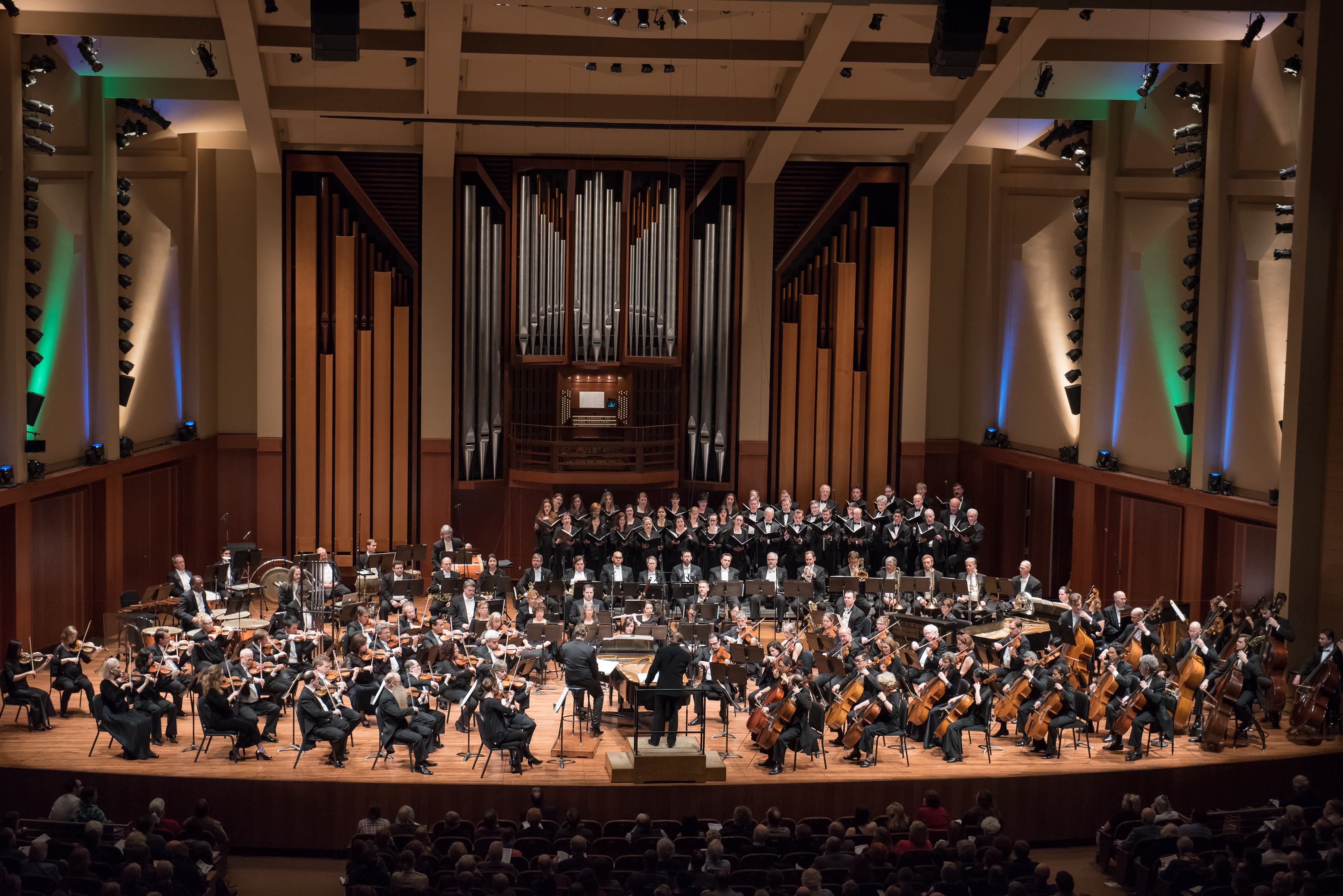
So it’s hardly surprising that music director Ludovic Morlot is concluding the current season with an all-out marathon of orchestral virtuosity. The program of Stravinsky’s three pre-First World War ballet scores for the Ballets Russes in their entirety lasts close to three hours and, out of necessity for the players, requires two intermissions. It drew what appeared to be a close-to-packed house.

No matter how well we think we know this music, the opportunity to hear the young Stravinsky’s three iconic ballets back to back is bound to prompt new perspectives. And Morlot’s deeply sensitive interpretation of the uncut, sumptuous score for The Firebird (1910) did precisely that – all the more so since, only two weeks before, he’d led the SSO in the complete Daphnis et Chloé, also for the Ballets Russes, which was premiered in 1912, the year between Petrushka (1911) and The Rite of Spring (1913).

continue reading at Bachtrack

Filed under: review, Seattle Symphony, Stravinsky

Impressing Their Peers: All Eyes and Ears on Seattle

Dutilleux-SSO

New review on Bachtrack:

Talk about keeping the pressure on: Only last month the Seattle Symphony and music director Ludovic Morlot journeyed to Carnegie Hall for an unusually high-stakes concert and attracted a good deal of press coverage — not least because one of the works featured had just won the Pulitzer Prize in music (John Luther Adams’s Become Ocean, a Seattle Symphony commission). Thursday night’s all-French program meanwhile attracted special scrutiny from movers and shakers throughout the American orchestral scene.

This time the ensemble was playing on its home turf at Benaroya Hall, where it welcomed a sizable number of guests in town for the annual conference of the League of American Orchestras. Under the slogan “Critical Questions/Countless Solutions”, some 1,000 participants representing the breadth of America’s orchestral life had flocked to Seattle. Their mission: to brainstorm ways to engage audiences more meaningfully. Ideas ranged from more innovative concert formats and digital initiatives to suggestions for making orchestras “the heartbeats of our cities”, as Morlot put it.

continue reading

Thomas May

Filed under: concert programming, review, Seattle Symphony

Speak What We Feel: King Lear at Seattle Shakes

Blow, winds, and crack your cheeks!

“Blow, winds, and crack your cheeks!” Dan Kremer as King Lear; photo by John Ulman

To grapple with the challenge of staging King Lear has to be the Shakespearean equivalent of trying to produce an entire Ring cycle. The play is so vast, so all-encompassing, its web of theatrical and emotional motifs so intricately woven, that it’s no wonder old-fashioned — well, OK, ancient — critical opinion deemed the play simply “too huge for the stage” (A.C. Bradley).

But visionary productions over the past century have dispelled that misgiving. Or maybe it’s just that the course the world itself has undergone makes us more receptive to Lear‘s devastating dramatic truths. Sometimes it almost seems as if Shakespeare had written the script for our times — and we’re just bumbling along, trying to act it out. Things don’t just fall apart; they coil toward entropy.

In Seattle Shakespeare’s new production, the play’s apocalyptic dimensions are essentially eclipsed by the familial — and all-too-familiar — realism of dysfunctional relationships and personal psychology.

Linda K. Morris, Patrick Allcorn, and Dan Kremer; photo  by John Ulman

Linda K. Morris, Patrick Allcorn, and Dan Kremer; photo by John Ulman

Director Sheila Daniels conceives the tragedy as an intimate echo chamber of unstable characters who are progressively losing it. What they undergo entails a series of variations on the theme of Lear’s crack-up. Scene by scene (with the whole divided here into three acts), their attempts to impose order on events, to get closer to their desires, become increasingly desperate. The overriding impression isn’t so much of the grim inevitability of consequences — Shakespeare’s merciless updating of classical “fate” — as of psychological meltdown.

As the ex-monarch, Dan Kremer underscores this approach through the unpredictable variability of his temper. It works very well for the first sections of the play — particularly in how it clarifies the relationship between Lear and his daughters that has already charted the course of the tragedy long before it begins.

We see how Goneril (Linda K. Morris) and Regan (Debra Pralle), given neatly differentiated portrayals here, aren’t just self-serving but have been brought up to fear daddy’s mercurial outbursts. Elinor Gunn’s Cordelia shows a steely stubbornness she must have learned first-hand. That’s what keeps her from seeing the danger she puts herself in — not a martyr complex to speak truth to power.

As for their husbands, while the Duke of Cornwall compresses into a sadistic psychopath (Gordon Carpenter), Shakespeare gives amplitude to the Duke of Albany (Patrick Allcorn) to grow in self-awareness and influence.

What lacks the needed emotional force are the actual climaxes marking each way-station in Lear’s descent. Kremer’s scene on the heath becomes just another fit, his verbal torrent more a fest of self-pity. By the same token, the Lear Kremer depicts in the final scenes fails to stir any deeper pity than he already has at the beginning of his long humiliation.

Kremer is more compelling in his interactions with “the other half” — with the fellow victims of ruin who never seem to faze him as they cross his path and all head toward the final confrontations at Dover. His reunion scene with the blinded Gloucester (Michael Winters) is especially resonant in its unsettling blend of horror and comic absurdity.

Dan Kremer and Michael Winters in Seattle Shakespeare Company’s production of “King Lear.” Photo by John Ulman

Dan Kremer and Michael Winters; photo by John Ulman

Some stand-out performances by others in the cast tilt the focus of the play in interestingly unexpected directions. Eric Riedmann’s chillingly embittered Edmund — possibly the most accomplished single interpretation — conveys the malign intelligence of a Iago yet always feels human. It’s one of Daniels’ strengths to clarify each character’s motivations in a way that makes them psychologically persuasive, further emphasizing the intimacy of family connections in this production.

Riedmann moreover revels in Shakespeare’s poetry, articulating its sonorities and rhythms with a relish and variety I wish were not otherwise the exception in this cast. The only misstep is the close-to-campy exaggeration of the sexual dalliance between him and Regan.

Linda K. Morris and Eric Riedmann in Seattle Shakespeare Company’s production of “King Lear.” Photo by John Ulman

Linda K. Morris and Eric Riedmann; photo by John Ulman

Winters makes Gloucester’s wishful gullibility work, and the scenes with his two sons are among the most vividly realized. In his guise as Poor Tom, Jorge Chacon draws on physical hints he’s shown us as the nervous if good-natured Edgar.

King Lear is notable for the overdetermination of the fool archetype. Along with the official fool (Todd Jefferson Moore), the disguised Kent (played as a “Duchess” by the splendid Amy Thone) and Poor Tom on the heath reinforce the fool’s function of bearing witness to the truth as they retreat most deeply into their roles. Thone and Jefferson have a winning dynamic together and help re-introduce some of the play’s larger perspectives — particularly, its obsession with the power of language to shape reality, both positively and negatively. This is what gives the humor they interject its edge.

After all, they continue to subject Lear to the treatment that outraged him when it came from Cordelia. But even to “speak what we feel” is a kind of rhetoric, if the mirror side of Lear’s fulminations and curses. Language is the one thing the dispossessed king is left with — the very language he obviously abused throughout his reign.

Dan Kremer, Craig Peterson, Sophie Paterson, Amy Thone, and Jonathan Crimeni in Seattle Shakespeare Company’s production of “King Lear.” Photo by John Ulman.

Dan Kremer, Craig Peterson, Sophie Paterson, Amy Thone, and Jonathan Crimeni; photo by John Ulman

The scenic conception is notably weak and lags far behind the many fine nuances of the ensemble’s acting. Daniels, who collaborated with set designer Craig Wollam, opts for a colorless, ultra-minimalist playing space with a backdrop of hanging plastic and linen sheets and a scaffold that rolls to and fro. It is a way of making the stage the world, but the process of stripping away so essential to the play’s arc has already happened by the start.

Melanie Burgess’s abstract-pattern, cheerless costumes seem out of sync with the high contrasts of Jessica Trundy’s lighting. I do like the effect of cruel illumination upon the arrival at Dover, but the veer toward a horizontal Rothko glow at the end puzzles. Robertson Witmer picks up on the script’s references to drums to create a sternly percussive sound design.

Seattle Shakespeare Company’s production of King Lear plays through May 17 at the Cornish Playhouse (formerly Intiman) at Seattle Center, Wed. – Sun. Tickets here or call 206 733-8222.

(c)2014 Thomas May. All rights reserved.

Filed under: directors, review, Shakespeare, theater

Archive

Enter your email address to follow this blog and receive notifications of new posts by email.