MEMETERIA

Icon

Arts writing by Thomas May

The Cursed Clown Returns: Seattle Opera’s Rigoletto

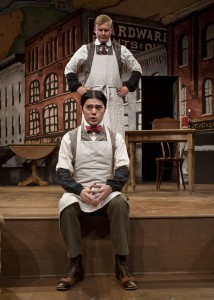
Marco Vratogna; photo by Elise Bakketun

Rigoletto (Marco Vratogna) at work in the court; photo by Elise Bakketun

It’s no surprise that general director Speight Jenkins opted to reprise Seattle Opera’s production of Rigoletto, staged by the American director Linda Brovsky, for his farewell season (which also coincides with the company’s 50th anniversary). Introduced a decade ago, this Rigoletto is of fine vintage and remains hands-down the most satisfying Verdi production I’ve seen at Seattle Opera (a close tie being the Falstaff directed by Peter Kazaras).

Seattle can hardly be called a Mecca for Regie opera in the usual sense in which that term is bandied about. But that doesn’t mean it’s a haven for boringly conservative “traditional” stagings. The company actually is director-centric in that it places a high premium on theatrical values: it prizes directors who can contribute a sensitively close reading so that musical and dramatic meanings enhance each other. (Jenkins is, after all, a Wagnerian, and a good deal of the success of Seattle’s Ring has hinged on director Stephen Wadsworth’s ability to do just that.)

Rigoletto is certainly an opera amenable to directorial transposition, and the concept applied by Brovsky and the design team is to set the swiftly moving plot in the lurid “court” of a Benito Mussolini-like duce in the 1930s, at the height of Italian fascism. Rigoletto serves as a kind of spy who can feed him information and of course also as his procurer. The decadence of the duce/Duke of Mantua and his cronies turns out to be an expression of their unchecked power — the way they “loosen up” when not arrogantly terrorizing the citizens into submission.
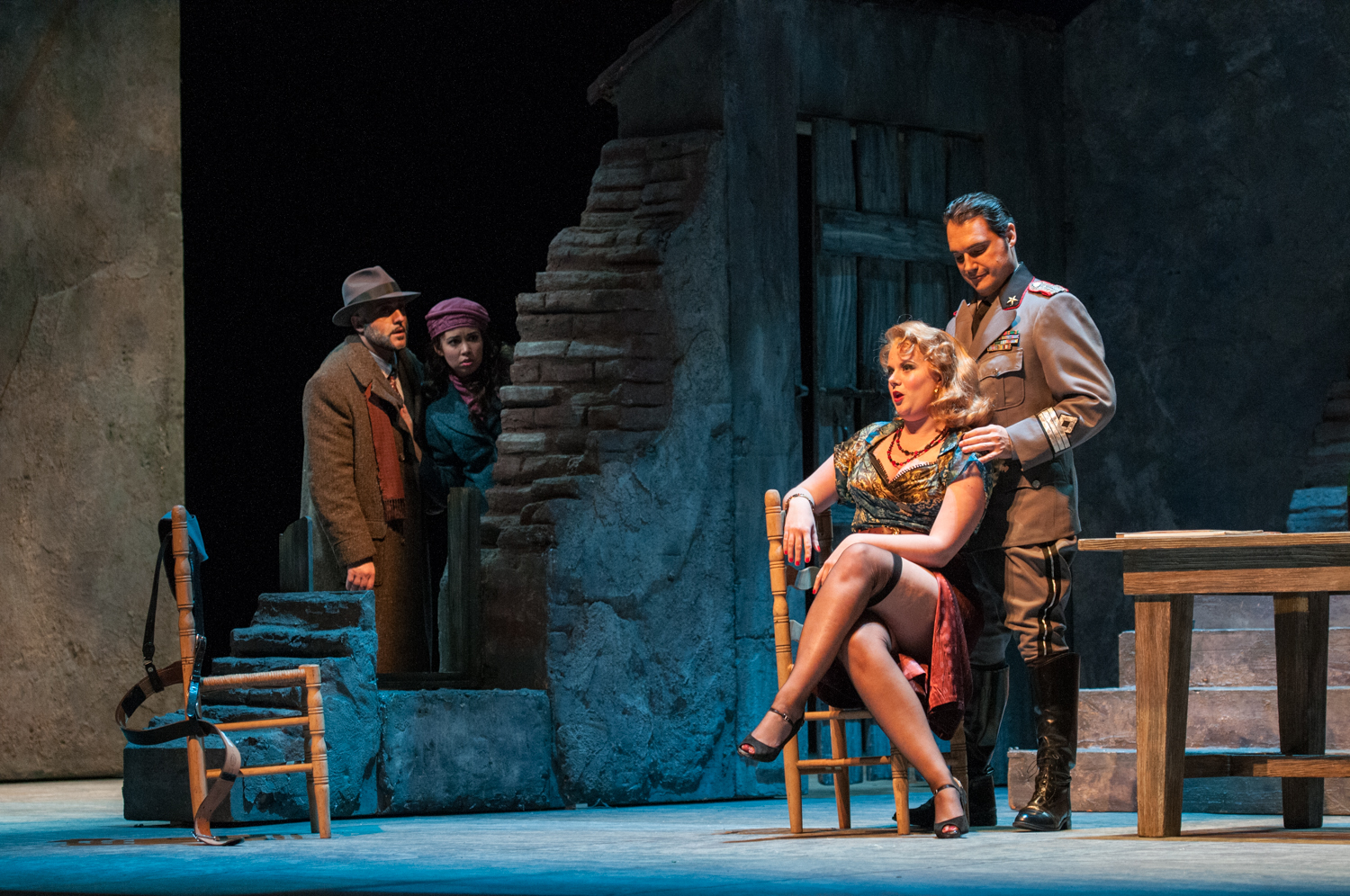
Marco Vratogna as Rigoletto, Nadine Sierra as Gilda, Sarah Larsen as Maddalena and Francesco Demuro as the Duke of Mantua; photo by Elise Bakketun

l to r: Marco Vratogna (Rigoletto), Nadine Sierra (Gilda), Sarah Larsen (Maddalena), Francesco Demuro (Duke of Mantua); photo by Elise Bakketun

Robert Dahlstrom’s sets and Thomas C. Hase’s lighting dramatically contrast the two poles of Rigoletto‘s world. The palace, thrumming with lust, is sleekly decked out with the spoils of art (a version of Bernini’s Rape of Proserpina sculpture serves as a prop littered with dirty champagne glasses), while the dimly lit, claustrophobic backstreets where the jester lives with his daughter Gilda are creeping with menace, an underworld that mirrors the cynical brutality of the rulers — only without their stylish veneer and classical trappings. The scenery of the last act, with its storm-swept cityscape across a river, is especially evocative. Marie Anne Chiment’s elegant gowns and chic suits make exceptionally eye-catching costumes.

All this provides more than a mere backdrop against which the familiar melodrama plays out. By anchoring what otherwise might seem a far-fetched series of unfortunate coincidences in a repulsive political and moral order, the fascist setting pushes buttons. When the nobleman Monterone reproaches the Duke for “seducing” his daughter — it’s clear that she’s been traumatized — Brovsky shows the old man wearing a yarmulke and dragged off to prison on the Duke’s orders: a voice of protest silenced by anti-Semitic thuggery. (Could this explain the family secrets Rigoletto keeps hidden from Gilda, including the mystery of her mother?)

Rigoletto will find himself in the same position as Monterone when he mourns the ruin of Gilda. The opera’s denouement is fueled by the jester’s plan for vengeance, his realistic version of the curse pronounced by Monterone. Marco Vratogna portrays an uncommonly sympathetic Rigoletto, making for a harrowing final scene. The problem is that he’s essentially too “nice” for the production’s milieu — particularly in the opera’s opening scene, where Verdi shows his cynical persona at work. The less-than-imposing curse delivered by Donovan Singletary’s Monterone should be the climactic focus of the scene, but the jester’s reaction barely registers.

Vratogna’s baritone admirably balances sturdiness and lyricism — it can be thrilling in a cabaletta wrap-up — but on opening night didn’t display the variety of colors essential to making this character vivid. You need to experience Rigoletto’s jabbing viciousness for his final sorrow to earn its full impact. Vratogna’s pivotal second-act solo lacked the differentiated phrasing Verdi calls for when Rigoletto, accustomed to his role as a performer, at last gives vent to his rage but then quickly changes tack to plead for his daughter.

Francesco Demuro as the playboy Duke; photo by Elise Bakketun

Francesco Demuro as the playboy Duke; photo by Elise Bakketun

A similar drawback applies to Francesco Demuro’s depiction of the Duke. A lyric tenor with a gorgeous command of legato, Demuro brings out the careless playboy side of the role quite convincingly. It’s just that he’s too suave, too effortlessly mellifluous to generate the effect of a feared, ruthless leader. In fact, the emotional depth Demuro gave to his richly sung “Ella fu mi rapita!” scene (the Duke’s most interesting solo and the one eclipsed by the popularity of his other two famous numbers) ends up jarring against the rest of his characterization. The Duke’s moment of interiority of course goes nowhere — and that’s one dramaturgical lapse Brovsky’s smart production doesn’t solve.

On the other hand, the really, really dark side of this Rigoletto is supplied in spades by Andrea Silvestrelli as the assassin-for-hire Sparafucile. His bass sounds as fathomless as an unlit, echoing cave, and Silvestrelli telegraphs noirish menace with just a flick and boot crush of his cigarette. As his sister and partner-in-crime Maddalena, Sarah Larsen channels a touch of Carmen, working out an entire character transformation in the course of her one scene.

Andrea Silvestrelli (Sparafucile); photo by Elise Bakketun

Andrea Silvestrelli (Sparafucile); photo by Elise Bakketun

But no one else matched the art of transition displayed by American soprano Nadine Sierra, making her Seattle Opera debut as Gilda. It’s not hard to discern what wowed the judges when they chose her as the youngest-ever winner of the Metropolitan Opera National Councils a few years ago. Sierra — and you’ll most definitely want to pay attention to her name — has an alluring, immediately identifiable voice that encompasses dark-hued deep notes as well as spectacularly spun, floating light notes at the very top of her range.

And that’s only a starting point for Sierra: her remarkable control allows her to venture an exciting variety in her phrasing. Her characterization complements this vocal richness: Sierra shows Gilda not as the innocent “tabula rasa” we usually see at first but as a loving daughter who already has desires of her own. The pain of her humiliation in the second act is so palpable it’s hard to watch. And her Gilda’s persistent attachment to the Duke isn’t a sentimental weakness but a desperate attempt to salvage some kind of meaning within the opera’s heartless environment. An especially effective touch is the shudder of terror she reveals even after she’s resolved to sacrifice herself.
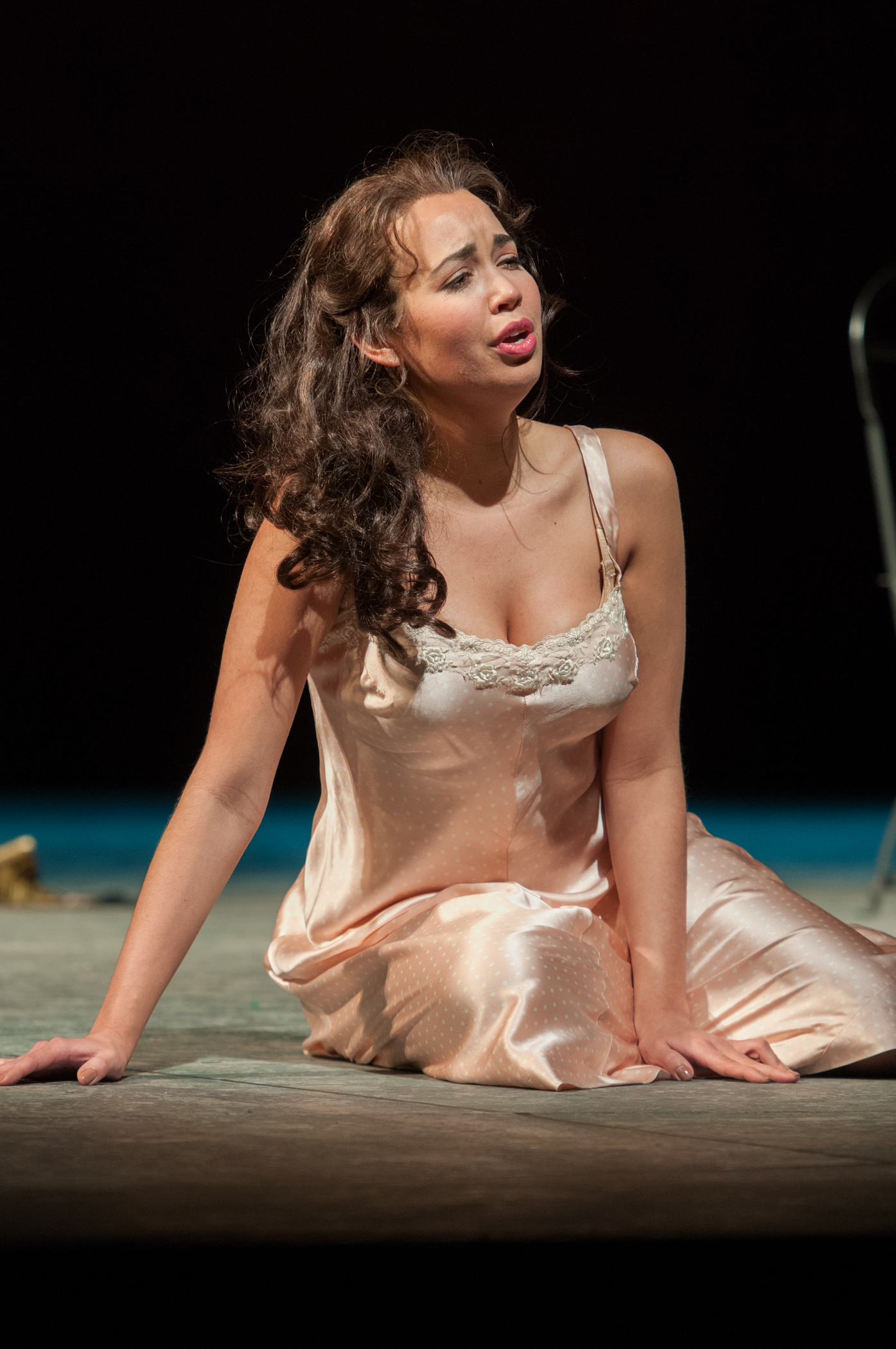
Nadine Sierra; photo by Elise Bakketun

Nadine Sierra; photo by Elise Bakketun

Another indispensable contribution is made by conductor Riccardo Frizza, doing the best work I’ve heard from him. The orchestra itself wasn’t on quite the same level on opening night, and some sloppy intonation crept into the mix, but the musicians are clearly responsive to the conductor’s reading of the score. Frizza understands that these immortal melodies get their punch precisely from the contexts Verdi creates. As a milestone experiment on the way toward the mature Verdi, Rigoletto is all about restyling the conventions of Italian opera within a context of breathless, dramatically compelling momentum.

Frizza was able to stretch a phrase here and there, effortlessly accommodating the singers, but all the while maintaining the needed tension. He also has a terrific ear for the telling, sometimes ironic details Verdi uses to punctuate the lyrical flow. The first scene especially benefited from a snarling energy that supplied in sound what the staging meant to evoke. The chorus (prepared by John Keene) also used details to excellent effect in the two palace scenes, hinting at a whole spectrum of implicit back stories for the audience’s imagination to supply.

One especially memorable detail from Brovsky: her treatment of “La donna è mobile,” the opera’s most-famous (and ironic) number, as a kind of prop. Here it’s a pop hit that obviously gets a lot of play on the state radio. We hear it (i.e., the orchestra’s preliminaries) as the Duke tunes in the radio while he’s out slumming for sex, prompting him to sing it himself. It’s when Rigoletto hears the Duke’s version again, after his presumed stabbing, that the corpse’s identity becomes a chilling question.

Brovsky’s conceit is right in keeping with Verdi’s own “high concept” interpolation of the tune, which refuses the expected cadence but has the melody fade away. Verdi begins the tune with a false start, and it never really ends — the Duke is left unscathed, ready for his next conquest, leaving us with a catchy tune. Fascism, as Walter Benjamin famously pointed out, is the “aestheticization of politics.”

Seattle Opera’s production of Rigoletto runs through January 25. Tickets available here.

Review (C) 2014 Thomas May. All rights reserved

Filed under: review, Seattle Opera, Verdi

CD Review: Hochman/Homage to Schubert

Benjamin Hochman

Benjamin Hochman; photo by Jürgen Frank

I haven’t yet had the pleasure of encountering Benjamin Hochman in live performance, but I come away from his new release, Homage to Schubert, with a remarkably vivid sense of what he brings to the competitive scene of today’s young pianists. This is his second solo album and debut recording for the AVIE label, and it amply reveals Hochman’s qualities as an interpreter as well as the creative and original programming style that appears to be a signature.

A native of Jerusalem now based in New York, Hochman counts Claude Frank and Richard Goode among his mentors. He made his New York debut in 2006 with a Met Museum recital juxtaposing Bach, Berg, Schubert, and a newly commissioned piece. A similar imaginative leap ties together his program here: two lesser-known Schubert sonatas and a pair of contemporary pieces “commenting” on the Austrian’s legacy — by György Kurtág (Hommage à Schubert) and Jörg Widmann (Idyll und Abgrund), respectively. Hochman performs on a Steinway and benefits from the tasteful production and engineering (Eric Wen and Dennis Patterson).

Of course there’s lots of powerful competition even when it comes to these less-familiar Schubert sonatas. Paul Lewis, the spiritual scion of Alfred Brendel, has recently staked an irresistible claim to this territory, and Mitsuko Uchida is another eloquent advocate. (She also began linking Schubert’s piano music with Schoenberg back in the ’90s.) A fundamental attraction of Hochman is that he allies a natural sympathy for Schubert’s brand of musical thinking with superbly balanced technique, all the while effacing any temptation to showboat or force a newfangled reading onto these scores.

In other words, Hochman’s overall stance toward Schubert himself is pretty traditional, while smartly allowing the “moderns” sharing his program to provide a contemporary angle. It’s a daring and subtle strategy, and one that rewards the listener. Which is by no means to imply that there’s anything even remotely stodgy or routine here: Hochman initiates the proceedings with the gorgeously spun lyrical flow of the Sonata in A major D664 (from 1819), his control of the pulse so mesmerizing that it seems as if this music has always been going on — a stream we’ve been graced to chance upon.

Hochman is fully alert to the potential of Schubert’s wild contrasts. That’s the premise, after all, of pairing the gentle, smaller-scale A major with the hugely ambitious and even aggressive Sonata in D major D850 (the so-called “Gasteiner,” after the spa town where it was written in 1825, the year Schubert sketched most of the “Great” C major Symphony). Yet Hochman doesn’t overload these contrasts with melodrama, but lets the few outbursts in D664 take us by surprise within the larger context.

At several points I could almost imagine D664 versus the “Gasteiner” as a precursor for Schumann’s Eusebius (especially in the melancholy appoggiaturas of D664’s Andante) and Florestan dichotomy. But what excites me the most about Hochman’s deeply satisfying approach to D850 is his implicit understanding of the Schubert-Beethoven connection. By this point, Schubert’s acquired admiration of the German composer had begun inspiring a new level of ambition (he was a Beethovenian convert).

Hochman seems to hint at the uncanny echoes of late Beethoven, as in the “Gasteiner”‘s widely wandering second movement, where one passage of reiterated chords suddenly approaches the radiance of the Arietta in Beethoven’s Op. 111. But he avoids any impression of Schubert as an imitator or epigone: these moments occur as genuine Schubertian epiphanies within a remarkably different musical landscape.

Between Schubert and Beethoven, there is an almost diametrically opposed sense of drama, as Hochman points out in his excellent booklet essay, alluding to Brendel’s famous image of Schubert “the sleepwalker” in contrast to Beethoven “the architect.” That groping around unforeseen corners to alight on a new vista that is so characteristic of Schubert is especially apparent in the weirdly mercurial variants of the finale’s rondo theme as Hochman performs it.

As for the contemporary homages, Hochman has chosen two utterly distinct ways of thinking about Schubert. Kurtág’s lapidary piece (lasting about a minute) distills the contradictory ingredients that make up Schubert into an intense poetic reverie — a musical life that flashes before our ears.

The German composer Widmann — who is just 7 years older than Hochman — has meanwhile written a miniature suite of “six Schubert reminiscences” in Idyll and Abyss (originally conceived as a companion work to the great final B-flat Sonata D960). Teasing direct references to cadences and phrases slip a reflective scrim over the distance between Schubert and us. Alternately playful and disturbing, Widmann’s suite rudely juxtaposes the many sides of Schubert’s personality, purposely emphasizing the paradoxical nature of a genius that encompassed sweet melody, leisured reflection, and savagely violent outbursts. Widmann and Hochman leave it up to the listener to put the pieces together.

(c)2013 Thomas May. All rights reserved.

Filed under: CD review, new music, review, Schubert

Protected: Stairway to Heaven: A Major Seattle Symphony Premiere

This content is password-protected. To view it, please enter the password below.

Filed under: Beethoven, composers, new music, review, Seattle Symphony

Fascinating Boulez, Problematic Mahler 6

It’s good to have Ludovic Morlot back in town for his first Seattle Symphony program since September’s marvelous all-Ravel feast. And there’s been a lot of interest building up for this week’s offering, since – well, that’s usually the case with a Mahler symphony (even if the over-programming of Mahler in general is tempting burnout), but all the more since Maestro Morlot has been approaching this rep with understandable caution.

But first to the program’s “hors d’oeuvre,” Nos. 1-4 of the Notations by Pierre Boulez. This is prime Morlot territory: thrillingly prismatic music, brimming with intellectual and sensual complexities that complement rather than cancel each other out. The orchestra, massively expanded and crowding the entire stage to realize Boulez’s scoring requirements, played the first four of this set of miniatures originally written as a sequence of 12 for solo piano (back in 1945). Boulez began revisiting these early works decades later and so far has completed orchestral elaborations of seven of them. In their orchestral guise, they resemble lavish plants grown from the starker seeds of the piano originals.

Morlot gave a brief, excellent introduction to their concept and design and paired each of the four with renditions of the originals by pianist Kimberly Russ. I’ve never understood why some of my fellow critics kvetch about this sort of commentary from the podium during a concert. Morlot’s manner isn’t even remotely condescending, and he’s able to home in on a few pregnant details that really do enhance listening.

And Boulez is hardly a familiar quantity in Seattle. This was the first time I’ve heard the SSO grapple with music by the French maverick; is it possible Boulez has never been programmed in its history? Quel scandale! Regarding his ongoing investigation of French musical tradition with the orchestra, Morlot remarked that to overlook Boulez would be like visiting Paris “and not going to see the Eiffel Tower.”

The pieces in Notations – all related to a shared 12-note theme – are epigrammatic and fleeting, yet so frighteningly complicated in their working out (the articulation of harmonic, rhythmic, and textural layers) that it’s like a speeded-up musical Big Bang, tracing vast consequences from simple origins. Or so it seemed in Morlot’s meticulous account. Most impressive for me was his ability to convey a graspable sense of passion and drama alongside Boulez the “researcher” of sounds.

In his “Ask the Artist” conversation after the concert, Morlot mentioned that he’d initially hoped to get Boulez to come to Seattle to conduct this program himself, thus giving the SSO a direct connection to the tradition Boulez still embodies. (Now 88, the French maestro’s health essentially precludes such travel.) Yes, irony of ironies, the firebrand revolutionary of yore is one of the last keepers of a tradition connected both to French modernism from Debussy onwards and to Schoenberg and his Vienna colleagues. (Berg was particularly fascinated by the music of Mahler’s Sixth Symphony.)

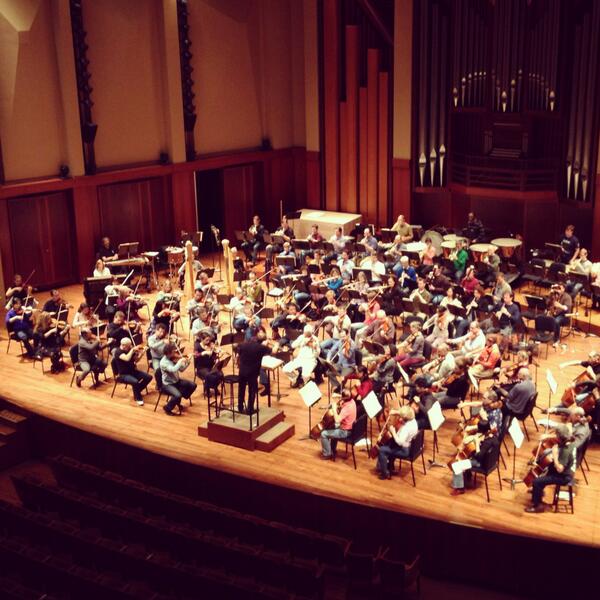
Morlot and SSO rehearsing Mahler 6

Morlot and SSO rehearsing Mahler 6

I found this interpretation of the Mahler Sixth only halfway satisfying – and, oddly, in a completely unpredicted way. Long one of the most marginalized of his symphonies, the Sixth has actually received a good deal of advocacy over the past 15 years or so. Michael Tilson Thomas inaugurated his complete cycle with the San Francisco Symphony with No. 6 (on September 12, 2001, no less), winning a Grammy. Since that year the SSO’s conductor laureate Gerard Schwarz has led two Mahler Sixths (2001, 2008).

Presenting the Boulez as an entrée results in the interesting effect of seeing the orchestra downsize a tad for the Sixth, which happens to employ the largest orchestra Mahler ever called for (in purely instrumental terms – obviously excluding the Eighth, with its ginormous choral forces). The SSO even managed to procure one of the cowbells originally used for the premiere in 1906. (I’ve got to investigate that back story.)

Yet just a few paces into the grim straitjacket march-time opening the first movement, Morlot uncharacteristically failed to achieve the sort of sonic balance you can usually count on him to effect – a tremendously challenging task in this score, to be sure. Morlot’s modus operandi in general is precisely not to go for the obvious “throughline” but to tune us in to the nuances of multiple layers and textures interacting, but too many of the accents seemed tentative, a “work in progress,” so that the players got bogged down in local details and the big picture lost focus.

Breathtaking, sensitively shaped moments awaited in the enormous development section – it’s like a dream sequence escaping from the harsh “real world” surrounding it – and, along with many admirable solos, concertmaster Alexander Velinzon’s contributions enraptured the ear. Still, as a whole the first movement lacked the persuasiveness and sheer, unrelenting terror it needs to set the symphony on course.

The Scherzo sounded even more bogged down by moment-to-moment bursts of color and emotion without a convincing larger context: all-too-careful playing that just didn’t take fire with any sense of risk. But with the Andante – Morlot chose Mahler’s original order for the inner movements – the long delay until reaching this oasis paid off. The SSO became not just thoroughly engaged, but convincing and supremely eloquent. Morlot took a relatively rapid pace, allowing the beauty of this music to breathe as simply as a song instead of relying on exaggerated distensions.

Cowbells used by Seattle Symphony (including one from 1906 premiere of No. 6)

Cowbells used by Seattle Symphony (including one from 1906 premiere of No. 6)

And then what really took me by surprise: in every live performance of the Sixth I’ve heard, it’s in the immense sound world of the finale that everyone loses steam, exhausted and struggling just to make it through. But this was the most exhilarating playing of the evening, starting with the hallucinogenic sweep of colors with which Mahler launches this enigmatic movement.

Here Morlot guided the musicians through an enthralling labyrinth of events which really did begin to cohere and connect. In the coda, the threnody of brass sustained enough mystery to hint, however slightly, at a possible hopeful outcome so that the shock of Mahler’s most tragic symphonic ending had a thrilling dramatic impact.

A quick note on the other chief musicological controversy – besides the order of the movements – which is part of the Sixth’s performance tradition. Morlot chose the version with two rather than three “hammerblows” in the finale, later explaining that withholding the third ax-like shattering intensifies the suspense. The two blows we heard were in any case both sonically and visually memorable, thanks to the impressive box and hammer percussionist Michael Werner (see video at top).

There’s one more chance to experience this program live: on Saturday, 9 November 2013, at 8.00 pm. Tickets here.

(C) 2013 Thomas May. All rights reserved.

Filed under: Mahler, review, Seattle Symphony

What Fire in the Ears: Much Ado c. 1953

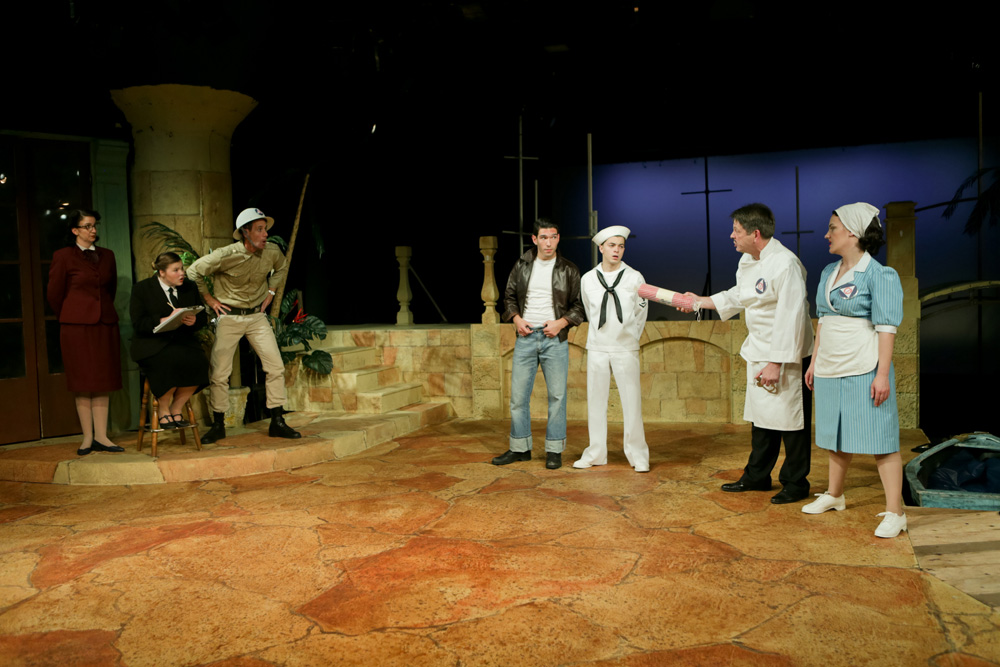
Jennifer Lee Taylor as Beatrice and Matt Shimkus as Benedick; photo by John Ulman

Jennifer Lee Taylor as Beatrice and Matt Shimkus as Benedick; photo by John Ulman

Linguists like David Crystal are fond of pointing out that shifts in pronunciation over the centuries cause modern audiences to miss out on some of the key puns and subtexts in Shakespeare’s plays. The claim that “nothing” and “noting” were all but indistinguishable in Elizabethan English is a case in point. I don’t know who first observed that “Much Ado About Noting” might be a far apter title for Shakespeare’s perennially popular comedy of misalignments realigned, but it’s become a widespread idea by now.

Certainly the play’s momentum is driven by acts of noting, of hearing or seeing things that cause perceptions to be changed dramatically. Most of these eavesdroppings are intentionally stage-managed by other characters – for benevolent if somewhat mischievous purposes (Benedick and Beatrice being led to believe they are the object of each other’s affection) and for nefarious ones (the framing of Hero as unfaithful).

What I find most striking about Seattle Shakespeare’s current production of Much Ado About Nothing is how gullible the main characters prove to be. A good portion of the comedy in the Beatrice-Benedick stand-off arises from the exaggerated language both use to express their mutual disdain – with Beatrice scoring more stinging zingers in Jennifer Lee Taylor’s arch, glib-as-a-movie-starlet delivery. Yet it doesn’t take much trickery to soften them up and make the pair willing to thrust their necks “into a yoke” same as all the rest.

Justin Huertas as Balthasar, Jim Gall as Don Pedro, Jay Myers as Claudio, and Peter A. Jacobs as Leonato; photo by John Ulman.

Justin Huertas as Balthasar, Jim Gall as Don Pedro, Jay Myers as Claudio, and Peter A. Jacobs as Leonato; photo by John Ulman

More tellingly still, Claudio reverses his Prince Charming poses even more readily than he’d pressed his lightning-fast courtship of Hero. She, in turn, is just as content to have the hot-head back after he’s been compelled to “note” her fake funeral.

All this manipulation and puppet-like flexibility can make Much Ado seem pretty arbitrary. The fundamental problem Shakespeare’s comedy poses for the performers is that it nestles a potential tragedy at its core. The notions of love that the two main couples hold on to, imagining they represent the real thing, must be put to the test; they have to enter crisis mode before any genuine change can take place.

Merely “noting” appearances or trying to preempt disappointment is a passive stance, and it can’t substitute for experience. It’s one thing for this testing to take the form of obstacles – standard procedure in comedy – but to be presented as the nightmare which erupts at the play’s center is deeply unsettling.

Hero (Brenda Joyner) rejected; photo by John Ulman

Hero (Brenda Joyner) rejected; photo by John Ulman

Or…maybe that’s just making much ado about nothing after all. Maybe the play really should be enjoyed for its witty slant on romance and friendship triumphant, served up with abundant linguistic virtuosity (and a virtuosic reversal of all that when it comes to the malapropic snares in which Dogberry gets entangled). As directed by George Mount, artistic director of Seattle Shakes, this production doesn’t show much interest in digging beyond that, but it still adds up to a pleasurable performance for the most part.

The production’s design elements are a particular attraction. They effectively translate the cheerful Mediterranean clime of Shakespeare’s Renaissance Messina to a tony seaside resort in 1953, with sailors coming home from the (presumably Korean) war, now ready to relax and get back to the pleasures of life. Craig B. Wollam’s elegantly evocative set, Roberta Russell’s sun-kissed lighting scheme, and the delightful period details of Doris Black’s costumes work together to reinforce this background.

Seattle Shakes is also embarking here on the first of two collaborations this season with Seattle Repertory Jazz Orchestra: Michael Brockman composed music for the songs Shakespeare embeds in the play. The jazz ensemble pre-recorded this incidental score. Justin Huertas (Balthasar) does double duty as the resort’s Sinatra-smooth entertainer and also sings a lovely threnody at the tomb of Hero before her “resurrection.”

Dogberry (David Quicksall) and crew; photo by  John Ulman

Dogberry (David Quicksall) and crew; photo by John Ulman

These elements so successfully evoke a concrete sense of place that it seems to encourage some of the cast to adopt a looser, more-relaxed style vis-a-vis Shakespeare’s language – as if to match the “realism” of the setting. Taylor’s Beatrice and Matt Shimkus as Benedick stand out not only for their engaging interactions, spinning off each other’s whip-snap repartee, but for their attention to the textures and rhythms of their words. And Peter A. Jacobs brings a suave edge to Leonato as the entitled party-giver while remaining authoritative in his speech.

As Hero and Claudio, on the other hand, Brenda Joyner and Jay Myers tend toward blandness, failing to voice the different registers of their language. Myers also remains too much the nice guy who’s been duped to give his final transformation its full effect. Especially flat is the one-note resentment displayed by Nick Rempel as the scheming villain Don John.

Noah Greene layers a Fonzie-ish attitude on the rascal-for-hire Borachio, who is the first in the play to set off its chain-reaction of conversations overheard. Most of these are staged, but he chances on Claudio’s spontaneous confession of his love for Hero. And by the play’s symmetry, it’s when Borachio is overheard by chance bragging about his nasty deed that the solution to the crisis is introduced. But before everything can be untangled, the night watch set up by Constable Dogberry (David Quicksall) – who do that bit of overhearing – restore the comic tone that’s so suddenly been sucked out of the play with Hero’s slander. This layer was, to my taste, the least successful, too reliant on extraneous gimmicks at the expense of the hilarity already there in the language.

When all is restored in the finale (the captured Don John notably awaiting his punishment offstage, to be dealt with later), this production infuses an infectious joie de vivre that makes this Much Ado about something after all.

Seattle Shakespeare Company’s production of Much Ado About Nothing, directed by George Mount, continues through November 17, 2013, at the Center Theatre at Seattle Center. Tickets online.

(c) 2013 Thomas May. All rights reserved.

Filed under: review, Shakespeare, theater

Azeotrope’s City-Country Double Bill

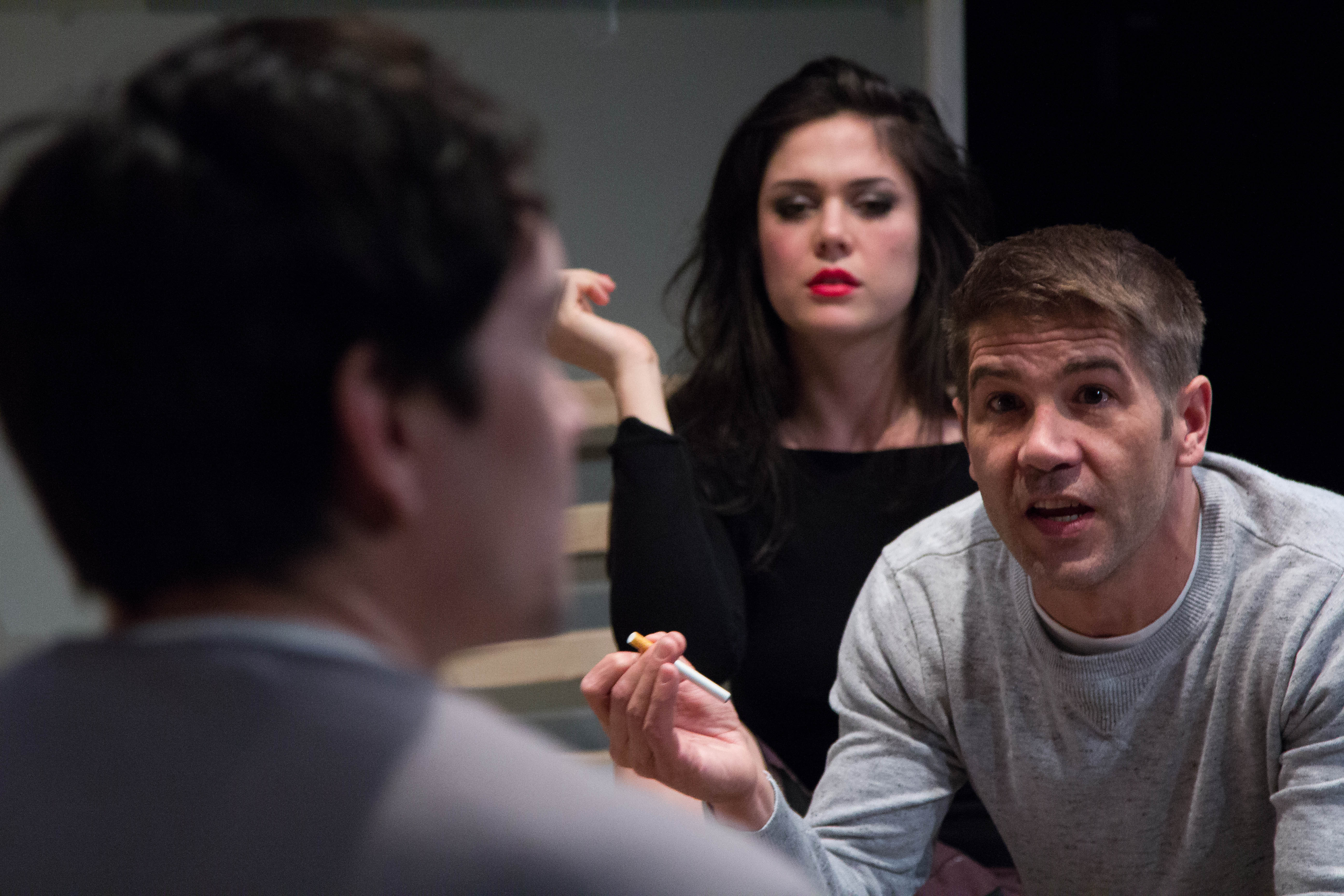
 Richard Nguyen Sloniker, Tim Gouran and Mariel Neto in Red Light Winter; photo: Benito Vasquez

Richard Nguyen Sloniker, Tim Gouran and Mariel Neto in Red Light Winter; photo: Benito Vasquez

My recent profile of Seattle’s remarkable Azeotrope Theatre is up on Crosscut:

What makes people want to attend live theater? Sure, it’s an art that dates back to the origins of human culture, but why put up with the hassle when it’s become so easy to find entertainment from the comforts of home? Even the allure of films is no longer enough to guarantee the future of movie theaters.

But Azeotrope has a way of making you remember what’s so unique about theater in the first place. No amount of digitalized special effects can trump the raw, gritty emotional power or the gripping depictions of desperate characters who populate Azeotrope’s latest project.

 Richard Nguyen Sloniker in Red Light Winter; photo: Sebastien Scanduzzi

Richard Nguyen Sloniker in Red Light Winter; photo: Sebastien Scanduzzi

Over the next month the company is presenting a double bill of plays in rotating repertory at the Eulalie Scandiuzzi Space, a tiny black box theater located downstairs at ACT. Both plays are less than a decade old: Adam Rapp’s Red Light Winter (2005), which was a Pulitzer finalist, and the Seattle premiere of the recent 25 Saints by Joshua Rollins (who will be on hand for post-play discussions on Nov. 2 and 3).

“When I when I first read Red Light Winter, it just kicked me in the balls,” says Richard Nguyen Sloniker, an actor, writer, teacher and co-founder of Azeotrope. “It hit me in a way I couldn’t quite grasp, and I had to try to parse out why.”

Rapp’s scenario is a bleak examination of the need for intimacy. It explores the consequences of a night two former college friends spend with a beautiful young prostitute in Amsterdam. “Sure, it’s not a very cheery play,” Sloniker explains, “but I identified with these lost, broken, human characters. A good play doesn’t necessarily have to give you a catharsis.”

continue reading

Filed under: review, theater

The Morning After: Seattle’s Theatre22 Takes Its First Bow

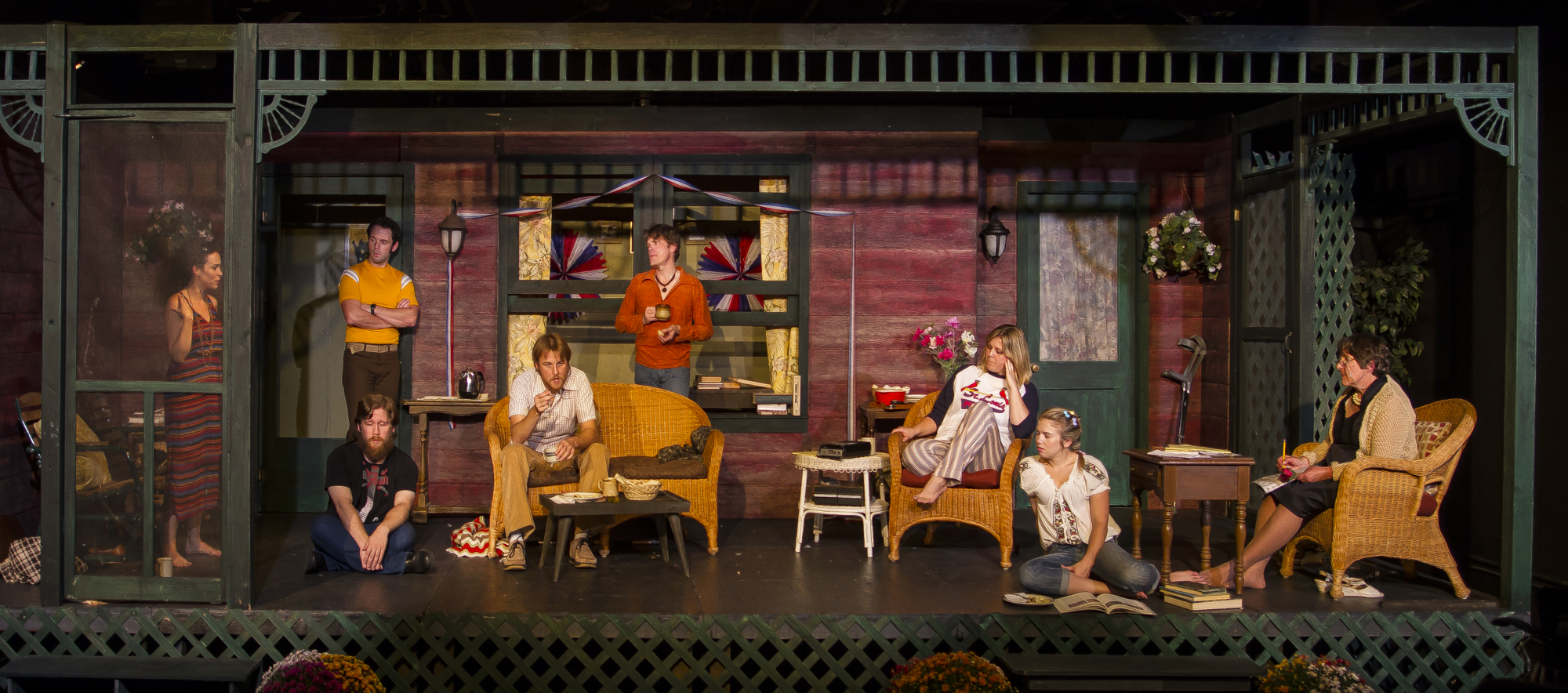
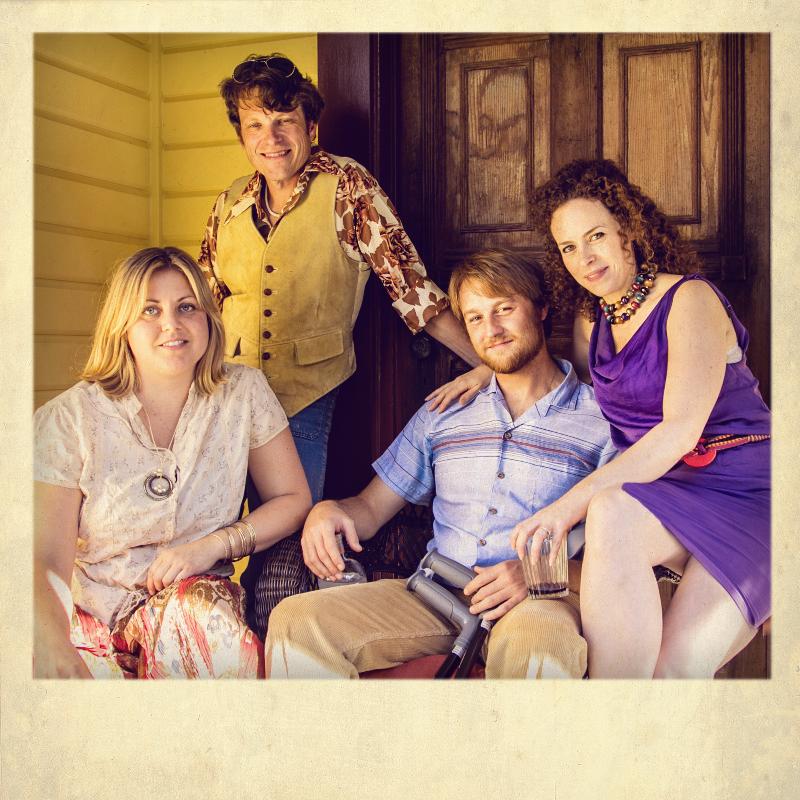
(left to right) Meg McLynn, Alex Garnett, Zach Sanders, Chris Shea, Tom Stewart, Megan Ahiers, Rachel Sedwick, and Mary Machala

(left to right) Meg McLynn, Alex Garnett, Zach Sanders, Chris Shea, Tom Stewart, Megan Ahiers, Rachel Sedwick, and Mary Machala

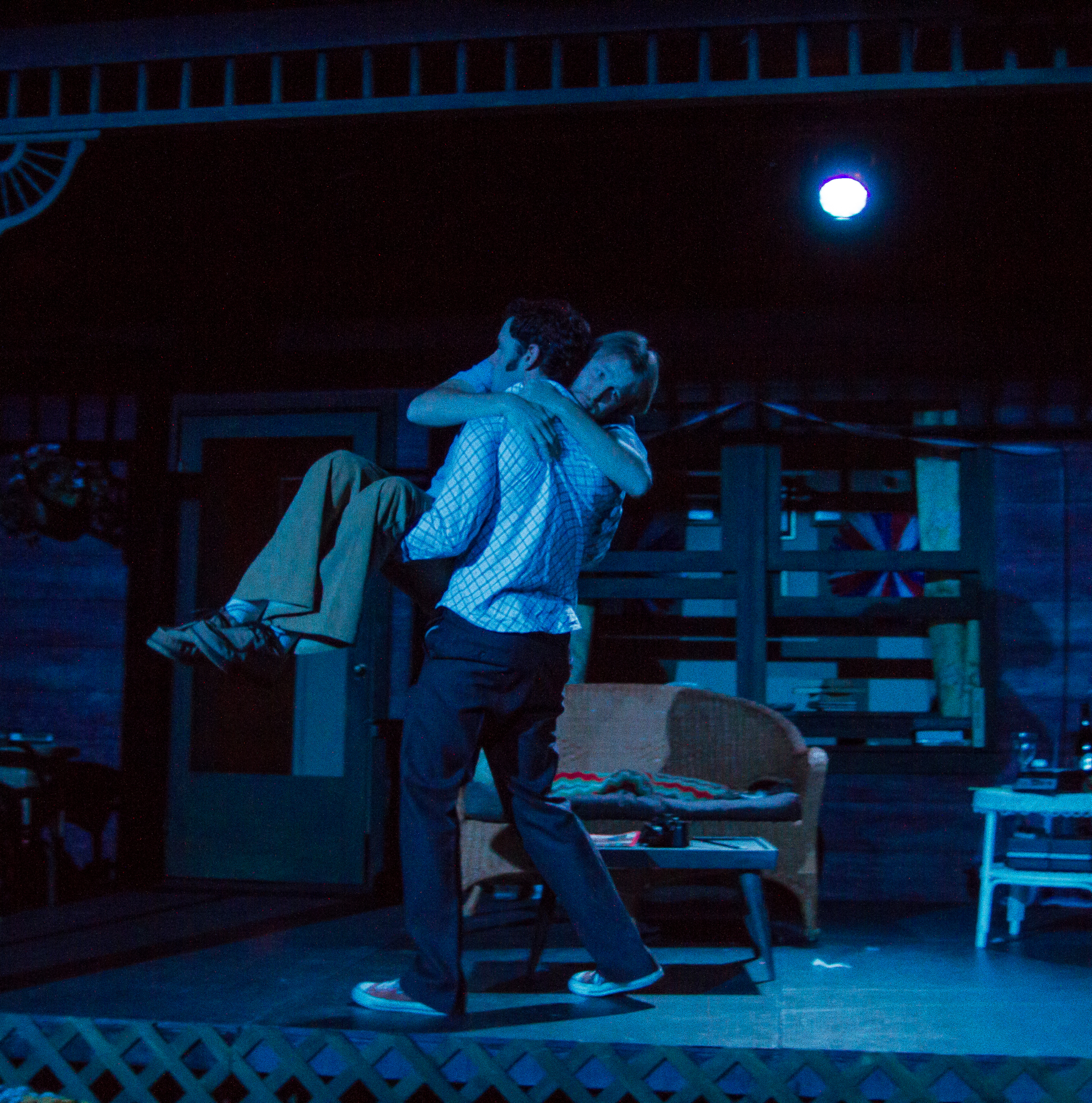
When he was ready to realize his dream of launching a new theater company in Seattle, director, actor, and teacher Corey D. McDaniel chose a play that centers around rich and complex ensemble acting for their first outing. Theatre22‘s declared mission to serve as “a meeting ground” emphasizes the power of artistic collaboration. And the company’s inaugural production of Fifth of July unquestionably puts its values to the test.

Lanford Wilson’s landmark play from 1978 is a richly textured meditation on the ties and tensions between a circle of highly individual characters coping with the emotional scars of disillusionment – and, in the case of Kenny Talley, a vet who lost his legs in Vietnam, the physical scars as well. Ken has taken temporary refuge in the now-rundown family homestead in rural Missouri which is his inheritance. Kenny’s lover Jed, a creative gardener, is painstakingly restoring the surrounding landscape, but the impulse toward stability Jed represents is countered by the events of a long Independence Day’s journey into night.

Chris Shea and Alex Garnett as Kenny and Jed

Chris Shea and Alex Garnett as Kenny and Jed

Among the holiday guests are Kenny’s sister June and her precocious teenage daughter, their Aunt Sally, and friends from their shared past as erstwhile radical students at Berkeley in the 1960s: the smooth-talking John Landis (who was sexually involved with brother and then sister) and his wealthy wife Gwen, whose big business trust fund didn’t prevent her from accessorizing trendy ’60s-style Marxism back in the day. Now, though, Gwen’s dreams have turned toward a career as a country singer, and her trusty guitarist Wes has accompanied her for the visit.

Borrowing a framework from Chekhov, Wilson establishes dramatic stakes that outwardly revolve around the proposed sale of the Talley home. John and Gwen hope to buy the farm to transform it into a commercial recording studio. But its metaphorical significance – the symbol of Ken’s unrealized potential and also of the past, of the collective memory whose meaning is up for grabs – intensifies the moral weight of the outcome. (Wilson, who died just two and a half years ago, went on to expand his drama of the Talleys into a trilogy, writing two more plays about the Talley family’s past, which take place in the 1940s.)

Fifth of July cast: Megan Ahiers, Tom Stewart, Chris Shea, and Meg McLynn; photo by Robert Falk

Fifth of July cast: Megan Ahiers, Tom Stewart, Chris Shea, and Meg McLynn; photo by Robert Falk

Director Julie Beckman is well attuned to the musical method of Wilson’s writing: like a tapestry of solo instrumentals emerging from the ensemble, different characters unexpectedly detach and come into the foreground to riff on a particular – not necessarily related – theme, only to gently recede while the focus turns elsewhere. A persistent challenge is making these transitions plausible and seamless: at times the production makes them feel too abrupt. There’s a lot of sensitive attention to detail in these monologues, and to their alluringly poetic blend of pathos and eccentric humor. The overall pacing, though, especially in the first act, has a tendency to slacken. As with Chekhov, finding the right tempo for Wilson is an extremely subtle undertaking.

Yet the connections and frustrations that are key to Fifth‘s momentum are vividly realized by the cast. Chris Shea, while tending toward a one-note approach to Kenny’s bitterly ironic tone, is genuinely moving in the final scene when – with beautiful symmetry – he is persuaded to stay by Gwen (a gloriously larger-than-life fuck-up in Meg McLynn’s portrayal). As his boyfriend Jed, Alex Garnett is the force that grounds Kenny, but he also underlines the significance of his rapport with Aunt Sally – and thus is the linchpin who holds this fragile family together. Megan Ahiers conveys sister June’s lingering insecurity; as her uber-curious daughter Shirley, Rachel Sedwick toggles between bratty tantrums and wise-beyond-her years remarks.

Aunt Shirley is meant to embody the contradictions that define the Talley family – or the braver exemplars of the clan – and the link to a past whose meaning has become painfully dubious. Mary Machala shows her as a dreamy eccentric, bruised in her own way and thus in league with her nephew Kenny. Tom Stewart emphasizes John’s sleazy swagger, but he comes off a tad too nice for the cutthroat competitor who has apparently shucked his Age of Aquarius idealism with no qualms. Zach Sanders has a few show-stealing moments as the space cadet Wes – including his famous monolog about the ill-fated Eskimo family.

The fine black box space of Fremont’s West of Lenin underscores the intimacy of this production and the details of Michael Mowery’s picture-frame unit set and Jordan Christianson’s spot-on costuming (complete with unironic bell-bottoms sported by John). Tim Moore’s sound focuses on the music – mostly a blast from the past – though I would’ve also welcomed some environmental sounds for a sense of place. Robert Falk’s lighting traces the first act’s woozy trailing off into memory as the national holiday fades into night, followed by the uneasy promise of the morning after.

It all makes for an impressive inaugural production. And Theatre22 has mapped out some ambitious plans for later in the season: in February comes a new musical titled The Hours of Life by Paul Lewis, based on Edgar Allen Poe, which will be directed by Corey McDaniel; and Terrence McNally’s The Lisbon Traviata is slated for this coming June, directed by Gerald B. Browning.

If you go: Fifth of July plays through October 26 at West of Lenin in Fremont. Tickets online

Corey McDaniel (producer) and Julie Beckman (director); photo by K. Lindsay

Corey McDaniel (producer) and Julie Beckman (director); photo by K. Lindsay

Filed under: review, theater

What a Story: Enda Walsh’s Walworth Farce

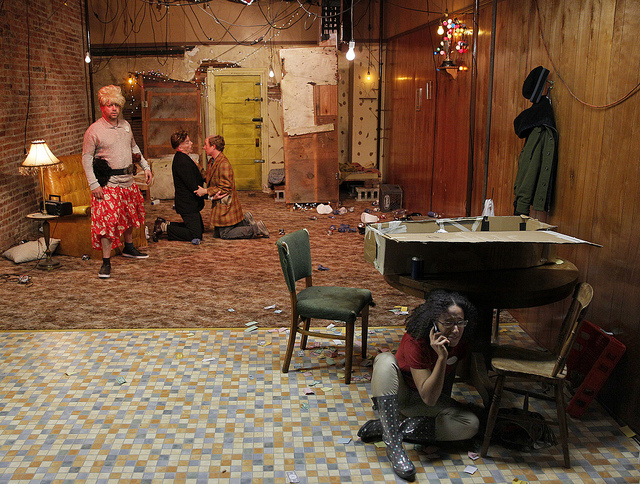
NCT's "The Walworth Farce"; photo by Chris Bennion

NCT’s The Walworth Farce; photo by Chris Bennion

For its fall production, Seattle’s enterprising New Century Theatre has chosen Enda Walsh’s The Walworth Farce. Here’s my review for Crosscut:

Talk about a repetition compulsion: For the first half of The Walworth Farce, New Century Theatre’s latest adventure, a father and his two grown sons run through the lines of the play they reenact day after day – an absurd, antic ritual involving a mock procession with a cardboard coffin, constant prop swaps, dizzying identity changes and a hidden “fortune” of shredded Monopoly money.

In the confines of their squalid South London council flat, Dinny (Peter Crook) is the paterfamilias and dictatorial writer-director of the script he and his sons Sean (New Century Theatre artistic director Darragh Kennan) and Blake (Peter Dylan O’Connor) perform day after day. Dinny keeps his boys’ eyes on the prize, egging them on to compete for a chalice-like trophy that will go to that day’s “best actor.” But snafus inevitably occur, and the ritual has to be reorganized.

Dinny’s play is the thing that’s supposed to keep them all safe. It recounts the story, fable repeated until it’s taken as fact, of how this insular family unit was forced to abandon their idyllic home back in Cork. We also learn how Mother was killed in a bizarre accident involving a dead horse. They’ve been living as exiles ever since, surrounded by “savage” Londoners and holed up on the top floor of a grimy, stairless high-rise.
“What are we without our stories?” wonders Dinny by way of justifying the outrageous fiction he’s used to paint over what actually happened – and the real world kept at bay by a half-dozen deadbolts on the flat’s front door.

continue reading

Filed under: playwrights, review, theater

Holy Cabooses! Wilder’s The Matchmaker at Taproot

Matchmaker-Pam Nolte2

(Pam Nolte as Dolly Gallagher Levi in Taproot Theatre’s production of The Matchmaker; photo by Erik Stuhaug)

It’s surprisingly easy to mistakenly associate Thornton Wilder’s theater — or at least his most-famous plays — with feel-good, homespun, Norman Rockwell Americana. (Whether that represents a mistaken idea of Norman Rockwell is another question.) A similarly false impression clings to the widespread image of Aaron Copland, who even composed a score for the 1940 film of Our Town and later considered basing on opera on it — though the playwright declined, countering: “I write amusical plays.”

Of course The Matchmaker, a Broadway and West End hit in 1955 after it bombed in its earlier 1938 incarnation as The Merchant of Yonkers, did morph into the musical Hello, Dolly! in the following decade. But the brassy success of the latter — which, admittedly, I’ve never been able to fathom — only reinforced the notion that Wilder’s play is just another charming twist on the happy alliance between romance and the American Dream.

The new production of The Matchmaker currently on the boards at Seattle’s Taproot Theatre is certainly entertaining. But in director Scott Nolte’s version, it also welcomely embraces Wilder’s deft homage to a vanished, rawer era of American theater-making. For the most part, there’s no embarrassed smoothing-over of the popular farce — complete with its own character types — that was already a fossil when Wilder devised this valentine to it.

Matchmaker-hat store

(Asha Stichter and Natalie Moe as Minnie Fay and Irene; photo by Erik Stuhaug)

Apart from an opening scene that drags, this Matchmaker is delightfully paced and benefits from a consistently focused ensemble energy. The renegade store clerk Cornelius Hackl (given an especially winning turn by Robert Hinds) and the scheming, ambitious milliner Irene Molloy (Natalie Anne Moe, channeling the moxie of Gretchen Mol’s Gillian on Boardwalk Empire) make their wide-eyed anticipation plausible when they remark: “The world is full of wonderful things!”

However “amusical” he may have thought his plays, Wilder’s build-up of the confrontations between the tyrannical merchant Horace Vandergelder and his underlings feels genuinely scherzo-like. Nolte makes room for the other concerns Wilder voices through the pleasure-seeking vehicle of his farcical plot.

Matchmaker-clerks

(Robert Hinds and Brad Walker as Cornelius and Barnaby; photo by Erik Stuhaug)

As these characters become entangled in mixed-up or feigned identities and search for mates and fortunes, they muse about the things that really matter to them. Against the backdrop of the Gilded Age and its class differences — effectively telegraphed by Sarah Burch Gordon’s delightful palette of costumes — Mrs. Dolly Gallagher Levi, the matchmaker in question (among other dubious pursuits), realizes it’s time to let go of memories of her late husband and “live among human beings” again: to be “a fool among fools” once more rather than “a fool alone.” Pam Nolte (Scott Nolte’s wife) animates her portrayal of the ever-confident Dolly with a well-calibrated hint of her disappointments.

Along with his humanist touches, Wilder works in a trenchant commentary on the greedy excess to which the drive for material success can lead. “The difference between a little money and an enormous amount of money is very slight, and that, also, can shatter the world,” observes Dolly, who espouses her own economic theory of “spread-it-around” capitalism. “Everybody thinks when he gets rich he’ll be a different kind of rich person from the rich people he sees around him,” Cornelius says. “Later on he finds out there’s only one kind of rich person. And he’s it.”

The point gets rather blunted in Robert Gallaher’s approach to Horace Vandergelder. Instead of the authoritarian, hard-as-nails “monster” who intimidates everyone, secure in his “half million,” Gallaher comes through as too domesticated, even mildly bemused by his sense of superiority.

Matchmaker-Horace

(Robert Gallaher as Horace Vandergelder; photo by Erik Stuhaug)

Brad Walker, on the other hand, makes a memorable impression by playing up his character type as Barnaby Tucker, the naive sidekick to Cornelius in search of “an adventure” on their self-declared day off. So does Kim Morris in her hilarious depiction of the eccentric Miss Flora, the friend of Dolly and Horace’s late wife. During the denouement in her New York house (a surprise for anyone who knows only Hello, Dolly!), Wilder uses Miss Flora to parody treacly sentiments about “true love.”

Mark Lund’s simple sets (including a painted urban backdrop) and sound design transform the small stage area into 1880s New York with a bare minimum of suggestion. The real time change is conveyed through Wilder’s earthy language — spiced at times with clever, Oscar Wilde-like turns of phrase — and the actors’ demeanor, though, and it all plays out as less dated than you might expect.

The Matchmaker, which closes Taproot’s current season, plays through Oct 19 at 204 N. 85th St., Seattle; tickets at 206 781-9707 or online.

–Thomas May (C) 2013 All rights reserved.

Filed under: review, theater

Ludo Starts His Third Season

Morlot-Thibaudet-Sep 2013
(Ludovic Morlot and Jean-Yves Thibaudet rehearsing Ravel with the Seattle Symphony)

I know I’m not the only one who can’t believe Ludovic Morlot is now in his third season helming the Seattle Symphony. Last night was an impressive all-Ravel program, with the fine pianist Jean-Yves Thibaudet on hand for both concertos. What a feast! My review here:

Wrapping up last night’s all-Ravel program with “Boléro,” Ludovic Morlot and the Seattle Symphony demonstrated complete mutual trust – an ingredient essential to giving this ultra-famous piece its spark. However familiar it is, Ravel’s sequential spotlighting of soloists makes it a dangerous enterprise. The music itself seems to dramatize the issue, with its slinky, head-worming tune twisting about but straitjacketed into a monomaniacal lockstep rhythm. How to find the right but unpredictable balances, to weigh the individual voice against the ensemble?

Continue reading

Filed under: review, Seattle Symphony, Uncategorized

Archive

Enter your email address to follow this blog and receive notifications of new posts by email.