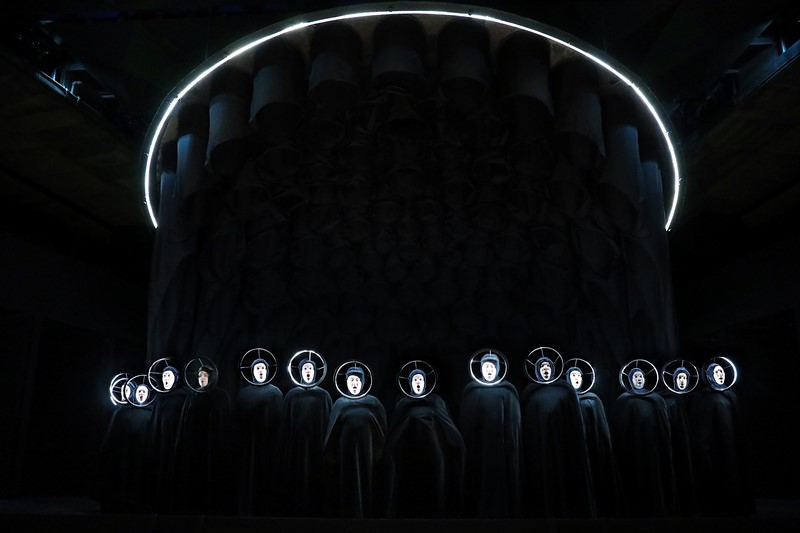
I wrote for Opera Now about Yuval Sharon’s Monteverdi production this summer at Santa Fe Opera:
The rousing fanfare that famously calls the audience to order for Orfeo was preceded by the sound of a modern orchestra tuning up – a preliminary signal of many surprises to come in Santa Fe Opera’s first-ever staging of the epochal work by Claudio Monteverdi. continue
Steven Osborne, James Ehnes and Alisa Weilerstein; (c)Jenna Poppe
Seattle Chamber Music Society’s 2023 Summer Festival is now in full swing. My review of the opening night concert:
Opening night concerts can be an invitation to default to lightweight programming, letting extramusical distractions become the focus. Not so at Seattle Chamber Music Society. The 2023 Summer Festival kicked off with a concert that kept the audience’s attention avidly fixed on the music at hand…
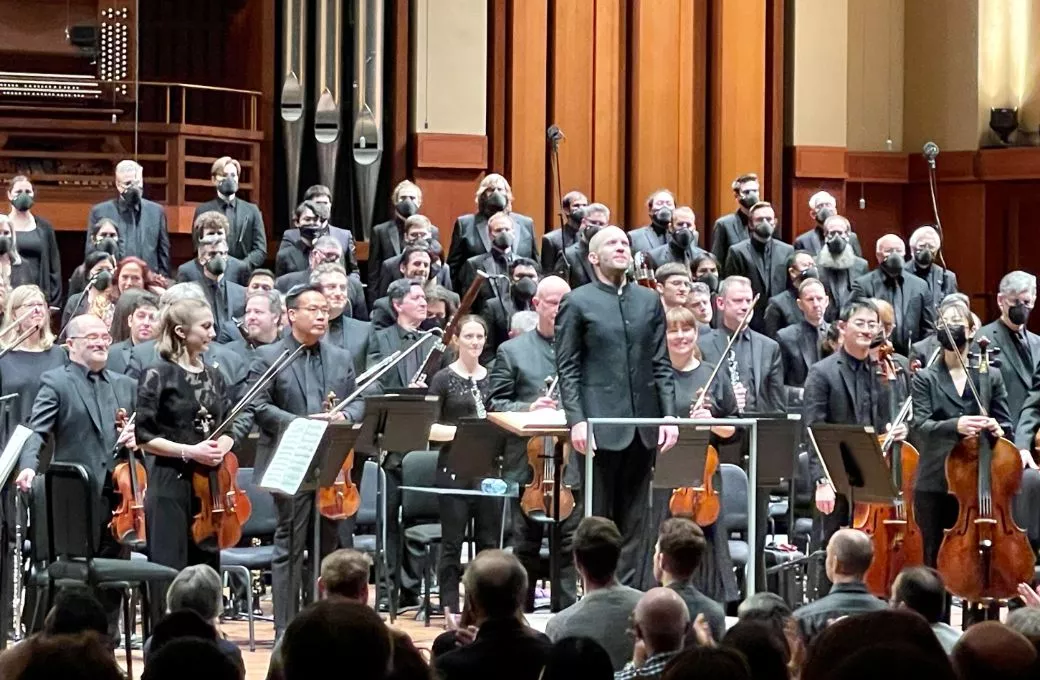
Osmo Vänskä led the Seattle Symphony in a breathtaking account of Mahler’s Symphony No. 2. (Photos by Carlin Ma)
I reviewed the final concert of the Seattle Symphony season — an excellent performance of Mahler’s “Resurrection” Symphony No. 2 with guest conductor Osmo Vänskä:
SEATTLE — The Seattle Symphony’s season of guest conductors concluded with a visit by Osmo Vänskä. On June 24, he led a breathtaking, meticulous performance of Mahler’s Symphony No. 2. Conventional program structure offers a chance to experience each visiting conductor’s skills with a variety of pieces and styles. But with the entire concert devoted to this single work, Vänskä took on the additional test of sustaining the musical narrative over the length of a feature film.
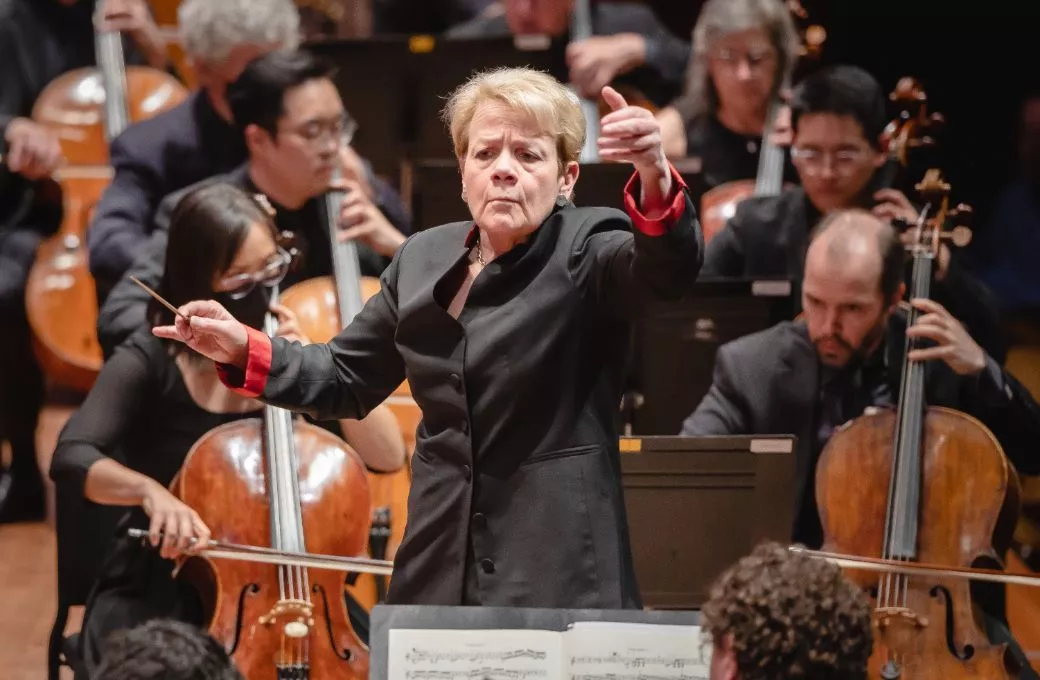
I reviewed this past weekend’s Seattle Symphony program with guest conductor Marin Alsop:
There was nothing star-crossed about Marin Alsop’s guest appearance with the Seattle Symphony. Fortune turned its wheel to allow for a happy, if long-overdue, collaboration following an absence of almost two decades from Benaroya Hall….
Music from Shostavich’s Fourth, Fifth, Eighth, Tenth and Eleventh Symphonies was performed live to Eisenstein’s film. (Seattle Symphony photo)
I wrote about a very interesting film + live symphony event at Seattle Symphony with guest conductor Frank Strobel:
In 1925, Sergei Eisenstein made cinematic history with the release of Battleship Potemkin, his feature debut. Dmitri Shostakovich, still a precocious teenager, was hard at work on his First Symphony, which also caused a sensation when it was premiered the next year by the Leningrad Philharmonic.
Abel Selaocoe and the Seattle Symphony; photo (c) Carlin Ma
What a memorable concert this was — my latest Seattle Symphony review:
“I feel very welcome here,” said Abel Selaocoe just before making his debut with the Seattle Symphony. Not only did he seem completely at home: in remarks introducing Four Spirits, his new work for cello, voice and orchestra, the young cellist-composer invited the audience to enter into his musical world, indicating that he would cue them when to sing along at the appropriate moment. “I’ll see you on the other side,” he winked, just before taking up his position to launch the piece.
David Robertson conducts the Seattle Symphony; photo (c)Brandon Patoc
David Robertson guest conducted the Seattle Symphony last week in a program of Ligeti, Bartók, and Rachmaninoff. My review:
Since it lacks a music director, the Seattle Symphony is presenting a smorgasbord of guest conductors throughout the season. These have been mostly younger artists still early in their careers, but David Robertson’s engagement marked the return of a seasoned conductor already well-liked by the players and in full command of a formidable talent….
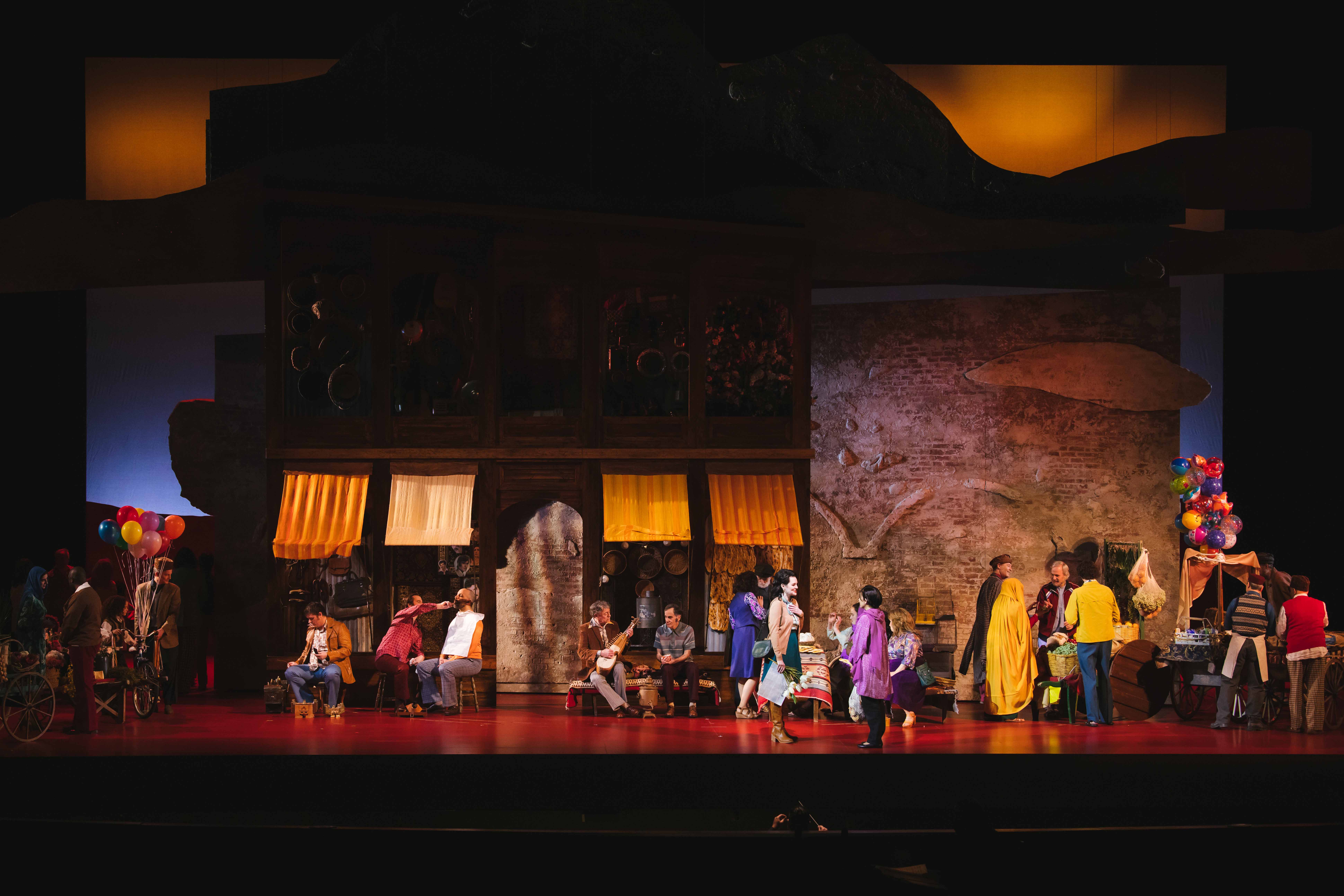
Cast members in A Thousand Splendid Suns at Seattle Opera. Photo credit: Sunny Martini
The moving operatic transformation of Khaled Hosseini’s 2007 novel AThousand Splendid Suns by composer Sheila Silver and librettist Stephen Kitvakos had its world premiere over the weekend at Seattle Opera in a powerful production directed by Roya Sadat. I reviewed the opening night performance for Musical America:
Soon after reading A Thousand Splendid Suns, Sheila Silver sensed that the story’s combination of tragedy and endurance has an archetypal, larger-than-life quality — exactly what opera excels at expressing. It’s a terrible irony that the work’s lengthy genesis has actually made this story of the oppression of women even timelier than when Silver first considered the idea over a decade ago….[see below]
David Danzmayr and the Seattle Symphony; photo (c) Jorge Gustavo Elias
I closed out 2022 with a review of the Seattle Symphony performing Boulanger and Beethoven:
The tradition of attending performances of Beethoven’s Ninth Symphony around New Year’s in Japan — where it is known simply as daiku — has a counterpart in Seattle. That the score’s epic journey spans such a spectrum of human experience yet culminates in a message of overwhelming affirmation makes the Ninth ideally suited for the Janus duty of casting a retrospective glance over the highs and lows of the year drawing to a close while ringing in the one just beginning with hope-filled anticipation….
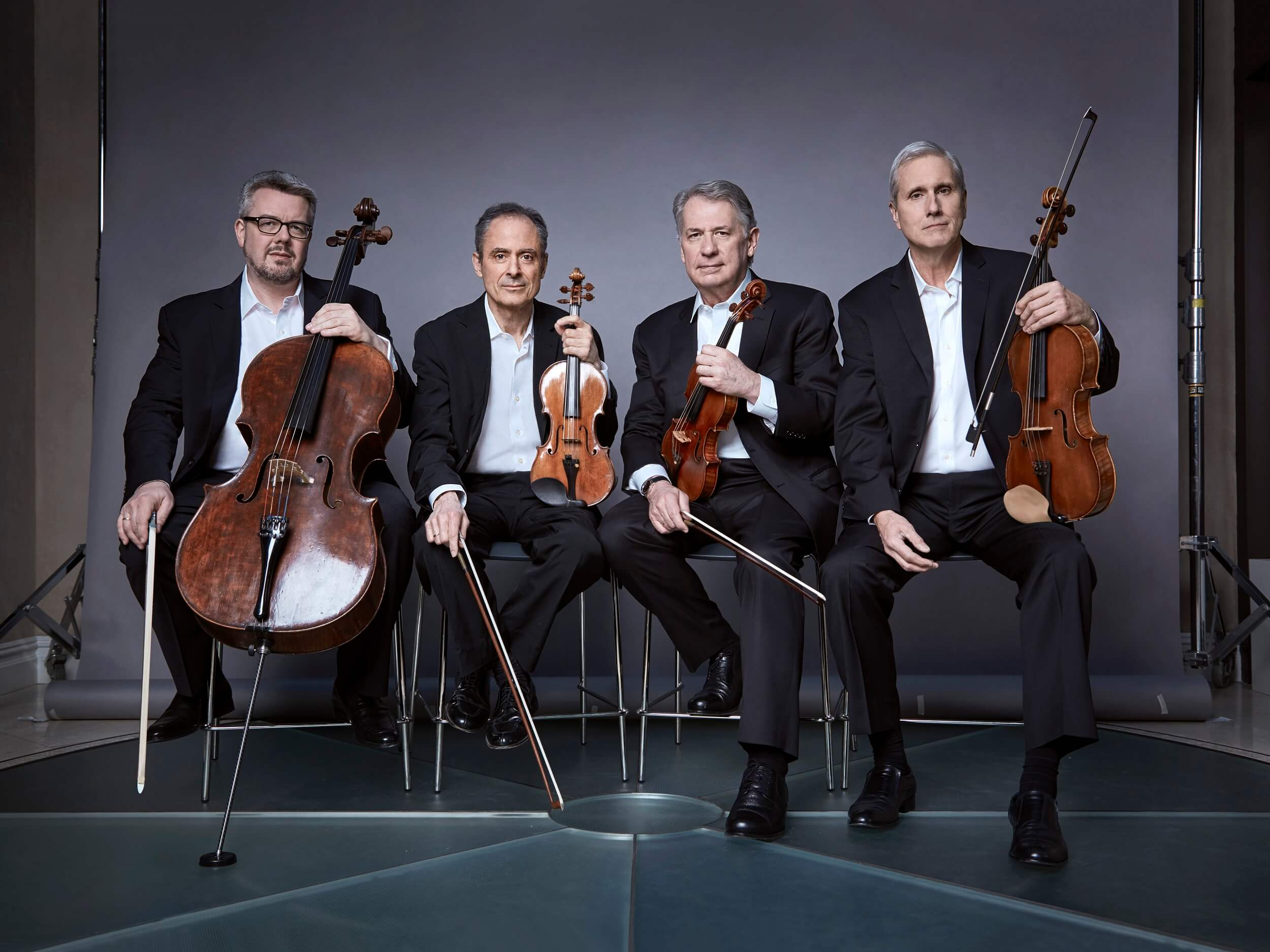
The Emerson String Quartet; photo (c) Jürgen Frank
There’s actually still nearly a year to go before the Emerson String Quartet (ESQ) plays its final final concert, which is currently planned for the end of October 2023 at Alice Tully Hall in Manhattan. On top of that, they are also preparing a feature-length documentary of their farewell tour, written and directed by Tristan Cook and produced by Birgit Gernbōck. So this splendid, storied American ensemble still has some way to go before reaching the end of the line….
Still, the Emersons’ concert on 1 December at the Meany Center for the Performing Arts had a distinctly valedictory accent. One of the stops on their official farewell tour, their appearance at the University of Washington venue had already been postponed from the spring and marked the 27th (or possibly even 28th) visit since the ESQ’s debut there in 1988. The ensemble attracts a loyal following, and an impressive percentage of the audience indicated that they had attended that inaugural performance.
As for the musicians, violinists Eugene Drucker and Philip Setzer have remained part of the ESQ since they founded it in 1976, and violist Lawrence Dutton joined in 1977. The only other change in personnel has been the arrival of Paul Watkins in 2013 following the departure of longtime cellist David Finckel. (Reunions with Finckel and the other two former members, cellist Eric Wilson and violist Guillermo Figueroa, are also on the agenda during the farewell tour.)
The ESQ have been offering their renowned Shostakovich interpretations as part of the farewell tour — their final London concert a few weeks ago featured the bleak implications of the Russian composer’s last three quartets — but they chose a blend of American and classic European fare for their Meany Center program. Each selection suggested an individual variant on the idea of leave-taking. George Walker expressed his grief over the passing of his grandmother in his 1946 Lyric for Strings, which originated as the slow movement of his String Quartet No. 1. Walker’s structural idea of having the single voices enter one after the other served as a beautiful metaphor for the individuality of the quartet members joining together in song and converging in a collective eloquence.
The ESQ here set the tone for the entire program, which at times seemed uncharacteristically understated, even subdued — as if to keep the audience pricking up its ears to fill in the spaces for what seemed left unsaid. This ploy took particularly delightful form in the fifth of Haydn’s Op. 33 set, the Quartet in G major that since the 19th century has been known by the English nickname “How Do You Do.” The “farewell” here was especially sly and sophisticated. Haydn cleverly plays with the idea of musical endings, which is to say, cadences, by starting off the whole work with a cadential gesture that befits a closing phrase — but that he catchily turns into the connective idea, leading us ever onward. The ESQ didn’t overemphasize Haydn’s little jokes of time and timing — the pizzicato ending that throws an enigmatic question mark on the otherwise plaintive slow movement, or the stop-and-start high-jinx of the scherzo, for example. The focus seemed to be on letting the music have its say, with minimal “interference.”
This translated into a decidedly austere, anti-sentimental take on Samuel Barber’s Adagio for Strings — like Walker’s, music by a young man, originally positioned as part of a string quartet, which seems wise far beyond its composer’s years. The Adagio (which is said to have been inspired by the third of Virgil’s Georgics) has of course been turned into a default song of farewell, an idealized elegy enlisted to provide a kind of shared catharsis in times of devastating tragedy. Despite some wavering intonation (here and elsewhere in the program), the Emersons homed in, without exaggeration, on the simplicity of the line, Setzer’s first violin soaring with courageous honesty and Dutton’s viola adding a slight, pleading edge. I was especially struck by how an early music sensibility emerged here in place of the usual, throbbing Romanticism.
Schubert was just a couple years older than the Barber of the Adagio for Strings when he wrote his great Quartet in G major in 1826. But rather than launch his career, the Austrian’s final string quartet (unpublished while he was still alive) seems to combine an expansive sense of symphonic writing with his most ambitious ideas of the quartet genre. (It was just around this time that Beethoven was working on his final quartet, in the very same city.)
There was less dramatic digging-in to the muscular aspect of Schubert’s sound world than I expected, and more nuance and room left for inference. Drucker took the lead here (as he had in the Haydn), while Watkins offered some especially flavorful phrasing. The ensemble’s rhythmic flexibility served the Schubert well, and the harmonic revelations of this remarkable quartet were presented as if being discovered for the first time, to mesmerizing effect. The finality of the final cadence to the dance of the fourth movement — which felt as it might otherwise have kept driving ahead, a frenzied vision of eternal return — came as a shock.
As a gentle encore, the Emersons turned to Dvořák’s quartet arrangement of one of the numbers from the collection known as Cypresses (“I Wander Often Past Yonder House”) — the string quartet distilled into pure song.