John Adams with the Seattle Symphony (photo credit: Chris Bennion)
Here’s my Seattle Times review of last night’s Seattle Symphony concert with John Adams at the podium:
The chance to hear a great living composer conducting his own music is rarity enough. But the new work John Adams has brought with him is rarer still: a composition created in the here-and-now that shows every sign of becoming part of the canon.
Illustration by Gabriel Campanario / The Seattle Times
The cover story of the weekend section of TheSeattle Times‘ is my feature on John Adams. He’ll be in town this coming week to conduct the Seattle Symphony in the West Coast premiere of his brilliant new violin concerto/dramatic symphony Scheherazade.2:
Some people feel like they’ve missed out because Mozart and Beethoven lived in a different century. But they’re overlooking the great artists who are in our midst today — composers writing music that is just as meaningful, and just as likely to last.
The title of my review is actually only part of the story of last night’s performance by the Seattle Symphony and Ludovic Morlot. The program — which I recommend highly as one of the highlights of the season to date — will be repeated Saturday and Sunday. The Beethoven alone would be enough to justify my enthusiasm, but let me get to the other parts of the story first.
Also worth the price of admission is the chance to hear the mellifluously named French pianist Jean-Efflam Bavouzet in Bartók’s Third Piano Concerto and the relatively rare Three Places in New England of Charles Ives.
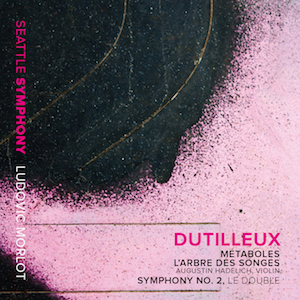
I suspect some of the remarkably palpable energy the players manifested last night has to do with a sense of anticipation regarding the 2016 Grammy Awards coming up Monday: the SSO nabbed three nominations for the second volume of their ongoing Henri Dutilleux series on the in-house label (including for Best Orchestral Performance).
What was particularly striking in the Ives — deeply challenging pieces, despite the sudden appearance of fragments of folk Americana that momentarily give the illusion of familiar reference points — was the refinement of detail within the most opaque, thickly laden textures of this score. The boisterous energy Morlot summoned for the famous clashing marches of the second place (“Putnams’ Camp”) was all the more startling on account of that refinement — a trait that reminded me of how the conductor searches for the right detail, le ton juste, inside one of Dutilleux’s intricately wrought orchestral canvases.
It was fascinating to hear the Ives so soon after last week’s rendition of Luciano Berio’s Sinfonia. You couldn’t help comparing the method of intrusive quotations, unprepared and free-associative, and wonder at the American maverick angle that leavened Berio’s European avant-gardism. Both composers resort to a collage aesthetic that seeks to replicate the complexity and porousness of musical memory — free of irony and mind games.
Indeed, at times Morlot elicited a curious innocence and tenderness from Ives’s decidedly unsentimental memory-soundscapes. Those qualities also came to mind in the Bartók concerto. On the surface this piece can almost be read as a kind of regression or longing for simpler procedures, a revocation of the composer’s Modernist street cred.
But Bavouzet’s enchanting, subtle interpretation had a cleanness of focus that suggested a mature master taking stock and paring away the inessential. Bartók knew he was dying when he composed the Third Concerto, and in this score the musical past returns not by way of collage and quotation but as acts of allusive, loving homage (above all to Bach and Beethoven — and of course to the rich loam of folk culture that Bartók accessed in a way so unlike the Romantics).
This was especially effective in the profoundly stirring central movement (“Adagio religioso”), where the pianist gave exquisite weight and voicing to Bartók’s harmonies and crisp, wonder-evoking articulation to the birdsong. Bavouzet — who had an opportunity to study with the pianist who premiered this work, György Sándor — projected winning charm along with a clear sense of purpose in the outer movements.
He returned for a most unusual encore (playing, incidentally, the new Steinway recently purchased for the SSO): three of the Notations by a 19-year-old Pierre Boulez, composed right around the time Bartók was working on his final concerto. Bavouzet played with Zen-like presence, or like a curator displaying a set of particularly rich gems, holding them up to glisten and sparkle in the light. This week’s concerts are being dedicated to the memory of the late Boulez.
So on to the Third Symphony of Beethoven. Morlot chose this work for his very first subscription concert after stepping to the podium as the SSO’s music director in September 2011 (pairing it on that occasion, curiously enough, with Dutilleux and a Frank Zappa piece Boulez himself had conducted).
Certain aspects echoed what lingers in my memory from that performance: above all, the historically informed performance touches that conferred a certain athletic fleetness and sharper focus. These were even more apparent — and more paradoxically “radical” in brushing aside the dust from overfamiliar passages — without determining every contour of the conductor’s approach.
I’d say that’s evidence of an increased confidence and interpretive vision Morlot is bringing to this score. The hammer blow chords at the end of the first movement’s exposition, for example, were genuinely shocking, while the use of a solo string quartet to voice one of the variation passages in the introductory section of the finale underscored the idea that textural transformations are just as crucial to Beethoven’s thinking as the thematic/harmonic ones that usually command attention.
Above all, the sheer energy of collaborating with the SSO on moment-by-moment decisions in the score gave this performance the stamp of authenticity that really matters, resulting in an electrifying Eroica. Not all those decisions worked: some of the rhythmic articulations of the Funeral March were sloppy, and the volcanic whirlwind that should launch Beethoven’s extraordinary finale (is there anything about the Eroica that isn’t extraordinary?) sounded curiously listless. But Morlot and the SSO sustained an edge-of-your-seat intensity across the work’s epic span, liberating it from any trace of the routine.
And Morlot inspired much fine, indeed heroic, solo work from the players, including Mary Lynch’s achingly expressive oboe solos (a key leitmotif of the Eroica) in the Funeral March and Jeff Fair’s fearless, flawless spotlights in the famously fear-inducing trio of the Scherzo.
Really, what more can you ask of a symphony program?
You couldn’t come away from last night’s Seattle Symphony concert without a feeling that you’d been privy to a major occasion — a genuine historic moment for the orchestra, for music director Ludovic Morlot, and for audiences both longterm and new to the art.
The occasion was the SSO’s first time tackling Sinfonia, the Luciano Berio masterpiece that is simultaneously viewed as an icon of the end of the modernist era and as a template for postmodernism and today’s aesthetic of collage. Indeed, Berio’s project can arguably be described as a rebuttal of the main tenets promulgated by his colleagues Boulez and Stockhausen — rather as Ligeti likewise represents a powerful refutation. Even so, all of these composers are sometimes clustered together as “Modernists.”
Keep in mind that Sinfonia was composed for the New York Philharmonic’s 125th anniversary under the tenure of its dedicatee Leonard Bernstein, before the Pierre Boulez era there. A very different kind of “modern music,” in other words.
The smart thing is just to set the labels aside and recall that Berio earned a powerful reputation as a rare (at that time) contemporary “classical” composer who managed to bridge the divide between far-flung experimentalism and an apparent willingness and capacity to communicate with audiences.
His outlook was all-embracing, which,for Berio, meant a passionate conviction that music had to be intimately connected to all aspects of the surrounding cultural context. And the context of Sinfonia‘s composition, in 1968-69 — the “heavy” years of the 1960s, a time of revolution, confusion, and upheaval — still reverberates.
The SSO’s performance — the Berio occupied the second half of the program –was prefaced by a dramatic darkening of the house and a brief, wonderfully personal video introduction from Morlot, projected onto a screen. Just enough to set the mood for a taste of that context, with a mix of musical and political reference points.
Playing to what appeared to be close to a packed house, Morlot and the SSO were joined by the vocal ensemble Roomful of Teeth (for a contemporary updating of sorts of the role played by the group Berio originally had in mind — the Swingle Singers). The orchestra itself swelled across the stage, massively enlarged, with speakers placed downstage; the amplified Roomful singers were discreetly “embedded” in their ranks (I couldn’t tell what other elements may have been slightly amplified).
In his intro, Morlot referred to his initial experience of Sinfonia, to how hard it seemed to figure out what was happening in this music. And the sense of being inducted into a bafflingly unanticipated world drove this performance. It was irresistibly present in the opening gestures — the mysterious, almost atavistic summons from the tam-tam, which passes on to the seemingly disembodied voices of the octet.
[Boulez himself conducting Sinfonia]
From that moment forward, it was as if Morlot and the ensemble had set off sailing down a daunting, mythic river. Earlier in the week Morlot had led the Curtis Institute Symphony Orchestra in Sinfonia at Carnegie Hall, yet there was never an impression of neatly worked-out solutions and answers to Berio’s unprecedented challenges. Rather, much of the thrill came from sensing that everyone was out on a limb, unsure of how — or even whether — it would all work out.
“I think Berio’s music has inspired a lot of us to treat instruments in a virtuoso way that is nevertheless humane,” observes the composer Steven Stucky. “I mean both humane to the performers and humane to the listeners, a kind of friendly, Italian virtuosity…” For me, Morlot tapped successfully into this idea of virtuosity and complexity. Berio’s strategies came across as much more than technical adventures to be surmounted.
And the capacity of this music to shock, in a post-Rite of Spring world (the Stravinsky is of course part of Berio’s collage-scape), was in this performance also remarkable. For example, in passage where Berio isolates a gesture like a sforzando and exaggerates it through repetition, Morlot elicited a savage intensity of accentuation that suggested the struggle for a new kind of musical speech.
Much is made of the “overwriting” on the canvas of the scherzo from Mahler’s Second Symphony (in the pivotal third movement of Sinfonia). But a highlight for me was the apocalyptic “panic chord” from Mahler’s Third that also surfaces — a moment of awareness in nature, before the arrival of human consciousness, as Mahler construes it. In this reading Berio’s commentary and contextualization seemed to pinpoint the arrival of in surmountable despair, from which Sinfonia has to work out a “breakthrough” of its own.
Overall, Morlot’s account paid special heed to Berio’s interrogation of the intersection between instruments and voices, between words as purely “musical” melismas and as intelligible signifiers. The fine line dividing chaos/noise from musical sense is being renegotiated by Berio in a new social contract.
A contract that was rudely shredded by a cell phone in the row ahead of me cruelly timed to ring as accompaniment to Sinfonia‘s final measures — not a mere errant ring followed by an awkward silencing, but the entire cycle of rings, the owner of the device displaying not the slightest degree of concern over inflicting this on his fellow humans.
Certainly the solutions of ultra-programmatic music offered by a Richard Strauss were no longer viable. Which may be why, in part, I was rather unsatisfied with the concert’s opener, the early tone poem Don Juan. Or that may just be down to the somewhat ruffled ensemble from the strings.
Morlot brought a few intriguing ideas to the score, pumping up the opening with an adrenaline rush and lingering over the tender passages with surreal, stop-motion gazes — abetted by Mary Lynch’s glorious oboe solos and Jeff Fair’s rich, glowing horn. Some of it, though, felt like special pleading. Call it a moment of crisis, but I found myself growing impatient with Strauss’s tricks and poses.
It was delightful to hear the underrated Beethoven Second Piano Concerto in such a thoughtful, finely chiseled account — continuing Morlot and the SSO’s success with their Beethoven concerto series (the First, last October, was spellbinding). Soloist Yefim Bronfman’s restraint, bordering even on understatement, surprised those familiar with his stentorian keyboard presence — a quality he confirmed in a thundering encore of the scherzo from Prokofiev’s Second Piano Sonata.
One more chance to catch this program: Saturday 6 February at 8pm: go here for tickets.
Can we really claim that there is a Mahler Ten? Opinions remain sharply divided among the most fervent Mahlerians. Some refuse to consider the proposition of performing even the first movement of the composer’s final, unfinished symphony – let alone any of the various attempts to construct a performable whole using the extensive sketches Mahler left behind at his death in 1911.
Bearing an exotically enigmatic title — Nu.Mu.Zu — the new work by the 80-year-old Georgian composer Giya Kancheli left a distinctly memorable impression in its North American premiere by the Seattle Symphony Orchestra under Ludovic Morlot. The world premiere took place only a few weeks ago in Brussels (Kancheli’s current residence is in Antwerp), with Andrey Boreyko and the National Orchestra of Belgium; both that ensemble and the SSO co-commissioned the piece. continue reading
The SSO describes Sonic Evolution, which began with Ludovic Morlot’s tenure and is now in its fifth season, as “a bridge for the Symphony to engage with Seattle’s creative community through innovative concert programs that celebrate the past, present, and future of the city’s musical legacy.”
Alack and alas, the series has managed to trigger a panic attack for the likes of Norman Lebrecht, who was moved last year to pen an absurd editorial claiming that the orchestra had “handed the pass to the enemy.”
This despite the irrelevant triviality of not having actually attended the performance in question, a part of which featured the rap legend Sir Mix-A-Lot (the object of his freak-out).
Two Sonic Evolution events rather than one have been baked into the current season. (Is that enough for Lebrecht to fret over the prospect of this unconventional concert format “replacing” the usual repertoire?) The second one, in May 2016, promises a collaboration (to which I’m especially looking forward) with the Seattle International Film Festival, Michael Gordon, William Brittelle, Fly Moon Royalty, and others.
There was much to recommend last week’s program as well, titled “Under the Influence of Jazz.” The concept of a jazz band-symphonic “fusion” of course has long roots by now, with George Gershwin among its most celebrated pioneers.
It remains a tricky proposition. And yet Derek Bermel upped the ante by pitching his multi-movement jazz concerto The Migration Series on an epic scale. (Bermel was returning to Seattle after a new commission last year from the Seattle Chamber Music Society.)
For this listener the risk paid off abundantly. Bermel originally wrote The Migration Series in 2006 on a commission from the American Composers Orchestra and the Lincoln Center Jazz Orchestra under Wynton Marsalis.
It wasn’t until he was already involved in the composition, Bermel said during a brief onstage interview, that the sounds he was hearing began to evoke memories of the great cycle of 60 paintings by the same title by Jacob Lawrence (1917-2000). The artist had a Seattle connection, having moved here later in his career, where he became a professor at the University of Washington. Bermel added that as a teenager he recalled being profoundly affected by seeing the series (which is currently split between the collections of MOMA in New York and the Phillips Collection in Washington, D.C.).
This cross-connection between music and visual art is another dimension of the ways Sonic Evolution is experimenting with opening up the concert format to other kinds of stimulation. As we listened to the Bermel, reproductions of paintings from Lawrence’s cycle were projected, ranging from landscapes and urban settings to chilling depictions of the violence faced by African-Americans during the Great Migration northward, along with complex crowd scenes.
Bermel says he didn’t aim to “illustrate” particular paintings but wanted “to focus on the shapes, colors, moods, and atmospheres evoked by groups of scenes within the series… In this grand American story, I gravitated toward the larger themes, those of determination, mystery, despair, and hope; Lawrence’s unique sense of perspective and distance – his generosity and universality of narrative – allowed the space for me to add music.” Apparently this was the first performance of The Migration Series to present the music in tandem with the art that inspired it.
Bermel constructs his five-movement score (with three connecting interludes) as a kind of jazz concerto grosso. The super-talented Roosevelt High School Jazz Band took on the role of the concertino, the band as hyper-soloist in dialogue with the SSO, while Bermel himself played a soulful, extended clarinet solo.
The composer aptly compares his method of construction here to a mosaic, and parts of the score tend to lure the ear like glittering shapes, while simple motifs recur as binding devices. If some stretches feel a touch overlong, what remains most striking is the quality of Bermel’s musical language: engaging, original, with something genuine to say. (You can hear a sample at the bottom of this piece from Second Inversion.)
Also on the agenda was a world premiere was by local jazz wizard Wayne Horvitz: Those Who Remain, a compact two-movement concerto for his longtime collaborator, jazz guitarist Bill Frisell. In this case, I found the interest of the source of inspiration — the poetry of Seattle’s own Richard Hugo (1923-1982) — overshadowed the substance of the musical work.
Horvitz’s solo part (including room for improvisation) for Frisell seemed deliberately understated, and the orchestration was colorful and vibrant — especially the second movement’s chorale theme — but for all its charms, a first hearing left me underwhelmed, without a clear sense of musical profile.
In fact I was fortunate to have gotten a wonderful Horvitz fix earlier in the week at the Paramount Theater’s presentation of his original score for The Cabinet of Dr. Caligari (part of the Trader Joe’s Silent Movie Mondays): Horvitz and his ensemble performed the music live. It’s a fascinating and truly inventive collaboration between jazz and silent film.
The concert’s second half brought the Seattle-born vocalist Shaprece center stage, accompanied by Morlot and the SSO in arrangements of her songs by Phillip Peterson (and by an expressive pair of dancers and a bearded backup vocalist).
The theme of visuals continued throughout the concert — less successfully for the Horvitz and then with more liveliness (and club floor slickness) for Shaprece’s numbers. She commands such a beautiful voice I’d love to hear Shaprece in a wider range of material. But anything that’s reminiscent of Björk, as several songs in her set were, is fine by me.
A few evenings ago, members of the Seattle Symphony joined with some guests for its latest installment in this season’s series of chamber concerts.
I especially enjoyed hearing Alexander Melnikov as the pianist in a Shostakovich’ masterpiece (the Second Piano Trio, his memorial to Ivan Sollertinsky), just two days after the pianist’s triumph with the full SSO in playing Beethoven. The 19-year-old Leonard Bernstein’s Piano Trio and the Elliott Carter Woodwind Quintet of 1948 also stood out for me.
But the indisputable highlight came right at the center, with a riveting, soulful, hugely dramatic performance of George Enescu’s Op. 25 Sonata No. 3 in A minor for Violin and Piano from 1926 (titled “dans le caractère populaire roumain”). SSO violinist Mikhail Shmidt and guest pianist Oana Rusu Tomai took all sorts of risks that paid off in this fascinating, epic-sounding piece.
And now I can’t get it out of my head. The YouTube performance above is from 1936 and features the brother-sister team of Yehudi and Hephzibah Menuhin.


 John Adams with the Seattle Symphony (photo credit: Chris Bennion)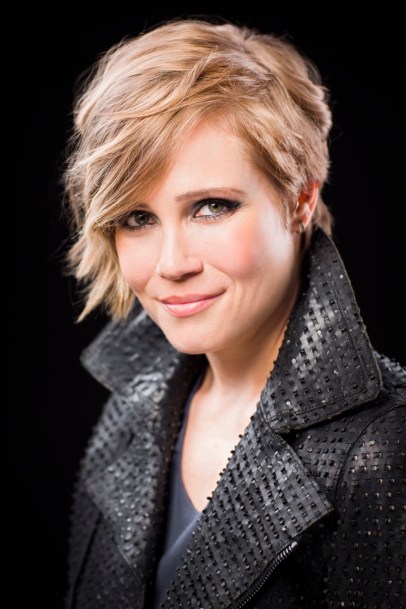





 MEMETERIA by Thomas May