
On the first anniversary of Pierre Boulez’s death.
Filed under: Pierre Boulez

January 5, 2017 • 3:48 pm Comments Off on Pierre Boulez, Modernist Legend, Dies at 90
On the first anniversary of Pierre Boulez’s death.
Filed under: Pierre Boulez
January 3, 2017 • 10:40 am Comments Off on Déjà vu?

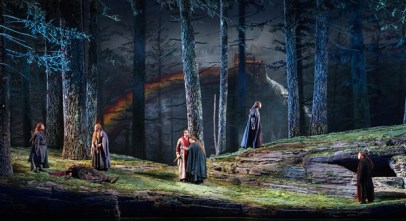
I found the above image accompanying a review of The Cunning Little Vixen (aka Das schlaue Füchslein) from a Wiener Staatsoper production reviewed on Bachtrack.
Am I imagining things, or is this uncannily reminiscent of Seattle Opera’s so-called “green Ring” set?
Filed under: Seattle Opera, Wagner
January 1, 2017 • 12:00 am Comments Off on Revolution No. 9

It was premiered almost two centuries ago. And Beethoven’s Symphony No. 9 still feels as urgently needed today as ever.
Filed under: Beethoven, Ludovic Morlot, Seattle Symphony, Seattle Times
December 30, 2016 • 12:08 am Comments Off on The Healing Bach
 A link to my feature story, in this month’s Strings magazine, on the inexhaustible appeal of the Sonatas and Partitas for solo violin:
Bach’s works for solo violin and cello are the Shakespearean monologues of the string world: The indefinable balance of technical mastery and interpretive insight they require is the touchstone of a great artist.
Filed under: Bach, violinists
December 26, 2016 • 5:11 am Comments Off on Abducted by Mozart
Enjoying a fresh look at Die Entführung aus dem Serail as I research for an LA Opera essay. In January the company presents James Robinson’s staging of the Mozart Singspiel, which the director describes as “one of the most unabashedly romantic pieces that Mozart ever wrote” along with being “a wonderfully funny piece.”
From Mozart’s letters when he was working on Abduction in 1781, the year he broke with his Salzburg boss and decided to settle in Vienna:
An opera is sure of success when the plot is well worked out, the words written solely for the music and not shoved in here and there to suit some miserable rhyme … The best thing of all is when a good composer, who understands the stage and is talented enough to make sound suggestions, meets an able poet, that true phoenix; in that case, no fears need be entertained as to the applause – even of the ignorant.
Filed under: Los Angeles Opera, Mozart
December 24, 2016 • 1:08 am Comments Off on A Messiaenic Christmas
December 20, 2016 • 12:58 am 2
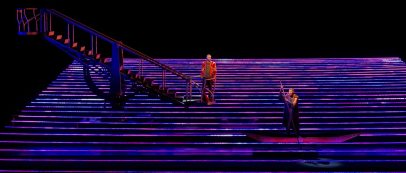 On Friday, 1 December 2016, the Metropolitan Opera will premiere its new production of Kaija Saariaho’s L’Amour de Loin. It will mark the first time since 1903 that the company will have presented an opera by a woman composer.
Here’s my essay for the Met’s Season book on this stunning creation by Kaija Saariaho:
Since its world premiere at the Salzburg Festival in 2000, L’Amour de Loin has earned a place among the most acclaimed stage works of the 21st century. The opera won the prestigious Grawemeyer Award for Musical Composition in 2003 and has been performed in Paris, London, Santa Fe, Helsinki, Aspen, Darmstadt, and elsewhere. Yet it took years before Kaija Saariaho became convinced that opera could be a viable medium for what she wanted to express as a composer.
Filed under: essay, Metropolitan Opera, new music, Uncategorized
December 17, 2016 • 3:24 pm Comments Off on El Niño in Spoleto: Perspectives on the Miraculous
In honor of the LA Philharmonic’s performances this weekend, here’s a look at one of John Adams’s masterpieces from the millennium.
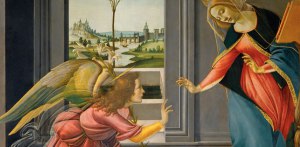
The Spoleto Festival USA for 2014 just opened with a production of a John Adams masterpiece, El Niño, fully staged by John La Bouchardière. Here’s the essay I wrote for Spoleto’s book:
Is it possible to be touched by a sense of the miraculous today? In our guarded, cynical age, can we feel anything remotely similar to the experience of wonder that was the norm rather than the exception for most of human history?
Just before the turn of the millennium, John Adams began a risky new project to explore art’s power to re-enchant us. El Niño is the intensely beautiful and moving result. It’s a work that offers an unforgettable entrée into his musical world — and one that tends to keep a high position on the favorites list of the composer’s most ardent fans.
“I’m very interested in the dramatic staging of musical works,” says Spoleto Festival…
View original post 1,206 more words
Filed under: Uncategorized
December 16, 2016 • 1:51 am Comments Off on Happy Birthday, Ludwig!
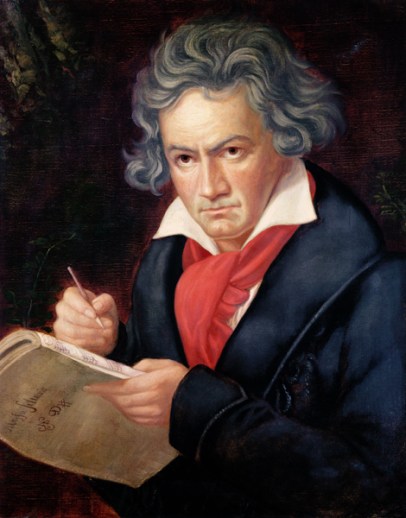
Portrait of Ludvig van Beethoven composing his Missa solemnis by Joseph Karl Stieler (1819) Beethoven Haus, Bonn, Germany/The Bridgeman Art Library International
Beethoven was my very first “classical music” love. And Beethoven remains inexhaustibly fascinating. I’m still digesting Jonathan Biss’s thoughtful performance of Op. 111 last weekend at Meany Center for the Performing Arts.
In honor of the composer’s (probable) birthday (we know at least that he was baptized on 17 December 1770), a few favorite quotes from the master:
“I must despise a world which does not feel that music is a higher revelation than all wisdom and philosophy, the wine which inspires one to a new generative process, and I am the Bacchus who presses out this glorious wine for humanity and makes it spiritually drunken.”
“My thoughts go out to you, my Immortal Beloved I can only live wholly with you or not at all-
“What you are, you are by accident of birth; what I am, I am by myself. There are and will be a thousand princes; there is only one Beethoven.”
“It seems I could wrest my ideas from nature herself with my own hands, as I go walking in the woods. They come to me in the silence of the night or in the early morning, stirred into being by moods which the poet would translate into words, but which I put into sounds — and these go through my head swinging and singing and storming until at last I have them before me as notes.”
“The true artist is not proud, he unfortunately sees that art has no limits; he feels darkly how far he is from the goal; and though he may be admired by others, he is sad not to have reached that point to which his better genius only appears as a distant, guiding sun. I would, perhaps, rather come to you and your people, than to many rich folk who display inward poverty.”
“Must it be? It must be.”
Filed under: Beethoven
December 14, 2016 • 1:56 am Comments Off on Women’ s Indelible Mark on Classical Music
 My December began with one of the most thrilling performance experiences in a very long time: the Met Opera premiere of Kaija Saariaho’s L’amour de loin. Another highlight this year was Julia Bullock’s performance in the revised version of Saariaho’s La Passion de Simone at the Ojai Festival.
In honor of Saariaho, here’s a piece I wrote this past spring about women in music:
It took until 1920 for the 19th Amendment to the U.S. Constitution to be ratified, guaranteeing female citizens the right to vote. But almost 100 years later, the status quo in classical music still needs a whole lot of shaking up if women are to have any chance of fair representation.
Filed under: essay, Saariaho, women composers
 Arts & Culture Stories from NPR

