MEMETERIA by Thomas May

Music & the Arts

Mark Padmore and Kristian Bezuidenhout at the White Light Festival

Mark Padmore (l) and Kristian Bezuidenhout (r)

Mark Padmore (l) and Kristian Bezuidenhout (r)

In my latest Musical America piece (behind a paywall), I review the second program in the remarkable Schubert Trilogy from last week at Lincoln Center’s White Light Festival.

Tenor Mark Padmore and fortepianist Kristian Bezuidenhout teamed up for three evenings of Schubert lieder cycles (with a touch of Beethoven for the second program — Schwanengesang prefaced by An die ferne Geliebte, reviewed here). Here’s an excerpt:

In a brief introduction to his Tully Hall recital on Thursday, October 15, the tenor Mark Padmore remarked that the sense of longing encompassed by the German Sehnsucht — a word that defies easy translation — provided the link between the evening’s pair of cycles by Schubert and Beethoven, performed with keyboard partner Kristian Bezuidenhout.
[…]
The term recital sounds too coldly objective. Certainly it fails to do justice to the sense they achieved of a “through-composed” emotional journey, without the benefit of staging or design elements: Gesamtkunstwerk of music and poetry on an intimate scale….

Filed under: Beethoven, lieder, Musical America, review, Schubert

Screen Test

JAC_Redford

The new issue of LISTEN Magazine contains my profile of composer and film music veteran JAC Redford, who just orchestrated Thomas Newman’s music for the upcoming James Bond film (Spectre):

THE WHOLE PICTURE is what counts; and the composer must see it not as a composer but as a man of the theater,” wrote Leonard Bernstein, reflecting on composing the score for On the Waterfront.

Bernstein’s adventure into film scoring — marred by creative scrapes with the film’s director Elia Kazan — was unpleasant for him, and marked the conductor–composer’s first and last time writing film music (not counting already existing scores that were adapted for film) — anomaly in an otherwise naturally collaborative career. But for many composers, there’s something perpetually alluring about the medium of film.

Like a particular scent, the simplest chord progression or snatch of soaring melody from a beloved score can instantly trigger a flood of memories—both personal and cultural.

continue reading [opens as pdf]

Filed under: composers, film music, James Bond, profile

Happy Birthday, Oscar

And some favorite quotes:

“You must not find symbols in everything you see. It makes life impossible.”
(Salome)

“The world is a stage, but the play is badly cast.” (Lord Arthur Savile’s Crime)

“Life is much too important a thing ever to talk seriously about it.”
(Lady Windermere’s Fan)

“The public have an insatiable curiosity to know everything, except what is worth knowing.” (The Soul of Man Under Socialism)

“It is perfectly monstrous the way people go about, nowadays, saying things against one behind one’s back that are absolutely and entirely true.”
(The Picture of Dorian Gray)

Filed under: anniversary, Oscar Wilde

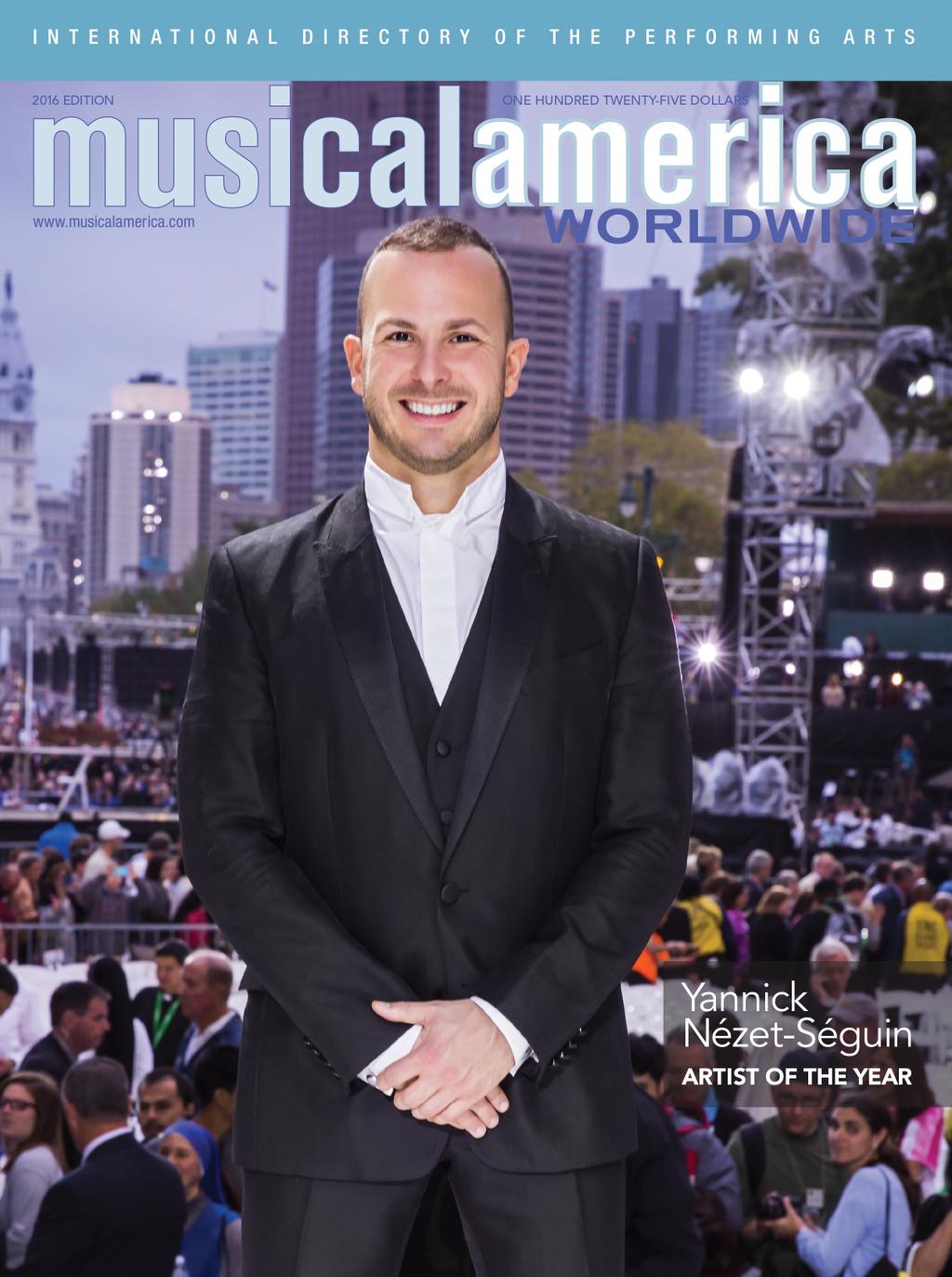
Musical America Announces the 2016 Artists of the Year

Yannick

On December 8 Carnegie Hall will host a ceremony honoring the following winners of the 2016 Artist of the Year categories determined by Musical America (to which I’m a contributing writer):

–Yannick Nézet-Séguin as overall Artist of the Year

–Tod Machover as Composer of the Year

–Jennifer Koh as Instrumentalist of the Year

–Mark Padmore as Vocalist of the Year

–Boston Modern Orchestra Project as Ensemble of the Year.

Congratulations to all!

Filed under: music news

Pollini’s Chopin

Reviewing Maurizio Pollini’s recent Carnegie Hall recital, Anthony Tommasini captures what makes the 73-year-old pianist’s Chopin so unique:

The high point came after intermission, with Mr. Pollini’s revelatory account of a later Chopin work, the Polonaise Fantaisie in A flat. This enigmatic 13-minute piece is like a free-roaming, pensive fantasy from which a dark yet snappy polonaise tries to emerge. Ambiguity was exactly the quality Mr. Pollini, long admired for his Chopin, emphasized in his fascinating performance.

The opening alternates short flourishes of majestic chords with curious strands of lacy lines that trail up the keyboard. Is some kind of march about to begin? Or is the music already consumed with self-reflection? It’s both at once, as Mr. Pollini’s playing suggested. Hearing this performance, I realized as never before that every time the dancing elements of the polonaise emerge, the themes are quizzical, the harmonies wayward.

Filed under: Chopin, pianists

Hughes, Shakespeare, and the Goddess

Thomas May's avatarMEMETERIA by Thomas May

Goddess

There’s no shortage of “upstart crows” when it comes to Shakespeare studies: scholar-mavericks who challenge the self-appointed gatekeepers in academia. And it’s no surprise that (after discounting the obvious crackpots) many of these turn out to offer little more than half-baked theories that crumble under closer scrutiny.

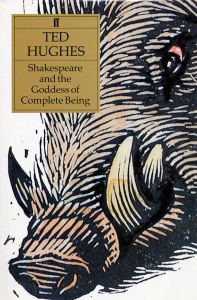
But one of the most significant unconventional readings of Shakespeare of recent years belongs to a class of its own: the poet Ted Hughes’ Shakespeare and the Goddess of Complete Being. Is this a truly paradigm-shifting vision or an absurdly reductive idea that sacrifices too much to in pursuit of a “hedgehog” theory?

Ann Skea offers a sympathetic portrayal of the scope of Hughs’ great project:

In his long introduction, Ted outlined the religious and psychological conflict caused by the Calvinist Puritan suppression of Old Catholicism in which the goddess of earlier pagan beliefs still flourished. The religious aspect of this conflict…

View original post 194 more words

Filed under: Uncategorized

Gargoyle Shadow

gargoyle-shadow

Filed under: photography

Tannhäuser at the Met

Tannhäuser has returned to the Met. Here’s my essay for the Met’s program:

Wagner never completely came to terms with Tannhäuser. On the
evening of January 22, 1883, less than a month before his death, he
ended a conversation with his wife Cosima by playing the Shepherd’s
Song and Pilgrims’ Chorus on the piano. In her diary entry for that day, Cosima quotes her husband lamenting that, “he still owed the world a Tannhäuser.”

Even if Wagner was merely referring to a production suitable for Bayreuth
(where the opera would be posthumously introduced under Cosima’s direction
in 1891), he remained anxious long after Tannhäuser’s premiere in 1845 abouthow to improve what he had created.

This anxiety bordered on obsession: Tannhäuser stands alone among the canonical Wagner operas as a continual “work-in-progress” over which the composer restlessly fretted, rethinking its premises on the occasion of each new production and periodically subjecting it to revision.

continue reading [pdf: p. 40]

Filed under: essay, Metropolitan Opera, Wagner

John Luther Adams at the Miller Theatre

Last night Columbia University’s Miller Theatre presented the opening of its John Luther Adams concert trilogy celebrating JLA as this year’s Schuman Award winner.

Together these three concerts are presenting JLA’s trilogy of large-scale memorials to his parents and to his musical parent (Lou Harrison). Last night Steven Schick conducted ICE in a luminous performance of Clouds of Forgetting, Clouds of Unknowing: music you wish would never have to come to an end.

Especially notable was the sustained realization of the sheer sensuousness of JLA’s voicings, so deftly counterbalanced with the abstract structure of the piece.

Here’s the essay I wrote for these programs:

Extraordinary Listening: A John Luther Adams Trilogy

“Music is not what I do. Music is how I live. It’s not how I express myself. It’s how I understand the world.”
—John Luther Adams

One among many moments of dazzling clarity in the writings and reflections of John Luther Adams, this artistic credo points to a composer deeply rooted in the American maverick tradition of figures like Lou Harrison, John Cage, and Morton Feldman: figures who have operated outside the business-as-usual conventions of making and thinking about music.

continue reading

Filed under: John Luther Adams, new music essay

Paul Taub Presents New Works for Flute + Ensemble

The intrepid flutist Paul Taub — a terrific force for new music in Seattle — is planning to present a program of five new commissions of works for chamber music and flute. The event is planned for 20 November at Seattle’s Chapel Performance Space.

The composers in the lineup are Tom Baker, Andy Clausen, David Dossett, Jessika Kenney, and Angelique Poteat. They’ve been asked to write pieces for an ensemble of flute (Taub) as well as clarinet (Laura DeLuca), cello (Walter Gray), contrabass (Joe Kaufman), piano (Cristina Valdes), and percussion (Matthew Kocmieroski).

Given Paul’s credentials as a passionate and effective new music advocate — he’s also a member of the adventurous Seattle Chamber Players — this program should be well worth attending.

Here’s some more from the press release on the criteria for this project:

Composers Tom Baker, Andy Clausen, David Dossett, Jessika Kenney and, Angelique Poteat have been chosen to participate in this project because of the high artistic quality of their work, the diversity of their styles, the varied stages of their career trajectories, and above all, because their music truly speaks to the public.

The variety of musical styles is a key element of the project. Baker and Kenney are well-established “mid-career” composers, with impressive resumes and works that have been played internationally. Poteat, in her late 20s, is emerging as a significant voice in the Seattle and national music world, with recent pieces commissioned by the Seattle Symphony. Emerging composers Dossett and Clausen (whose band The Westerlies has taken the jazz world by storm), are recent college graduates (Cornish College of the Arts and the Juilliard Jazz Program). The composers’ musical styles are varied and contrasting, with influences as diverse as jazz, electronics, Persian modes, classical music and improvisation.

Filed under: commissions, music news

Archive

Enter your email address to follow this blog and receive notifications of new posts by email.