I can’t get enough of Barrie Kosky:
Filed under: Bayerische Staatsoper, directors, Prokofiev

December 12, 2015 • 2:45 pm Comments Off on Feurig and Fiery
December 11, 2015 • 5:24 pm 1

Taylor Mac
The performance phenomenon known as Taylor Mac has been riding a wave of more mainstream success of late.
A few seasons ago he was a smash in a remarkable production of Brecht’s The Good Person of Szechuan by the Foundry Theatre at the the New York Public Theatre (playing both Shen Te and Shui Ta). The run of Mac’s wild new play Hir at New York City’s Playwrights Horizons was recently extended — yikes, recognition by the global capitalist economy! — and Hir is showing up on several best-of-the-year lists. (The title of this darkly absurd comedy about a dysfunctional, moving-to-postgender family conflates “his” and “her,” though Mac’s own gender pronoun of preference rejects both of these in favor of the delightfully befuddling “judy.”)
And Mac is heading into 2016 with his most-ambitious project ever: A 24-Decade History of Popular Music (still in progress), which will eventually comprise 24 concerts, each devoted to one of the 24 decades of the history of the United States (from 1776 through 2016).
Ultimately Mac plans to stitch these programs together into a single blow-out extravaganza of three acts, eight hours each, spread over a continuous 24 hours. Food and a medical tent are being promised; bring-your-own bedding is encouraged; communities will be forged.
You can sample an excerpt from the intended magnum opus in this weekend’s show at On the Boards, where Mac is making his belated debut.
At the opening last night, Mac offered a brief overview of the scheme: a string of popular songs, with each hours’ worth more or less representing a particular decade. Many are of course instantly recognizable numbers, but he’s mixed in some genuine obscurities (and will also be writing some of his own songs).
Mac also promises some spectacular diversions will be part of the still-gestating Gesamtkumstwerk. For example, last night he remarked that he’s come to see the necessity of including a skit for 24 Tiny Tims: “half of them the ukelele-playing Tiny Tim, and half the Charles Dickens type — as choreographed by my dear friend Susan Stroman. (But she doesn’t know that yet.)”
Actually, “a history of popular music” is a misnomer: the songs serve as vehicles for nothing less than Mac’s subversive, “subjective history” of the United States. Through his running commentary — with abundant use of audience collaboration — he de- and recontextualizes the songs.
Mac’s Seattle show involves a distillation of material from the larger project into a stand-alone concert focusing on the theme of “songs of the American right” across the decades.
The guiding conceit is to get the audience to enact a “ritual sacrifice”: Mac’s version, more or less, of catharsis, of which, admittedly, we’re all in need in these unsettling times.
Songs of the American Right wants to force us to face ugly moments in American social and political history and then, through Mac’s ironic deconstruction and parody, to enable the audience to exorcize the associated negativity in what he calls “a radical-fairy realness ritual.”
Backed in this show by a band of three musicians (piano, bass, and drums) and a local burlesque artist as guest performer, Mac morphed from standup comic to larger-than-life glitter queen to confrontational therapist. The show flows past several hiccups with an improvisatory rhythm.
He was clad in a fantastically overwrought, deliriously reflective costume, complete with a Lady Liberty crown, that was designed by Machine Dazzle (who’s crafting a different costume for each decade of the big show).
Mac had a sequence of topics in his sights: religious and political hive-think, capital punishment, gender conformity, sexual repression, civil rights, and homophobia.
Each of these he hooked onto associated songs, preserving the original lyrics but undermining them with his commentary and audience-participation frolics. (Don’t even think of trying to weasel out by sitting in the most anonymous seat. You won’t succeed.)
Some of these were self-consciously gimmicky, but forgivably so thanks to Mac’s sheer humor and stage moxie and humor; some, like a call to a communal “high school same-sex prom dance” (where Mac insisted that the entire audience leave their seats and join together onstage, intended to “undo” the judgmentalism of Ted Nugent’s 1970s song “Snakeskin Cowboy”), introduced a fascinating dynamic of awkwardness and vulnerability.
That points to the real flavor of Songs of the American Right — and of Mac’s overall aesthetic. This is an artist not interested in offering a polished “product” to his audience to consume as performance. Some segments of his show were less polished, less persuasive, some were too drawn out. The historical points are intentionally exaggerated, at times sledgehammer fashion. (“What is there about this,” he asked, pointed to his costume, “that says ‘lack of hyperbole?!'”) But for Mac, a “mixed” experience is more authentic than precision-engineered illusions of perfection.
Mac sang a few well-known icons, like “An Okie from Muskogee” and the opening “Amazing Grace”, sung to the tune of “House of the Rising Sun.” But many songs on his set list were historical curiosities, doubtless first-time discoveries for the audience: “Christ the Apple Tree” (a pious hymn popular in the 1790s), the 1920s tune “Masculine Women! Feminine Men!” and the anti-war song from the WWI era, ““I Didn’t Raise My Boy to Be a Soldier” (cleverly set off against its “right-wing” counterpart urging manly men to go to war).
Mac wasn’t too concerned about a literal association of each song with a “conservative” perspective. “Amazing Grace” became a symbol for the topic of churchgoing conformity — “one of the few kinds of rituals we still have in America, like sports,” Mac said. “Where everyone’s on the same team, and it’s homogenous.”
As with the anti-war/pro-war song confrontation from the early 20th century, he counterpointed the racism of Stephen Foster’s “My Old Kentucky Home” with Nina Simone’s defiant “Mississippi Goddamn” in one of the show’s most electrifying highlights.
And does judy have pipes: Mac’s remarkably versatile vocal stylings were grounded throughout in charismatic musicianship. In a touching encore, Mac rose high above the audience, perched on a stool, leading a group-sing of Patti Smith’s “People Have the Power” — gently yielding the reins to the assembled crowd.
–(C)2015 Thomas May. All rights reserved.
Filed under: performance, review, theater
December 10, 2015 • 11:02 pm Comments Off on A Chair and a Cello: Yo-Yo Ma Shows What Matters
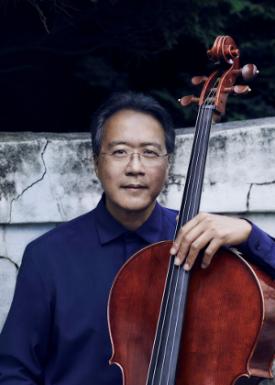
Yo-Yo Ma © Jason Bell
One irony of a musician operating at peak level is that the technique enabling this, the virtuosity that otherwise attracts so much attention, is reduced to secondary interest. It becomes a given and retreats into the background, eclipsed by the purely musical values that a less-confident technique would obscure. At least that’s the case when the musician is Yo-Yo Ma performing a solo recital as profoundly satisfying as he did on his latest visit to Seattle.
Filed under: Bach, review, University of Washington
December 10, 2015 • 8:24 am Comments Off on Shedding Light on Dark Sisters
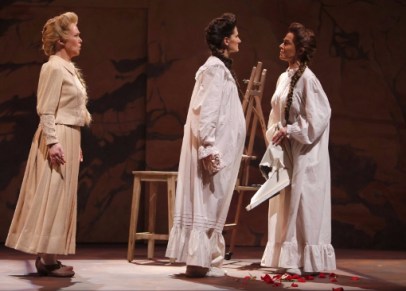
l to r: Melanie Krueger (Eliza), Eve-Lyn de la Haye (Zina), and Heather Pawsey (Presendia) Credit: (c) Tim Matheson
A new review for Musical America, in which I write about Vancouver Opera’s current production — the Canadian premiere — of the chamber opera Dark Sisters. (Content is behind a paywall.)
VANCOUVER, BC — Dark Sisters is the final new work Vancouver Opera will have presented before Canada’s second-largest opera company shifts from the full-season model currently underway to a festival one (in the spring of 2017).
This chamber opera by Nico Muhly and librettist Stephen Karam was first seen in New York in a 2011 production by the late lamented Gotham Chamber Opera and then at co-commissioner Opera Philadelphia in 2012, where a chorus of praise replaced the rather tepid initial reception
Filed under: new opera, Nico Muhly, review
December 9, 2015 • 7:13 pm Comments Off on RIP Heinz Fricke
 Heinz Fricke (1927-2015), who died on 7 December, was a remarkable musician who lived a remarkable life that brought him, after years behind the Iron Curtain in East Berlin, to the capital city of the capitalist superpower.
I was incredibly fortunate to get to know him during his early years at Washington National Opera. In fact Mr. Fricke became the first conductor I met and observed close up. Here’s one of my earliest pieces for the Washington Post, a profile of Heinz Fricke from 1997:
THE BRIGHT LIGHT IN DOMINGO’S SHADOW
Well into its first season with the world-renowned tenor as artistic director, the Washington Opera has been abuzz with talk of its ambitious vision for the future. That includes next season’s expansion to eight productions and the selection of a world-famous architectural firm to convert the historic downtown Woodward & Lothrop building into the opera’s new Valhalla.
Filed under: conductors, music news
December 9, 2015 • 9:46 am Comments Off on After Ebola: Bringing Hope to Life
Gus Denhard
A recent report in Foreign Policy described the dire ongoing effects of West Africa’s Ebola crisis on the survivors. More than 16,000 children have been left without food or shelter.
As they did last year, Seattle’s Early Music Guild is presenting a benefit concert this Saturday, December 12, at 3 pm. Titled After Ebola: Bringing Hope to Life, this family-friendly benefit performance will feature the Trio Guadalevín: Abel Rocha (harp, guitars, vocals), Antonio Gomez (percussion), and EMG Executive Director August Denhard (lutes and guitar).
The benefit will raise money for Liberian Transcontinental Christian Ministries of Kent’s program to provide housing, food, clothing, and education for children who have been orphaned as a result of the recent Ebola crisis.
Trio Guadalevín takes its name from the ancient river and gorge that divides the city of Rhonda in Andalusia. Denhard says the aim of the concert, in addition to benefiting these efforts, is to bring people together with a program “reminding us of cultural connections we share as we face the challenges before us.”
Tickets — available here — are $10 for adults (18 and older) and $5 for children and seniors over 65, plus a service fee. The benefit will take place on Sat., December 12, at 3 pm at the Carco Theatre, 1717 Southeast Maple Valley Highway, Renton, WA.
Filed under: music news
December 8, 2015 • 8:21 am 1
December 7, 2015 • 10:22 am Comments Off on 2016 Grammy Nominees in Classical
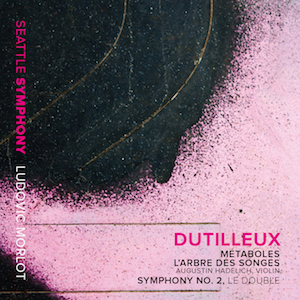
Here’s the complete list (including a release from the Seattle Symphony’s Dutilleux project):
2016 Grammy Nominees in Classical categories
Filed under: music news, Seattle Symphony
December 6, 2015 • 8:37 am Comments Off on Ricordi’s Meyerbeer Edition
 Arts & Culture Stories from NPR