MEMETERIA by Thomas May

Music & the Arts

A Fiery, Flaming Symphony

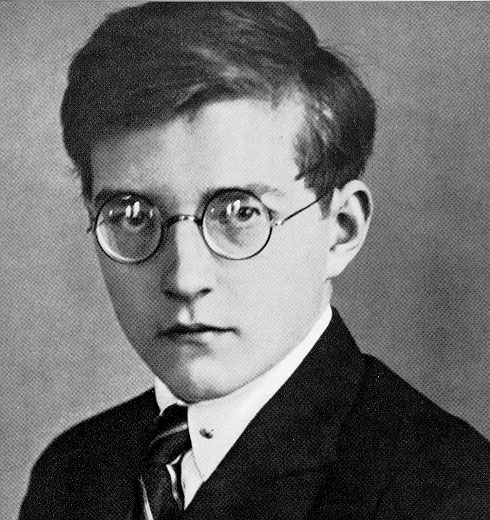
Sergei_Prokofiev_02
(Prokofiev c. 1918.)

My new essay on Sergei Prokofiev’s fantastic and way-underplayed Third Symphony is now up on San Francisco Symphony‘s web site for the program Michael Tilson Thomas is conducting next week. Thank you, MTT, for championing this work!

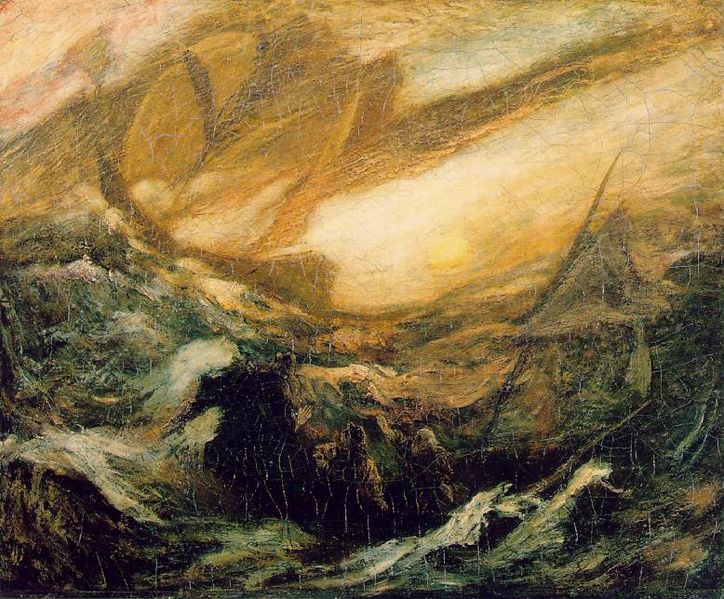
Music depicting the ravings of demonic possession, eroticized spiritualism (or spiritualized eroticism), medieval witchcraft and sorcery, and a convent of nuns whipped into mass hysteria—no, it’s not the score to a Stephen King film but a work that has a decent claim to being Sergei Prokofiev’s operatic masterpiece: The Fiery Angel (Ognenniy angel in Russian). A labor of love—and great frustration—The Fiery Angel also served as the source for his Third Symphony (even including much of its orchestration). Prokofiev wrote that he considered the latter “to be one of my best compositions.”

continue reading…

Filed under: composers, opera, program notes, symphonies

The Sea, The Sea

To prepare for a new essay, I spent some of last week immersed in Ralph Vaughan Williams’s breakthrough composition from 1910, A Sea Symphony – also known as the First Symphony (though he didn’t get around personally to numbering the first three of his nine symphonies).

While it has its weak moments, I wish this work were performed more often, but it’s never really caught on with American audiences, and the score poses a huge challenge for the chorus. By a remarkable coincidence, A Sea Symphony premiered exactly one month after Mahler’s Eighth (that incredible amalgam of medieval Church hymn and the final scene of Faust). Both works represent unclassifiable hybrids of cantata, symphony, and oratorio, taking the “model” of Beethoven’s Ninth to new extremes. And five years before that, Debussy’s La mer was first performed in Paris. (There was also a growing body of sea-oriented compositions by Vaughan Williams’s compatriots.)

For Vaughan Williams, though, the real impetus wasn’t to somehow paint the sea in orchestral-choral terms but, instead, to give shape to the oracular insights he’d gleaned from his immersive reading of Walt Whitman. He chose texts from Leaves of Grass that use the sea to figure the human soul’s yearning for “restless explorations” and the like:

O vast Rondure, swimming in space,
Covered all over with visible power and beauty,
Alternate light and day and the teeming spiritual darkness,
Unspeakable high processions of sun and moon and countless stars above,
Below, the manifold grass and waters,
With inscrutable purpose, some hidden prophetic intention,
Now first it seems my thought begins to span thee.

(Talking about our favorite VW symphonies, my friend Q said, “I think I often want Sibelius to be more pastoral, and Vaughan Williams less so, in the matter of symphonies.”)

plastic_pollution_55

What would a composer who was setting out today to write an ambitious work inspired by the metaphorical possibilities of the sea come up with, I wonder? Would it even be possible not to take account of the dire state of the oceans? There’s no escaping it, from the ongoing radioactive leakage at Fukushima to this recent study by Australian scientists concluding that “humans have put so much plastic into our planet’s oceans that even if everyone in the world stopped putting garbage in the ocean today, giant garbage patches would continue to grow for hundreds of years.”

Filed under: environment, nature, poetry, symphonies

“Noli Timere”: Seamus Heaney Lives On

SeamusHeaney1970
Seamus Heaney in 1970; photo (c) Simon Garbutt

Sad news of the death of Seamus Heaney on Friday. Today his funeral was held at the Church of the Sacred Heart in Donnybrook in south Dublin. Heaney’s final words to his wife, Marie — via text message from his hospital bed — were reported to have been in Latin: “Noli timere” (“Don’t be afraid”).

Heartening to see evidence of a culture where poetry still seems to matter: The Irish Times has been offering widespread coverage of Heaney’s legacy, and, according to The Guardian, at Sunday’s All Ireland Galiec football semi-final between Kerry and Dublin, “more than 80,000 spectators clapped for two minutes in appreciation of Ireland’s national poet.”

In a post for The New York Review of Books, Christopher Benfey recalls what he learned from Heaney, including “the un-teachable part” of writing poetry, the part related to “Lorca’s notion of duende, a mysterious dark fire of inspiration, a demonic rage, which, as I remember, Lorca associated with bullfighting and flamenco.”

“Some poems were like drawings, he used to say, gesturing with a quick downward zigzagging stroke of the pen, and some were like paintings. You were lucky if the poem came quickly, all in one piece. He would often quote Frost, from “The Figure a Poem Makes”: “like a piece of ice on a hot stove the poem must ride on its own melting.”

The continued outpouring of tributes and memories has been remarkable. Here’s a sampling:

Robert Pinsky remembers the Irish poet

Tributes from the poetry world

Videos of Heaney reading his poems

Dan Chiasson’s appreciation

Andrew O’Hagan recalls his travels with the poet

And Maria Popova recounts Heaney’s
Nobel Prize acceptance speech and includes a clip of the poet reading the title poem from Death of a Naturalist.

Filed under: poetry

Diebenkorn in Berkeley

Diebenkorn
(Richard Diebenkorn, “Seawall,” 1957. Oil on canvas. 20 x 26 inches. Fine Arts Museums of San Francisco, gift of Phyllis G. Diebenkorn, 1995.96. © 2013 The Richard Diebenkorn Foundation. All rights reserved.)

Currently on view at the de Young Museum in San Francisco is a must-see retrospective: Richard Diebenkorn: The Berkeley Years (1953-1966) (through September 29). This exhibit of more than 130 paintings and drawings curated by Timothy Burgard is a revelation on many levels.

There are insights to be gained here not just into the narrative of this major artist’s evolution but about the seductions of abstract and figurative painting relative to each other, about the influence of a particular landscape, its aura and light, on those aesthetic choices, and — most intriguingly for me — about an artist’s capacity for self-critique and unexpected leaps.

As you work your way through the context of Diebenkorn’s experiments with light and texture, the sudden reemergence of the human form is haunting, even astounding, upending comfortable notions of the historically inevitable “progress” of 20th-century painting in a way that has relevance for the similar tug-of-war between serialism and tonality among composers of this period.

Diebenkorn-figure on porch

(Richard Diebenkorn (1922-1993), Figure on a Porch, 1959 Oil on canvas 57 x 62 in. (144.8 x 157.5 cm) Oakland Museum of California, gift of the Anonymous Donor Program of the American Federation of the Arts, A60.35.5 © 2013 The Richard Diebenkorn Foundation. All rights reserved.)

Even the abstract paintings from the early years in Berkeley reveal an ambiguous attitude toward the “real world.” They are, as the excellent catalogue by Timothy Anglin Burgard, Steven A. Nash, and Emma Acker aptly describes it, “not completely nonobjective, or lacking in references to imagery, real or imagined.”

In Richard Diebenkorn’s own words:

All paintings start out of a mood, out of a relationship with things or people, out of a complete visual impression. To call this expression abstract seems to me often to confuse the issue. Abstract means literally to draw from or separate. In this sense, every artist is abstract … a realistic or nonobjective approach makes no difference. The result is what counts.”

Filed under: art exhibition, art history, visual art

Are American Orchestras Undermining Their Mission?

Orchestras
In a substantial and thought-provoking article in The New Republic, Philip Kennicott grapples with the issue of American distrust of “cultural authority” and how it affects the identity crisis suffered by today’s orchestras.

“The problems are financial and cultural, and the two are intertwined,” he observes. This year’s Pulitzer Prize winner for criticism, Kennicott compares the self-questioning undergone by American orchestras to a “protracted and painful Vatican II,” while the failure of the traditional subscription model has put orchestras in the same sinking boat as newspapers in the Internet era. As a last-ditch survival effort, orchestras have been forced to create a new paradigm based on audience segmentation, performing not just classical concerts but presenting a smorgasbord of watered-down “special events.”

But the most paradoxical and distressing result is the utterly generic quality of what most American orchestras now offer. By parsing audience taste to smaller fractions, the concert schedule in Oklahoma looks more and more like the concert schedule in Maine. At the League conference, the mantra was all “local, local, local”—that orchestras will survive only by catering in nuanced ways to their local constituents (not to audiences or listeners or music lovers, who are all passé). But a tendency toward groupthink across the field has led to the repetition of the same solutions, few of them successful or in any way particularly local.

Read the whole thing here.

(Above: American premiere of Mahler’s Eighth in 1916, with Leopold Stokowski conducting the Philadelphia Orchestra)

Filed under: American music, orchestras,

Remembering Lenny

Leonard_Bernstein_1971
Lenny in 1971, when he was rehearsing his new work Mass to open the Kennedy Center

So today Leonard Bernstein would have turned 95 [97]. If he were Elliott Carter, he’d still have about nine [seven] years left to share his genius with us — and Lord knows the world could desperately use it. I can still feel a pang when I pass by the Dakota on Central Park West; strangely, that Sunday afternoon in October when he died there doesn’t seem so far off.

I got to meet him just once, near the end of his life, when he was touring with the Vienna Philharmonic, conducting a program of Mahler Five paired with the Mozart Clarinet Concerto. I waited patiently afterward to get him to sign the book I happened to have on me — the first volume of Ernst Bloch’s Das Prinzip Hoffnung, which immediately prompted him to set aside his bottomless glass of Ballantine’s scotch and exclaim incredulously, “That’s my favorite book! Do you realize Bloch is the perfect book to go with Mahler?! Unbelievable!” And then he took another deep drag on his endless chain of L&M cigarettes.

Whenever I used to hear about folks who first fell in love with music thanks to the inspiration they found in Leonard Bernstein’s famous Young People’s Concerts, their accounts simultaneously intrigued me and left me feeling a touch jealous. The heyday of the series was before my time, so I never ended up seeing any of them until years later, when they became available on DVD. I can’t help but imagine how much these would have changed my life, too, if I’d had the opportunity to discover them when I was growing up.

Actually, I do have another gift from Lenny for which I remain eternally grateful. I can vividly recall chancing upon some PBS re-broadcast of his legendary Norton Lectures, first delivered at Harvard in the early 1970s and drawing on Noam Chomsky’s linguistic theory of transformational grammar, just around the time music was starting to become a force in my life.

Instantly I was hooked. To judge by what I can still remember from that first viewing — even taking into account the “creative reconstruction” that’s inherent to the process of memory — this encounter was remarkably formative. It didn’t just serve as my first crash course in music history and theory, in how to listen beyond the surface and look for structures and connections, but it even imparted a whole philosophy about music and its capacity to mean, to be at least as significant as everything else I cherished — maybe even more.

“I also believe, along with Keats, that the poetry of earth is never dead,” I remember Lenny declaring in his credo, “as long as spring succeeds winter, and man is there to perceive it.” The way he imparted these observations, as if they were a confidence shared with his prized students, was a perfect example of yet another gift of this impossibly gifted, complicated, multi-layered man — Bernstein as the great teacher and rabbi. He ended with this summing-up:

I believe that our deepest affective responses to these languages are innate ones that do not preclude additional responses that are conditioned or learned. And that all particular languages bear on one another, and combine into always new idioms perceptible to human beings, and that ultimately these idioms can all merge into a speech universal enough to be accessible to all mankind. And that the expressive distinctions among these idioms depend ultimately on the dignity and passion of the individual creative voice.

And finally, I believe that all these things are true, and that Ives’ “Unanswered Question” has an answer. I’m no longer quite sure what the question is, but I do know the answer, and the answer is, “Yes.”

Lenny the polymath: here he conducts and plays solo in one of the most exquisite scores I know, Ravel’s Piano Concerto in G.

Filed under: American music, Bernstein, composers

The Color Revolution

Color Revolution

Increasingly in this centenary year of Stravinsky’s Rite of Spring, we’re coming to see how much of modernism has involved an unpredictable marriage of the avant-garde and commercialism. Serge Diaghilev was a daring impresario but also a canny businessman. As for Schoenberg’s “air from another planet,” people who tend to write off atonality nowadays forget its far-reaching presence in film scores.

The management of color, too, turns out to have played a significant role in retuning tastes to the modern era. Regina Lee Blaszczyk’s The Color Revolution gives a fascinating account of color as a potent psychological and social tool manipulated by “color engineers.”

Blaszczyk’s lively history of the modern era’s preoccupation with color and her discussion of color’s influence on innovation in industry and design make me wonder how this shift affected perceptions of music as well — contemporary and canonical. Her focus is on American industry, which took important cues from the Paris scene. But Blaszczyk mentions other developments and influences from Europe, such as Alexander Scriabin’s experiments with color projections synchronized to his scores.

“Ever since Isaac Newton, people had been fascinated by the apparent analogy of the seven steps in the musical scale and the seven spectral colors in the rainbow,” writes Blaszczyk. This line of thinking even led to attempts at social engineering:

During the Enlightenment, a mathematician named Louis-Bertrand Castel dazzled Paris society with the first color-music instrument, an ocular harpsichord that diffused pigment light through windowpanes at the strike of a key. In 1893, a British inventor named Alexander Wallace Rimington had patented a Colour Organ that used gas jets and arc lamps to generate colored light as an accompaniment to musical instruments; the idea was to translate musical tones into visual hues. Rimington’s taste-making objectives presaged those of Albert Munsell: he hoped to sharpen the senses of the British working class and to teach them to prefer the palette of the Chartres rose windows over the crass aniline shades of Manchester calicos.”

In the mood for a little Klangfarbenmelodie?

Filed under: art history, book recs, style

Happy Loch Ness Monster Day

St. Columba & Nessie
According to the Vita Columbae, a hagiography attributed to Adomnán (Abbot of Iona), it was on this day in 565 that Saint Columba set about saving the pagan Picts from the ravages of a “water beast” (aquatilis bestiae):

Now the monster, which before was not so much satiated as made eager for prey, was lying hid in the bottom of the river; but perceiving that the water above was disturbed by him who was crossing, suddenly emerged, and, swimming to the man as he was crossing in the middle of the stream, rushed up with a great roar and open mouth. Then the blessed man looked on, while all who were there, as well the heathen as even the brethren, were stricken with very great terror; and, with his holy hand raised on high, he formed the saving sign of the cross in the empty air, invoked the Name of God, and commanded the fierce monster, saying, ‘Think not to go further, nor touch thou the man. Quick! go back!’ Then the beast, on hearing this voice of the Saint, was terrified and ‘fled backward more rapidly than he came…

Over at the Loch Ness Monster blog there’s plenty of fascinating material for anyone with a Nessie obsession. For example, on the earliest extant manuscript with Adomnán’s account:

In times past, only the privileged and academic few would have been able to gaze upon this most rare of Loch Ness Monster documents but thanks to scanning technology and the Internet, it is now available to view to all. The document is hosted by the Virtual Carolignian Libraries of St. Gall and Reichenau (the former monasteries which held such documents). The actual physical manuscript is held by the Stadtbibliothek in Schaffhausen, Switzerland.

(Hat Tip: James Thorne @twitter.com/JamesThorne2)

Filed under: Uncategorized

Legacy of a Ringmaster: Speight Jenkins and Seattle Opera

speight_jenkins
This week brings the final Ring cycle in Speight Jenkins’s 30-year reign as general director of Seattle Opera. Here’s my new feature reflecting on how the Ring became the company’s signature production and the twilight of the Jenkins era:

Speight Jenkins remembers a lot of violent, hostile booing. What made it all the more shocking is that Seattle audiences and booing don’t exactly a typical match make – as everyone knows in this city of the polite Obligatory Standing Ovation immediately followed by the Hasty Exit.

But whenever he refers to that night in hindsight, Jenkins explains why it ranks among the most treasured memories of his career as head honcho at Seattle Opera: “That night – July 28, 1985 – made this company. The controversy it excited was absolutely vital to Seattle Opera

read on

Filed under: Seattle Opera, Wagner

Hearing the Light: The Music of Tristan

Tristan-Isolde
(Ludwig and Malvina Schnorr von Carolsfeld in original production as Tristan and Isolde)

A new piece on Tristan und Isolde I just wrote for Washington National Opera’s upcoming production:

Even setting a myth of the beginning and end of the cosmos to music (aka the Ring) wasn’t enough for Richard Wagner. The legend of Tristan and Isolde began to crowd Wagner’s creative imagination thanks to a potent combination of factors in his private and artistic life.

After deconstructing the conventions of the commercially popular musical styles that reigned in opera houses of the time, Wagner had built a Valhalla-like fortress of theory to work out the ideas he was struggling to replace these conventions with, and these he began to apply in practice by composing the Ring. Yet Wagner’s subsequent discovery of the pessimistic philosophy of Arthur Schopenhauer (1788-1860) profoundly altered his attitude toward the purpose of art itself.

The Ring and its musical world originally sprang forth from a basically optimistic world view that placed its faith in the possibility of revolutionary utopia. Viewing the world through the lens of Schopenhauer caused Wagner to regard this as a naïve illusion. On one level, Tristan and Isolde turns the archetypal scenario of the love triangle into a symbol for the unquenchable force of desire in all its forms, which is the root of suffering for Schopenhauer. Apart from Wagner’s fascination with the philosopher’s metaphysical ideas, however, he was naturally attracted to the position of supreme value Schopenhauer reserved for music. It was Schopenhauer’s conviction that music alone can give us immediate access to this stark truth underlying the deceptive “real world” of appearances.

Tristan-Runnicles

In the Ring (up to this point), music had more or less been ascribed a role subordinate to the unified amalgam of score, script, myth, and staging. But  Wagner found a matchless vehicle with which to explore his changed perspective in Tristan’s story of extreme desire and its frustration—the love potion is merely another symbol for the release of what’s inherent in Tristan’s and Isolde’s natures. Setting it to music provided Wagner with the opportunity to create an unprecedented sound world evoking the human condition of restless desire, the mirage of blissful satisfaction, and, ultimately, a kind of transcendent awareness. The music isn’t there merely to “accompany” the moods of the drama: it provides the very foundation for what we see happening onstage. As Wagner later put it, the actual drama is “a visible image of the music”—a “deed of music made visible.”

Wagner had made one enormous leap in his musical language when, after a silence of about five years, he figured out how to set the Ring in motion with the remarkable Prelude to Das Rheingold, where the music swims about for minutes in the same key: Minimalism more than a century ahead of its time. But if the Ring proclaimed revolution, the Prelude to Tristan and Isolde seemed like all-out anarchy, immersing listeners into a disorienting soundscape where the familiar compass points no longer had any bearing.

Ironically, still another reason Wagner had determined to delay the Ring and write Tristan was purely practical: he hoped to make money with what he believed would be an easy-to-produce opera (compared, at least, to the Ring). But the originality and complexity of Tristan’s score, and the cruel demands on its two lead singers, doomed attempts to get it performed for several years, until the composer’s powerful new patron King Ludwig entered the scene and provided the financial backing for adequate rehearsals.

Tristan-FORBIS-AND-GRIMSLEY

Even professional musicians of the era found themselves perplexed by the daring harmonic language Wagner develops here. Its essential character is crystallized in the very first bars of the Prelude: the cellos pose a series of “questions,” their line of descending half-steps “answered” by enigmatic harmony and a similarly ascending phrase in the woodwinds. Yet even these responses are left unresolved—and are in turn followed by tense silences. The music coils forward, full of vibrant, insatiable yearning, but even the climax it reaches seems frustrated—and, to cite the composer’s own description, “the heart sinks back unconscious, back into languishing desire…”

The paradigm of Western tonal music familiar in Wagner’s era (and in pop music today) relied on reassuringly recognizable patterns of tension and release, with a beginning, middle, and end. These patterns play out both in the short term (a phrase of music) and in larger structures (a movement). Tristan’s music supplants this with states of tension that generate more tension. The whole process suggests a condition of tormented, unappeasable longing, with the horizon maddeningly just out of reach.

Instead of a collection of tunes we can look forward to once the curtain rises, the Prelude embodies a microcosm of Tristan’s musical vocabulary and grammar.  Its opening gestures proliferate in countless ways across the span of the opera—until that initially ambiguous “response” is finally allowed to fully resolve on what Richard Strauss once described as “the most beautifully orchestrated B major chord in the whole history of music.”

Tristan-zambello
From the 1998 Seattle Opera production directed by Francesca Zambello

The score of Tristan adapts the advanced musical principles Wagner had been honing in the Ring to its new context. Rather than independent, self-enclosed musical units (arias, quartets, choruses, and the like), each act unfolds as one continuous progression of musical thought. In general, conventional opera relied on tried-and-true forms and familiar, one-size-fits-all harmonic progressions which could apply to any of a number of interchangeable dramatic situations. In Tristan and Isolde Wagner spins out an organic form corresponding uniquely to the particular set-up, crisis, and resolution that make up the dramatic content of each act. Even more, that dramatic content is radically simplified and internalized (in contrast to the epic Ring). This opens up a space for Wagner’s music to trace the states of desire, suffering, and, ultimately, compassion which both Isolde and Tristan experience.

The opera’s large-scale musical and dramatic structure demonstrates a beautifully symmetrical balance, despite the impression of unleashed, formless “dissonance” (in the sense of unresolved musical tension) that the Prelude can still make even on experienced contemporary ears. The first act centers around a portrayal of Isolde in her anger and confusion: she draws Tristan into her fateful sphere before they cross an unexpected threshold together by drinking the love potion. The second act prepares for and leads away from an enormously extended love duet, with its proto-Impressionist, exquisite blends of orchestral color, in which the lovers merge their identities and yield to the intoxication of desire (notice the erotic frenzy conveyed by Wagner’s overlapping vocal parts). With the third act, Wagner shifts the focus to Tristan and his pain. After he dies—to the same strain he sang when overtaken by the potion in act one—Isolde completes the journey Tristan had undertaken in solitude.

Tristan-Titian
Titian’s Assumption of the Virgin in the Frari in Venice, which Wagner is said to have associated with Isolde’s ecstasy.

But Isolde complements her lover’s desolate vision of the emptiness of desire with a rapturous embrace of oblivion in the scene which concludes the opera (widely known as her Liebestod, or “Love-Death,” though Wagner used that term for the Prelude and referred to this scene as “Isolde’s Transfiguration”). This seals the opera with what musicologist Susan McClary calls “a feminine ending.” McClary quotes a personal exchange with the composer Virgil Thomson where the latter described the Liebestod as Isolde “hang[ing] around to demand one last orgasm of her own.”

Radical harmonic innovation is the most-celebrated dimension of Tristan and Isolde’s score, but Wagner employs all his resources to evoke the extreme states his characters undergo. In the third act, for example, Tristan’s delirious visions are underscored by changes in meter and powerfully syncopated rhythms. Another important device that recurs in some form in each act is the intrusion of the everyday world—for the lovers, the “false world” of day and illusion. From the strains of the sailor’s song opening the first act, Wagner abruptly shifts to Isolde’s point of view. The act late ends with the jubilant sounds of brass and chorus in solid C major to signal the ship’s arrival at its destination, ironically juxtaposed against the music of dangerous ecstasy for the lovers. In the second act Wagner vividly paints the external world of King Marke’s hunting party dissolving—the overlapping horns replaced by burbling clarinets—as Isolde becomes lost in her impatient vigil. And the shepherd’s merry piping in act three acquires a surreal quality as the backdrop for Tristan’s fevered hallucinations.

Tristan and Isolde, the early-20th-century music critic Paul Bekker went so far as to declare, is an opera on whose stage “walk sounds, not people.” Part of Wagner’s genius in this epochal work was to dissolve the boundaries between music and drama, orchestra and singers, tones and words, to an extent even he couldn’t have imagined when starting on the Ring—or when he first mentioned the idea he had for a new opera based on the legendary lovers: “the simplest but most full-blooded musical conception.”

Filed under: opera, Wagner

Archive

Enter your email address to follow this blog and receive notifications of new posts by email.