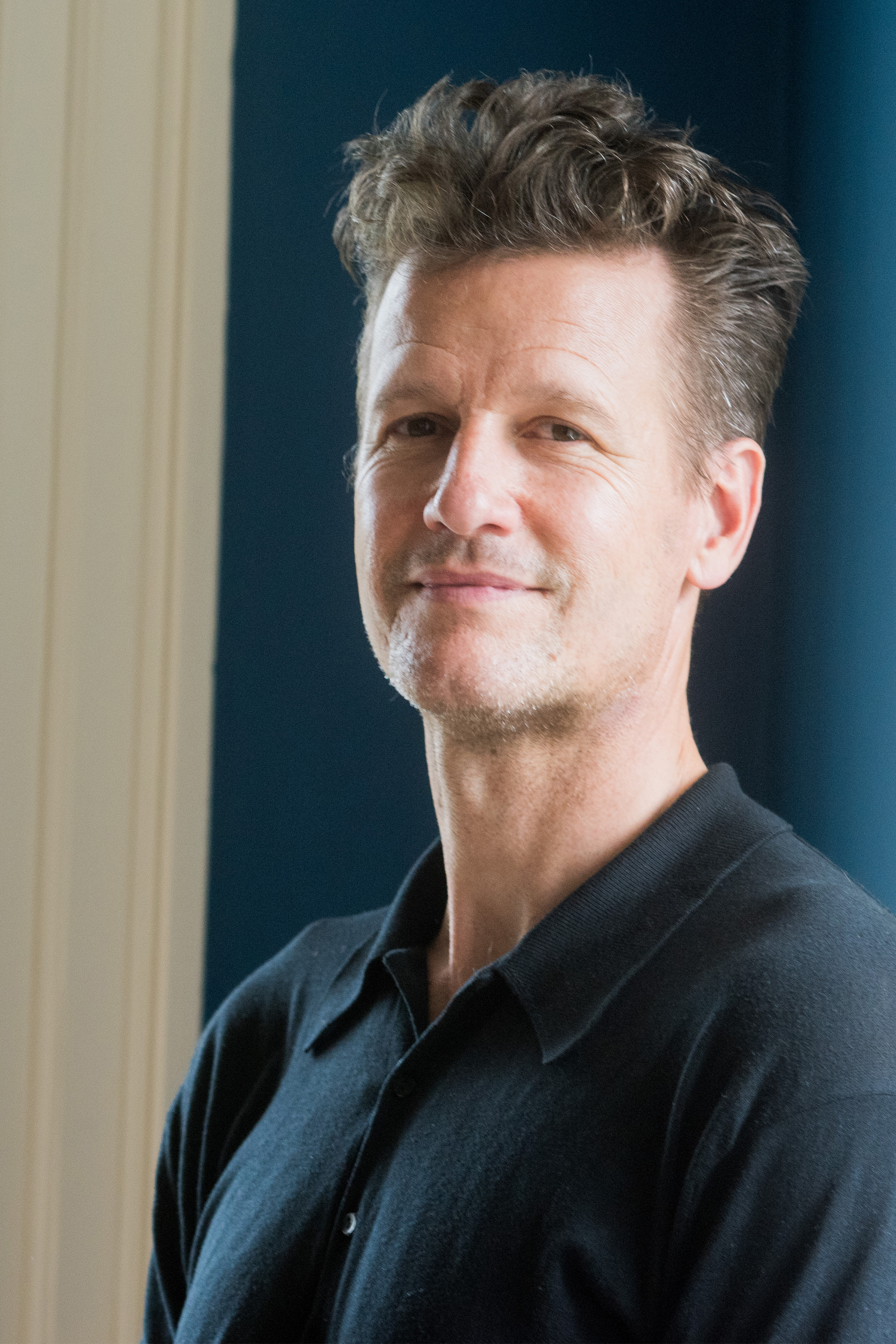
Devastating news that Geoff Nuttall has passed away. The beloved violinist and founder of the St. Lawrence String Quartet died today at his home in California at the age of 56. He had been undergoing treatment for pancreatic cancer.
The Spoleto Festival USA , where Nuttall was Director of Chamber Music, released the following press announcement:
October 19, 2022 — Violinist, music education advocate, and Spoleto Festival USA Charles E. and Andrea L. Volpe Director of Chamber Music Geoff Nuttall died today at home in California where he was undergoing treatment for pancreatic cancer. He was 56.
From center stage of Charleston’s historic Dock Street Theatre, Nuttall hosted the Festival’s iconic chamber music concerts since 2010, drawing enthusiastic audiences whose devout attendance owed as much to the series’ programming as the dynamism of its host and star performer. As director, he curated each of the 33 annual concerts and performed on many as a violinist and founding member of the St. Lawrence String Quartet, Spoleto’s quartet-in-residence, for more than 25 years.
Nuttall began playing the violin at age 8 after moving from Texas to Ontario, Canada. He received his bachelor’s degree from the University of Toronto, where he studied under Lorand Fenyves. Shortly after graduating, he co-founded the St. Lawrence String Quartet in 1989. The ensemble swiftly received top prizes at the Banff International String Quartet Competition and the Young Concert Artist Auditions, becoming a fixture at some of North America’s most celebrated festivals and concert halls.
St. Lawrence String Quartet is also ensemble-in-residence at Stanford University, where Nuttall served on the music faculty since 1999. With the quartet and as a solo artist, Nuttall played more than 2,000 concerts worldwide to critical acclaim, and was lauded as “intensely dynamic,” with “stunning technique and volatility” (The New York Times).
Nuttall was named to his role at Spoleto by longtime Festival chamber music director and Chamber Music Society of Lincoln Center founder Charles Wadsworth, who first invited Nuttall and the St. Lawrence String Quartet to Spoleto in 1995. Like his predecessor, Nuttall amassed a robust following—audience members who forged a strong connection to Nuttall’s onstage charisma.
The New York Times labeled him “chamber music’s Jon Stewart,” describing Nuttall as a “creatively daring, physically talented performer who can go goofball in a nanosecond, maintaining a veneer of entertainment while educating his base about serious matters…he is subtly redefining what a chamber music concert can be.”
Part of Nuttall’s genius as series host could be found in his pre-performance banter; engaging the audience in revelatory musical learning—facts about the composer or themes to anticipate. While this type of commentary has become de rigueur in many chamber music concert settings, Nuttall’s approach captivated novice listeners and experts alike.
Nuttall’s fervor for the music inspired colleagues both on and offstage. The sense of camaraderie Nuttall created between visiting artists contributed to a celebratory spirit felt in each concert, and a palpable camaraderie among players. He provided a platform for young musicians and composers to flourish. In recent years, next generation titans, including Benjamin Beilman, Anthony Roth Costanzo, Jennifer Frautschi, Arlen Hlusko, James Austin Smith, Paul Wiancko, and JACK Quartet, have appeared onstage in Charleston.
In addition to recording works by such composers as Schumann, Shostakovich, and Tchaikovsky, Nuttall and the St. Lawrence String Quartet were dedicated to the music of Joseph Haydn. In 2020, they were featured on the PBS Great Performances series, “Now Hear This,” in an episode that chronicled the composer’s life and work. Nuttall was also a steadfast champion of contemporary composers. He frequently worked with John Adams, Jonathan Berger, and Osvaldo Golijov—and received a Grammy Award nomination for the recording of Golijov’s Yiddishbbuk.
His passion for new music discovery permeated Spoleto Festival USA’s programming. He often placed contemporary works amongst lesser-known pieces from the canon, and emphatically promoted the works of his players and close friends such as Mark Applebaum, Todd Palmer, Stephen Prutsman, Joshua Roman, and Paul Wiancko. In 2019, Nuttall explained his programming style to Charleston magazine: “My closest friends are constantly curious, and I hope my audiences will share my enthusiasm for curiosity.”
In his final days, his wife, the renowned violinist Livia Sohn, who also serves as Spoleto Festival USA Assistant Director of Chamber Music, asked Nuttall if he had any unfulfilled aspirations on his bucket list. With his characteristic humor and grace, Nuttall replied, “my life has been my bucket list.”
In addition to Sohn, Nuttall is survived by their children, Jack and Ellis, as well as his mother and sister.
STATEMENTS
Mena Mark Hanna, Spoleto Festival USA General Director and CEO: “This is a loss not just for Spoleto Festival USA, but for music lovers around the world. Geoff was classical music’s greatest showman, eliciting a rowdy, raucous reception to Haydn that would sound more at home in a club than a concert hall. He didn’t care if people were clapping between movements; he didn’t care that people wore shorts and sandals to performances; he didn’t care for the rigid social formalities that govern classical music performance. All he cared about was the communitarian, cathartic power of music. And because of that, he changed chamber music in America.”
Alicia Gregory, Chair of Spoleto Festival USA’s Board of Directors: “Within the remarkable constellation of international talent featured every year at Spoleto Festival USA, Geoff Nuttall was consistently one of its brightest stars. His virtuosic artistry, combined with his deft skill in connecting with both artists and audiences, created transcendent performances. He will be remembered as one of the finest classical musicians and curators of our time.”
A celebration of Nuttall’s life and contributions to Spoleto Festival USA will be part of the 2023 chamber music program.
Geoff was able to continue living his life as fully as possible under the outstanding and thoughtful care of Dr. Christopher Chen. Geoff’s family has created The Geoff Nuttall Memorial Fund to advance Dr. Chen’s cancer research at Stanford University. In lieu of flowers, please consider making a tax-deductible donation. Gifts can be made three ways: 1) Online atmemorial.stanford.edu by selecting “Other Stanford Designation” and entering The Geoff Nuttall Memorial Fund in the “Other” text box, 2) By check payable to Stanford University with The Geoff Nuttall Memorial Fund indicated on the memo line, mailed to Development Services, P.O. Box 20466, Stanford, CA 94309, or 3) By phone at 650-725-4360.
Filed under: music news, Spoleto Festival USA, violinists