
Simon Rattle’s final concert with the Berlin Philharmonic: how fitting for our tragic time: streaming live from the Digital Concert Hall.
Filed under: Berlin Philharmonic, Mahler, Simon Rattle

June 20, 2018 • 10:11 am Comments Off on Ending an Era with Mahler 6
Simon Rattle’s final concert with the Berlin Philharmonic: how fitting for our tragic time: streaming live from the Digital Concert Hall.
Filed under: Berlin Philharmonic, Mahler, Simon Rattle
June 18, 2018 • 11:30 am Comments Off on Seattle Symphony Names New President and CEO

By a unanimous vote of its Board of Directors, Seattle Symphony has named Krishna Thiagarajan, currently Chief Executive of the Royal Scottish National Orchestra, as its next President and CEO, succeeding Simon Woods, who recently became CEO of the Los Angeles Philharmonic. Thiagarajan will start his tenure this September.
From the SSO press release:
Thiagarajan’s track record in his past three leadership positions encompasses strong financial management including balanced budgets and significant growth in both ticket sales and donations. He has also produced numerous acclaimed recordings and several international tours, as well as commissioned new works and created meaningful education programs for students. His past leadership has included strong community and corporate relationships, and a personal emphasis on creating an inclusive organizational culture.
Thiagarajan: “I believe the Seattle Symphony to be among the most innovative orchestras in the United States, having delivered an impressive track record of growth, artistic excellence and strong community presence. In collaboration with this outstanding group of musicians, staff and board, as well as dedicated supporters, I look forward to serving the community of the greater Seattle area as the orchestra becomes an even more prominent cultural ambassador for the Pacific Northwest.”
Thiagarajan replaces former President & CEO Simon Woods who became the CEO of the Los Angeles Philharmonic in January after seven years of exemplary leadership in Seattle.
Filed under: music news, Seattle Symphony
June 15, 2018 • 2:55 pm Comments Off on Bye Bye Beethoven
Last night at Zellerbach Hall, Patricia Kopatchinskaja’s remarkable staged concert,Bye Bye Beethoven, opened the Berkeley edition of the programs she just curated for the 2018 Ojai Festival. One of the most creative deconstructions I’ve seen in a while, one that really achieves what it sets out to do: to shake us out of the stupor of the safe concert routine and show us what we’ve been missing.
According to Kopatchinskaja, “the concert routine around the world is so absurd,” continually replaying the same icons “with not very much imagination relevant to our time.” Bye Bye Beethoven dramatizes her concern “about petrified traditions. I don’t think Beethoven would be happy to know that in the future his music would take so much space.”
It’s not iconoclasm—ultimately, a Puritan approach—but rather a wittily inventive transformation of perceptions that motivates Bye Bye Beethoven.
This is the kind of work being done all the time in the visual arts, in poetry, in fiction, in film. Why can’t we have more of it in concert life?
Filed under: Cal Performances, directors, Patricia Kopatchinskaja
June 13, 2018 • 1:02 pm Comments Off on Joyce Drama
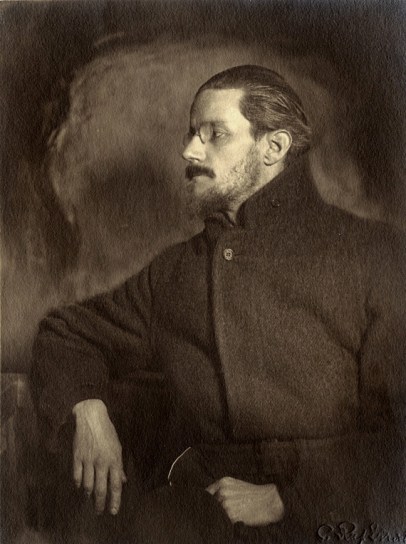
Bloomsday is around the corner, so just in time comes Jack Hitt’s fascinating story in the New York Times magazine: “The Strange Case of the Missing Joyce Scholar,” about the extraordinary case of John Kidd, Ulysses scholar and eccentric who became a literary celebrity in the Joyce Wars in the 1980s and ’90s — and then suddenly vanished.
Filed under: James Joyce, literary criticism
June 8, 2018 • 11:40 am Comments Off on The “Other” Scandal Concert
Vienna, 31 March 1913 — two months before The Rite of Spring in Paris — Schoenberg programmed two songs from his student Alban Berg’s settings of five Ansichtskartentexte (“Picture-Postcard Texts”) by the poet Peter Altenberg (Nos. 2 and 3).
The rest of the program consisted of Schoenberg’s own Op. 9 Chamber Symphony (in a special version for strings alone); the world premiere of a work by another Schoenberg pupil, Anton Webern’s Pieces for Orchestra (now known as Op. 6); and Maeterlinck Songs by Schoenberg’s own mentor, Alexander von Zemlinsky, with Mahler’s Kindertotenlieder as the final work — except that the Mahler was never performed. A disturbance broke out during the Berg songs, reaching such a point that police were called in. The orchestra gave up and the show did not go on. Incidentally, those two songs last all of three, four minutes…
“One is not wrong in alleging that scenes like the one yesterday have never before happened, neither in Vienna nor certainly any other concert hall in any other cultural city,” the Neues Wiener Tagblatt observed.
Another paper, Die Zeit, even accused the organizer, Schoenberg (who himself had recently had an anomalous success with the premiere of his Gurrelieder), of engaging in vanity programming. It claimed that he “felt obliged to repay his disciples by using his influence to have a performance of their pieces, although he privately thought very little of what they had achieved.”
Fortunately young Alban Berg was at least absent from the concert itself.
Filed under: Alban Berg, music history
June 6, 2018 • 11:26 am Comments Off on Prokofiev’s Stalingrad Sonata
Early in 1943, I received the score of the Seventh Sonata, which I found fascinating and which I learned in just four days…. The work was a huge success. The audience clearly grasped the spirit of the work, which reflected their innermost feelings and concerns. (This was also felt to be the case with Shostakovich’s Seventh Symphony, which dates from more or less the same period.)
With this work we are brutally plunged into the anxiously threatening atmosphere of a world that has lost its balance. Chaos and uncertainty reign. We see murderous forces ahead. But this does not mean that what we lived by before thereby ceases to exist. We continue to feel and love. Now the full range of human emotions bursts forth. Together with our fellow men and women, we raise a voice in protest and share the common grief. We sweep everything before us, borne along by the will for victory. In the tremendous struggle that this involves, we find the strength to affirm the irrepressible life-force.
Sviatoslav Richter, In: Bruno Monsaingeon, “Sviatoslav Richter: Notebooks and Conversations,” trans. Stewart Spencer
Filed under: Prokofiev
June 4, 2018 • 4:40 am Comments Off on Dausgaard and Seattle Symphony Take on an Early Sibelius Epic

photo: Brandon Patoc
My review for Bachtrack of Thomas Dausgaard and the Seattle Symphony in Sibelius’s Kullervo:
On 28 April 1892, when he was only 26, Jean Sibelius unveiled Kullervo to the public. Its triumph established both his career as a composer and his reputation as Finland’s musical bard…
Filed under: review, Seattle Symphony, Sibelius, Thomas Dausgaard
June 2, 2018 • 11:41 am Comments Off on Night Scenes from the Ospedale
Enjoying Night Scenes from the Ospedale by Robert Honstein, a project for the amazing Antico Moderno.
Filed under: new music with period instruments, Vivaldi
May 31, 2018 • 11:39 am Comments Off on Sibelius: Kullervo
Today’s listening, preparing for this weekend’s Seattle Symphony program.
Filed under: Seattle Symphony, Sibelius
 Arts & Culture Stories from NPR
 MEMETERIA