I finally had my first chance to see the fabled Martha Argerich live at last night’s Lucerne Festival concert — the second of two concerts at the Summer Festival by Daniel Barenboim and the West-Eastern Divan Orchestra.
Even in such a decided non-masterpiece as Liszt’s Piano Concerto No. 1, she’s the real thing, one of the most magnetic musical personalities I’ve encountered.
As a generous encore, she and Barenboim sat together at the keyboard to play a Schubert’s piano duo: the Rondo in A major, D 951.
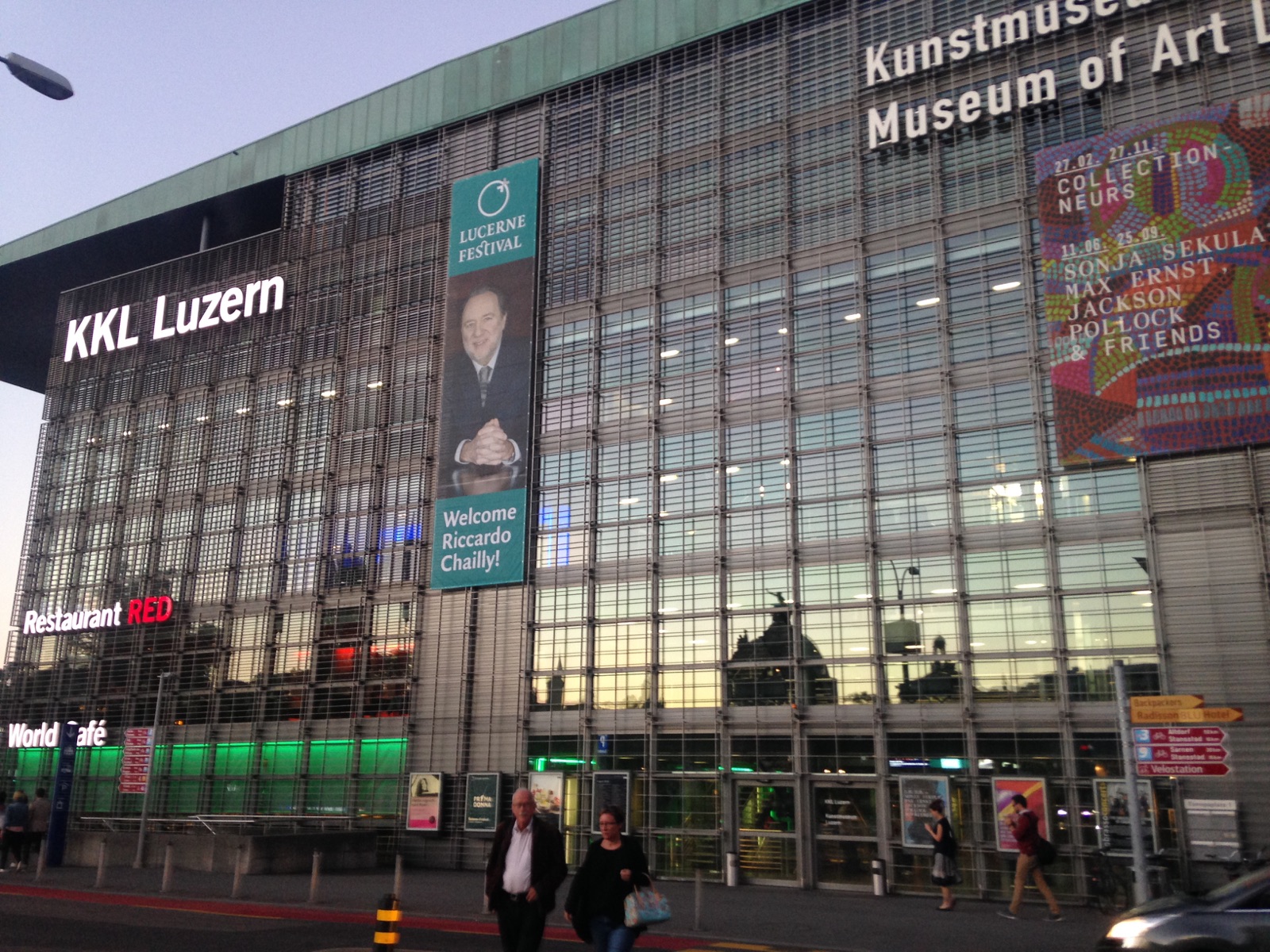
Swiss Radio and Television has now posted the opening concert of Riccardo Chailly’s debut with the Lucerne Festival Orchestra.
Chailly opened the 2016 Summer Festival on 12 August with a rousing performance of Mahler’s Eighth Symphony: the one work missing from the late Claudio Abbado’s otherwise complete Mahler cycle with his beloved LFO.
The broadcast also includes a 10-minute portrait of the conductor with interviews by way of a prelude.
Christian Wildhagen, an expert on the Eighth (he wrote a dissertation about the work), covered Chailly’s interpretation for the Neue Zürcher Zeitung:
Chailly, der aus früheren Aufführungen so umfassende praktische Erfahrungen mit dem Stück hat wie kaum ein anderer Dirigent, erkennt das Problem und versucht zu dämpfen, wo immer es geht. Doch prompt verheddert er sich in dem Paradox, das er selbst so trefflich mit den Worten umschrieben hat, man müsse mit dieser Musik fliegen und doch mit beiden Beinen kontrolliert auf dem Podium stehen. Die Kontrolle des gewaltigen Apparats gelingt bereits mehr als achtbar, das Fliegen hingegen nicht.
[…]
Chailly deutet diese Vertonung der Schlussszene aus Goethes «Faust» völlig zu Recht als sakrale Oper – angesiedelt auf einer rein imaginären Theaterbühne, aber mit halbszenischen Momenten wie der Erscheinung der Mater Gloriosa (Anna Lucia Richter mit etwas zu irdischem Tonansatz in der Höhe) auf der Orgelempore, wo am Schluss beider Teile auch jeweils das Fernorchester seinen «Auftritt» hat.
Prom 32 this week featured Esa-Pekka Salonen conducting the Philharmonia Orchestra in Schoenberg’s A Survivor from Warsaw, Mahler 1, and Dutilleux’s The Shadows of Time (one of his last works). The concert is still accessible to hear online for a few more days here.
Meanwhile, Daniel Stephen Johnson reports on the Seattle Symphony’s latest addition to its acclaimed Dutilleux series under conductor Ludovic Morlot:
While the orchestral playing is as ravishing as listeners have come to expect from Morlot and Seattle, the soloists brought in from outside the band are among the very hottest players on their respective instruments. The playing of violinist Augustin Hadelich, fresh from his Grammy win for last year’s entry in this Dutilleux cycle, is as intensely expressive in Sur le même accord as it is precise, while harpsichordist Mahan Esfahani executes Les citations with his characteristic wit and panache, and the cimbalom playing of percussionist Chester Englander lends an unexpected delight to Mystère de l’instant.
And my own recent profile of Hadelich for Strings Magazine is available here. September’s Gramophone will have my story on the Seattle Symphony and Dutilleux.
My profile of violinist Augustin Hadelich and his Grammy Award-winning interpretation of Henri Dutilleux with the Seattle Symphony and Ludovic Morlot will appear in the August 2016 issue of Strings magazine. A brief sample:
Augustin Hadelich just missed being in Los Angeles to receive his first-ever Grammy Award. He had even traveled to LA for a chamber concert the day before the ceremony but was already en route to his next engagement — with the Bournemouth Symphony Orchestra in Poole on England’s coast — when congratulations for winning the Grammy Award for Best Classical Instrumental Solo starting pouring in via social media.
“Devastated by the passing of Einojuhani Rautavaara [1928-2016], great original voice in Finnish music. Also my first composition teacher and friend,” Esa-Pekka Salonen posted on Facebook at the news of the Finnish master’s death.
A prolific composer, he wrote eight symphonies, nine operas, 12 instrumental (and one choral) concertos, plus a wide variety of orchestral, chamber, instrumental, choral and vocal works. He was also a highly perceptive writer on music and a teacher: many Finnish composers who have enjoyed international success were his pupils, including Paavo Heininen and Kalevi Aho.
Among this year’s lineup of newcomers at Seattle Chamber Music Society’s 2016 Summer Festival was American violinist Noah Bendix-Balgley — which gives you an idea of the level of luxury casting to which chamber music lovers have been treated.
The North Carolina native switched from his position as Pittsburgh Symphony concertmaster to become first concertmaster with the Berlin Philharmonic in 2014 — and he’s currently only 32.
For this edition of the Summer Chamber Festival, Bendix-Balgley took part in four programs, and I made sure to catch all of them. He made his debut here with Dvořák’s Op. 87 Piano Quartet in E-flat, joined by violist Jonathan Vincour, cellist Bion Tsang, and pianist George Li (I’m not exaggerating about the “luxury casting”).
This was the kind of playing that can change your attitude toward Dvořák, make you realize that we need to hear more and more of him, not just the warhorses. They sustained their intensity across the generous arc of the piece, not merely settling for its lyrical pleasures: the Piano Quintet as a page-turner epic novel.
For appearance no. 2, Bendix-Balgley joined Bion Tsang and Yura Lee (on cello) for Mozart’s Divertimento for String Trio in E-flat (K. 563), which made for a fascinating contrast with the overbrimming Romanticism of the Dvořák: the graceful restraint of his phrasing revealed emotional depths and the power of implication.
During his third concert Bendix-Balgley teamed with fellow violinist David Chan for Prokofiev’s remarkably far-ranging Sonata for Two Violins in C major, Op. 56. Along with expertly sounding its acoustical surprises and trompe-l’oreille effects, I admired how the musicians explored Prokofiev’s independence of line — of musical thought — from two similar voices, interrogating notions of “harmony.”
Beethoven was the focus of Bendix-Balgley’s final appearance (July 25), when he convened with SCMS artistic director James Ehnes (on first violin), Beth Guterman Chu and Rebecca Albers (violas), and Raphael Bell (cello) for the “Storm” Quintet in C major, Op. 29.
The Summer Festival is known for its mix of musicians who have regularly played for years as partners and ad hoc ensembles working together for the first time, and their account could have easily fooled listeners into taking this particular group for the former. By that I don’t mean only the level of risk-taking and involvement in the playing, but the conviction they seemed to share about the “Storm” Quintet’s emotional landscape and structural quirks.
Here’s a sample of Bendix-Balgley’s captivating, richly characterful playing:
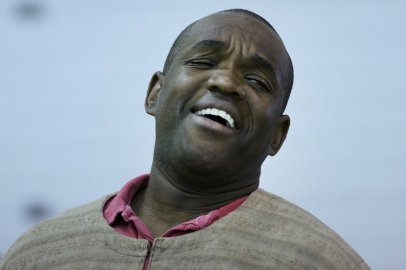
Lawrence Brownlee; photo (c) Johnny Andrews/The Seattle Times
My profile of Lawrence Brownlee is out in today’s Seattle Times. The world-class tenor is back in town to star in Rossini’s Count Ory at Seattle Opera:
He’s in demand around the globe, a favorite of music lovers at the most prestigious venues for classical music.
Over at the Aspen Festival there’s a new production of William Bolcom’s comic opera A Wedding — based on the Altman film — starts tonight. Here’s my essay for the Aspen program:
A Perfect Marriage: Comedy and Collaboration in Bolcom’s A Wedding
Throughout his career as a composer and pianist, William Bolcom has broken down artificial barriers between styles, between perceived divisions that separate “serious” music from entertainment. Along with his prolific output in the traditional genres, Bolcom has breathed new life into popular American idioms from the late 19th/early 20th centuries: piano rags, cabaret songs, and show tunes from a vanished era.
He and the mezzo-soprano Joan Morris — his longtime performance partner and his wife — have concertized as a duo since the early 1970s, celebrating the variety of the American Songbook.
All of these abiding interests nurture the vital language Bolcom has evolved — a language he exploits with virtuosic mastery in A Wedding, the third of his four large-scale operas. (The most recent of these, Dinner at Eight, will be premiered next March by Minnesota Opera.)
Bolcom’s first three major operas were commissioned by Lyric Opera of Chicago: McTeague, based on the Frank Norris novel from 1899, premiered in 1992; an operatic treatment of Arthur Miller’s classic AView from the Bridge, was first seen in 1999; and A Wedding was unveiled in 2004. The Music Academy of the West subsequently commissioned a version of AWedding scored for reduced orchestra, which was first staged in 2008 in Santa Barbara, California; this is the performance edition being used for Aspen Music Festival’s production.
Referring to the so-called eclecticism that is integral to his style, the Pulitzer Prize-winning Bolcom says: “The process of composition, as the word indicates, is about how you put it all together. What will generate electricity when these various planes meet? This is where you have to go by instinct. It helps to have a vocabulary and a theatrical experience.”
Bolcom’s most ambitious work, Songs of Innocence and Experience: Musical Illumination of the Poems by William Blake (which garnered multiple Grammy Awards) exemplifies this sense of coherence amid its abundant mingling of “highbrow” and “lowbrow” stylistic references — and thus looks ahead to his achievement in A Wedding. Songs is a category-defying epic of invention that was more than a quarter century in the making: part song cycle, part cantata, and part theater work.
A Wedding marks the final major project he completed with longtime artistic partner Arnold Weinstein (1927-2005), a leading 20th-century poet and playwright. For A Wedding, Weinstein teamed up with the legendary film director Robert Altman (1925-2006) to adapt Altman’s 1978 film for the opera stage.
“Bob worked out at the scenario, asking, ‘What does a scene have to accomplish?’ and then Arnie would write it up,” recalls Bolcom. With its chaotic cast of 48 individual personalities, the film AWedding might seem an implausible source for operatic treatment, yet the composer became intrigued by its potential as a comic opera and by the challenge of making this suite of characters musically memorable.
“You have to see the film several times to be able to work out the relationships,” says Bolcom. “It’s a whirlwind. I got to see the shooting script, where [Altman] had written out thumbnail sketches of the secret behind every single one of them.”
The composer’s solution was the musical equivalent of this process: to establish a musical “secret” that unlocks the heart of each character. For the cast of A Wedding, he applied “the same principle” he had used to cope with the variety of Songs of Innocence and Experience.
“Every one of these characters has a voice. Each character required asong — a music to make them come to life. I have found that most people have at least one song within them. The popular music world is filled with people who wrote one perfect, amazing song and nothing else.”
Still, it took a long time to figure out a way to distill the original 48 characters of Altman’s film down to a musically manageable ensemble of 16 major roles for the opera, each with their own back story. (The four operas of Wagner’s Ring cycle, by way of comparison, encompass a cast of more than 30 distinct characters.)
“One thing Bob and Arnie figured out was to conflate some of the different film characters into one,” Bolcom explains. For example, the opera blends the art dealer who falls in love at first sight with Tulip, the mother of the bride (memorably played by Carol Burnett in the film) and the lecherous physician who treats the grandmother of the groom into the same character.
“The libretto is very skillful in how it negotiates all these characters,” observes stage director David Schweizer, who began his career as a protégé of Joseph Papp in New York. “The structure is a little surprising from time to time, which is part of the fun of it. It has a cinematic, fluid structure that makes it natural for me to think of simple, imaginative ways to move from moment to moment that are not dependent on big, physical sets. When I direct I like to think of how people move through space and how they would behave.”
Schweizer points to the congruity between Altman’s methods as a film director and Bolcom’s own background in the theater. “Altman was famous for the improvisatory approach he used with a group of actors who knew him very well. There was always something creative happening on the set. But that improvisatory quality was based on consummate technique. That’s very similar to what you find with Bolcom. He has the confidence of a mature artist who is unconstrained, who feels free to do what his instincts tell him to do as a composer.”
Schweizer remarks on the connection between Bolcom’s extensive background in improvisation and his musical style. He believes it’s a key to the composer’s ability to juggle with the myriad stylistic reference points that populate the score for A Wedding: madcap Rossini ensemble, Copland’s Americana, jazz, rockabilly Elvis, Broadway pizzazz, and a touch of Gershwin. Yet for all of its references, A Wedding “is not a pastiche. It has a voice of its own which is a contemporary musical voice — and that voice is also quite touching sometimes. The opera involves a tricky tone that hovers between farce and pathos. It can’t be too cartoonish but it also can’t be devoid of a sense of humor.”
“The language of A Wedding contains a lot of Americana, which is fitting for a summer in which we are looking at the mid-20th-century symphonists,” says Asadour Santourian,Vice President for Artistic Administration and Artistic Advisor for the Aspen Music Festival. “Bill Bolcom — who is an alumnus of Aspen — is one of their descendants. This is an eminently American work in its musical syntax that hearkens back to a sound world all its own, quite different from what we find in Copland or Barber.”
Bolcom’s musical sleight of hand corresponds to A Wedding’s dramaturgy, which unpredictably mixes satire and farce with very serious situations. “There’s an almost musical Chekhovian quality in this group of people and what is happening to their spirits,” Schweizer observes.
If Chekhov is part of the equation, so is the effervescence of opera buffa as exemplified above all by Mozart’s innovative masterpiece — a work that similarly involves a wedding: The Marriage of Figaro. As an American corollary to Figaro’s fault lines between the aristocracy and the servant class, explains Bolcom, AWedding pits “the nouveaux riche [the parents of the bride, Muffin] against old money [the groom Dino’s family background].” And, like Figaro, the very confusion of AWedding’s story line is essential to its effect.
“Comedy is infinitely harder to do than tragedy,” according to Bolcom, whose first two operas were firmly rooted in the ancient Greek understanding of tragedy — particularly A View from the Bridge, for which playwright Arthur Miller explicitly had the model of Greek tragedy in mind when molding his drama set in working-class Brooklyn of the 1950s. The challenge of comic opera involves not only the timing but also motivation. “With tragedy you are talking about people who are the victims of forces that they may have unleashed themselves, pointing toward something spectacularly self-destructive. How many great laughs are there in opera?”
“Comedy requires its own skill,” says Schweizer. “What it has in common with music for the theater is timing. At the same time, opera singing is so emotional by its nature that to turn that to comic effect requires a real deftness that is not necessarily a province of singing.” Santourian believes this inherent tension poses a fascinating challenge for the young cast in Aspen Music Festival’s production.
“It’s not only about singing but about acting choices as well. Although it’s a comedy the performances must be delivered as seriously as possible.” He especially admires “the singability of this score. You see what a master Bolcom is at setting texts, so that even though the music flavors and colors what is being said, he always makes sure the text is not obscured.”
Because of these challenges — comic timing, the correlation of singing and acting, the ensemble coherence of the while — A Wedding is particularly well-suited to showcasing the talents of young, emerging singers. “With a young ensemble you can use their physicality to create a whole world,” Schweizer explains. Referring to a previous student production of the opera, Bolcom’s wife Joan Morris notes with amusement that “the kids were getting the jokes before their teachers did.”
“I’m glad that A Wedding hasn’t yet become part of that treadmill of conservatory operas,” says Santourian “This gives our singers an opportunity to tackle an American work that will be very fresh for them.”