All right, enough already of the reindeer and sappy carols. Who better to depict the true spirit of the Christmas season than the greatest of them all, J.S. Bach? Jauchzet, frohlocket, auf, preiset die Tage: Even Ebenezer Scrooge couldn’t have resisted.
Here’s Sir John Eliot Gardiner conducting the Monteverdi Choir and the English Baroque Soloists in the so-called Christmas Oratorio BWV 248, that splendid package of six Christmastime cantatas. A very happy Christmas to all!
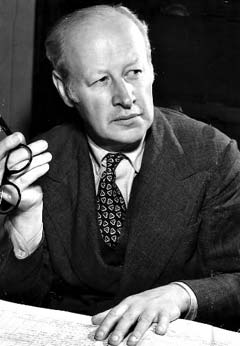
For the Handel bicentennial in 1959 (200 years since George Frideric’s death, that is), the conductor Sir Thomas Beecham proposed giving Messiah a face lift. In a rather bizarre essay, he argued that advances in the sphere of orchestral music had so shifted public taste that audiences were no longer willing “to tolerate a collection of voices singing…with little or no relief from the orchestra” for the duration of a full-scale piece. Beecham commissioned Sir Eugène Aynsley Goossens (1893-1962) — his younger (and recently knighted) assistant, who was also a composer — to re-orchestrate the entire score for a fee of £1,000.
Goossens came from a renowned family of musicians that had migrated from Belgium to England. Beecham jump-started his conducting career, and Goossens eventually developed into a famous and influential figure (especially as a new-music champion). Noël Coward even name-checks him in his lyrics for “Russian Blues” (“My heart just loosens when I listen to Goossens”). A series of globe-trotting posts kept him at the helm of American orchestras for over two decades. He then moved on to Australia to lead the Sydney Symphony and helped found the city’s new opera house.
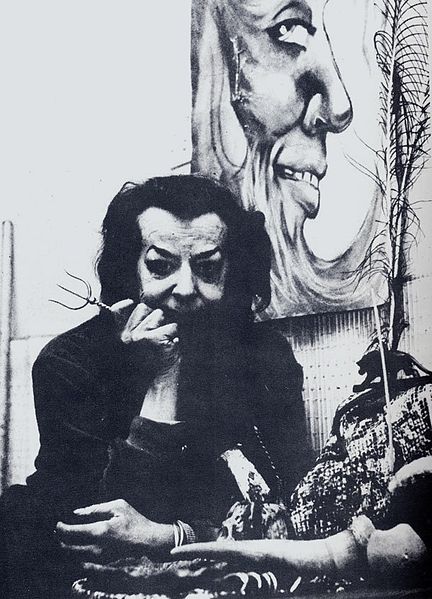
But just a few years before Goossens’ former mentor came calling with his Handel project, a tabloid scandal caused an abrupt fall from grace for the esteemed maestro. The precise details remain murky, but they involve a suitcase of erotic materials that linked Goossens to his lover Rosaleen Norton, an Australian occult artist and practicing witch (the so-called “Witch of Kings Cross”).
Rosaleen Norton (the “Witch of Kings Cross”)
A guilty plea for importing “blasphemous, indecent, or obscene works” led to a fee, and Goossens had to resign his positions. The made-for-tabloid scandal later inspired the play The Devil is a Woman by the Sydney-based writers Mandy Sayer and Louis Nowra, Onez Baranay’s novelPagan, and even an opera (Eugene and Roie by the Australian composer Drew Crawford).
The whole affair sent Goossens’ career into a nosedive. He spent his final years back in England, where he prepared his Messiah score: 364 pages of 30-stave manuscript paper that dwarfed Handel’s original autograph of 259 pages. A team of five copyists clustered nearby, madly scribbling away to meet Beecham’s deadline.
Even though the project was conceived to enhance performances in large concert halls, Beecham conducted a single live account (at the Lucerne Festival, on 12 September 1959). It was actually his best-selling studio recording (for RCA) that won this new version of the oratorio an iconic status. The first public performance of the reupholstered Messiah in the UK didn’t happen till forty years later, at the Proms, where it was billed as a “Messiah for the Millennium.”
In the interim, Goossens’ central role as the orchestrator of this version was glossed over. Carole Rosen, an authority on the Goossens family, refutes claims that a dissatisfied Beecham had himself retouched most of the orchestration. “Apart from a few passages,” she argues, “the whole of the rest of the work as recorded by Beecham was orchestrated by Sir Eugène Goossens.”
The basic premise behind retrofitting Handel’s score — in this case, to “modernize” it by using an enlarged, late-Romantic symphonic ensemble — would nowadays of course be taboo. Yet Messiah‘s long, rich performance tradition in a sense entails a series of revivals that did precisely that.
For his own annual revivals, the ever-pragmatic Handel frequently tailored the score to adapt to particular performers and venues (his revival of 1751, for example, used a boys’ choir for the treble voices). Mozart introduced the work to Vienna audiences in 1789 by clothing it with a full complement of classical woodwinds. A tendency toward expansion snowballed in the following century. Festival performances reached circus-size proportions, featuring choruses sometimes numbering in the thousands.
Despite its reputation for being “over the top,” the Beecham/Goossens edition was intended as a middle-of-the-road approach in the face of some truly wayward distortions. “If Handel is to be brought back into popular favor,” Beecham declared, “some reasonable compromise must be effected between excessive grossness and exaggerated leanness of effect, and this is what has been aimed at in the present version.”
To audiences who have absorbed the insights of the early-music movement in the half-century since, the jingling triangles in “For Unto Us” or march-band cymbals and piccolo in the “Hallelujah” Chorus probably sound like the definition of excess. Many would reject it out of hand, more or less along the lines of anti-Regie operaphiles who are disgusted by interventionist stage directors. Yet it’s too dismissive to simply write off the Beecham/Goossens Messiah as a perverse exaggeration or a noisy showboating at the expense of a pristine original.
Listened to with a less-judgmental attitude, it reveals a fresh take on over-familiar music. After all, Goossens’ approach wasn’t merely to “pile on” sonorities. Flowing harp accompaniment, pizzicato strings, a fortress of brass, and brightly chattering woodwinds cause us to listen to the tunes and counterpoint we know by heart from another perspective. The Goossens Messiah reminds us that a genuine classic is not an immutable, tamper-resistant object. Its vitality comes from its inexhaustible capacity to surprise.
Remembering the victims on this 25th anniversary of the Lockerbie bombing, especially the brilliant Julian Benello. After graduating from Yale, Julian was studying cognitive sciences at Cambridge and helping assemble a commemorative anthology in honor of his father, the sociologist C. George Benello.
The composer Gavin Bryars also lost a dear friend in the carnage, the sound engineer Bill Cadman. In his memory he composed the Cadman Requiem.
“I felt a real need to write something,” Bryars explained in an interview two years ago for WQXR, “perhaps the only time for me that this has been an almost physical necessity — and so I wrote this requiem, and it was incredibly cathartic.”
In the first place, although neither Bill nor I were practicing Christians, a requiem still felt like the right thing to compose. I was reminded of being at Cornelius Cardew’s funeral, where the majority of those present were either atheists, communists or both, and the absence of any person in authority, like a minister, meant that the event lacked coherence.
There was no sense of structure and no one knew what to do next — it was only the arrival of another funeral at the graveyard that pushed the burial forward. Having something formal, like a requiem, is almost reassuring in such circumstances, irrespective of religious belief.
However, when I looked at the form of the requiem itself, as distinct from the idea of one, most of the sections didn’t seem to me to be appropriate to Bill’s death — asking for forgiveness and so on… Then I thought of Caedmon’s Creation Hymn, the earliest poem we have in English, and Bill’s surname “Cadman” may be a corruption of this name….
Writing a requiem is something that I could only have done in this personal context, finding it less appropriate to intervene in public grief….
Bradley Cooper and a donut-larded Christian Bale in American Hustle
I’m a sucker when it comes to the theme of the con artist, the perfect mark for the grifter-artist who capitalizes on this topic, whether it’s Melville depicting a trickster in his last published novel (The Confidence-Man: His Masquerade), Thomas Mann (Confessions of Felix Krull, his last, unfinished novel), art forgers, the plays of David Mamet and John Guare, etc.
Guare in particular came to mind last night when I saw David O. Russell’s new film American Hustle. I was thinking of Guare’s brilliant treatment of another “ripped-from-the-headlines” source in Six Degrees of Separation and then recalled that he’d actually taken on the “Abscam” sting operation himself in Moon Over Miami.
Moon originated as a never-made film project for Louis Malle and John Belushi at the start of the Reagan era. Guare turned it into a play (which I saw years later at Yale Rep, with Stanley Tucci and Tony Shalhoub as “the Sheik”).
One of Guare’s major champions, then-The New York Times critic Frank Rich, describedMoon as an “uninhibited comic mess” with its free-associative technique.
As with Mr. Guare’s screenplay for the Louis Malle film ”Atlantic City,” the truly dominant character in ”Moon Over Miami” is the fast-changing, drug-infested beach town of the title. Mr. Guare’s Miami is a malevolent, all-American frontier for ”the pilgrims from the lost places,” with more moons, metaphorical and otherwise, than have been seen since the early plays of Tom Stoppard. The city’s ethos is a surreal melange of 1950’s resort kitsch and 1980’s corruption.
While ”Moon Over Miami” can resemble a campy Hotel Fontainebleau floorshow, complete with band and a chorus of ludicrously buxom ”mermaids,” its main plot is a satirical rehash of the Abscam scandal, with mimed videotape replays of public officials receiving attache cases of cash.
The play originated as a film project for John Belushi, and its Abscam gags now seem to have exhausted their shelf life. When the script narrows its focus to politics (especially in Act II), the writing goes flat. Mr. Guare’s conventional polemical point – that overzealous F.B.I. agents, entrapped Congressmen and mobsters are morally interchangeable – doesn’t justify the laborious efforts devoted to making it. The jokes about the dispirited post-Watergate F.B.I. are much fresher.
But back to American Hustle. Nearly all the reviews I’ve seen refer to the hilarious opening sequence of Christian Bale as the protagonist con man Irving Rosenfeld struggling with his comb-over and glue – the first act of deception we see in a film where getting the style right, “from the feet up,” is the credo for pulling a con off.
Some critics, like Peter Debruge in Variety, miss the point entirely by whinging about how the comb-over “threatens to upstage [Bale]’s actorly grandstanding at every turn,” no matter how fitting the metaphor, and complains that the filmmaker has conned the audience and critics by “cobbling a movie together from what feels like outtakes.”
This whole the-style-becomes-the-substance line of critique misses out on where the film (which does have its flaws, especially length) succeeds. I think Mick LaSalle gets it when he describes how the character portrayals have depth beneath all that polyester and sweet-and-rotten nail polish:
Jennifer Lawrence, as Irving’s young wife, embodies the movie’s tonal range. She is funny and alarming, often at the same time.
But it’s [Amy] Adams and Bale who are the film’s heart and soul, the honorable crooks in a sea of piranhas, the movie’s truthful core around which all the madness revolves. Adams, who goes through the movie almost flopping out of her low-cut ’70s gowns and blouses, is especially poignant playing an intelligent person with the least power and the most at stake. It’s fascinating watching her think her way through as she does the most with a bad hand. And Bale brings great suppressed feeling to his scenes with a goodhearted New Jersey mayor (Jeremy Renner), whose life Irving is being forced to wreck.
Reviewer Christopher Hart points out that the book offers fascinating examples of the many ways creative types “discover for themselves Flaubert’s famous advice that one should live like a bourgeois and put one’s bohemianism into one’s work.”
Thomas Mann evidently loved his kip, rising at 8am, enjoying a good hour’s nap in the afternoon and going to bed around midnight, in a separate bedroom from his wife. Richard Strauss appears to have slept a good ten hours a night. The results of all this bourgeois self-discipline and these early nights are plain: many of those who followed such a regimen were hugely prolific as well as great, from Bach to Balzac to Dickens. F Scott Fitzgerald, I was astonished to learn, sometimes wrote up to eight thousand words a day. This is approaching Barbara Cartland levels, but it didn’t seem to do his prose much harm.
But don’t forget the importance of exercise:
The best inspiration often came while walking. Beethoven always took a pencil and paper with him in the Vienna Woods, and Kierkegaard often came home and started scribbling again still in his hat and coat. Some always wrote standing up – Hemingway and, I think, Virginia Woolf (who is not covered here). Nabokov started standing up, then progressed to sitting and finally lying down. Few seem to have practised any more violent exercise than walking, apart from Byron with his boxing and riding and, rather surprisingly, Joan Miró. The dreamy surrealist was an ardent practitioner of boxing, running and ‘Mediterranean yoga’. He detested going to parties, telling an American journalist, ‘They get on my tits.’
Rosemarie Bodenheimer paints a detailed portrait of Charles Dickens as relentless walker:
Walking was essential, to bring his books into being, and to calm the effects of his intense engagement with his characters. Repeatedly his letters mention extended periods of walking as he worked toward a new project. The activity of walking allowed him to think his way into new fictional worlds, while allaying the increased restlessness that came upon him when he was still in a state of uncertainty.
And pretty soon it will be time again for those New Year’s resolutions…..
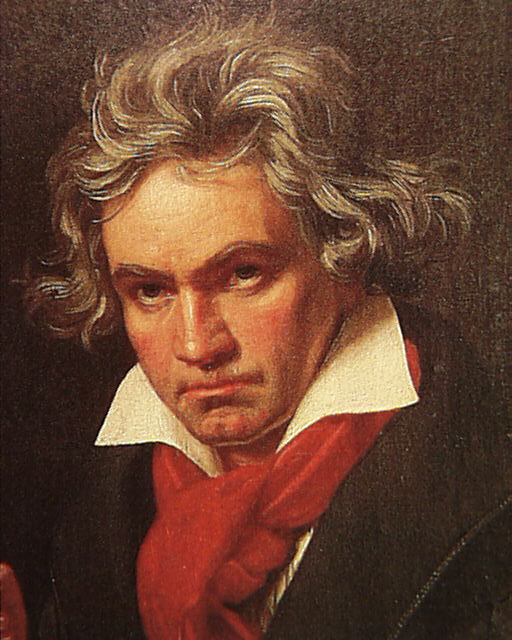
Portrait of Ludwig van Beethoven by Joseph Karl Stieler (1819)
He was an artist, but also a man, a man in every sense, in the highest sense. Because he shut himself off from the world, they called him hostile; and callous, because he shunned feelings. Oh, he who knows he is hardened does not flee! (It is the more delicate point that is most easily blunted, that bends or breaks.)
Excess of feeling avoids feelings. He fled the world because he did not find, in the whole compass of his loving nature, a weapon with which to resist it. He withdrew from his fellow men after he had given them everything and had received nothing in return. He remained alone because he found no second self. But until his death he preserved a human heart for all men, a father’s heart for his own people, the whole world.
Thus he was, thus he died, thus he will live for all time!
—Oration by the playwright and poet Franz Grillparzer delivered on the occasion of Beethoven’s funeral on 29 March 1827
To mark the occasion of the day celebrated as Beethoven’s birthday, here’s an account of what may well be Beethoven’s greatest large-scale composition – and his greatest “opera” – in an account led by Leonard Bernstein with the Concertgebouw: the Missa solemnis.
Just how “tailor-made” were Shakespeare’s plays for the particular actors in his company? In the TLS, Charles Nicholl reviewsShakespeare in Company by Bart Van Es. This new book “seeks to show that Shakespeare’s achievement as a writer was in crucial ways communal; that the contributions of his playhouse colleagues, indeed his whole immersion in the business and practice of the theatre, are woven into the fabric of his plays; and that in a broadly chronological framework one can see his literary skills evolving in response to certain changes in his working conditions.”
Van Es offers a corrective to the later Romantic image of the lone “lofty genius” — with interesting comparisons to be made along the way, incidentally, with the give-and-take of composers like Handel who wrote for particular performers and within a demanding commercial framework. According to Nicholl, Ven Es gives us a down-to-earth portrait of “a poet at work in the daily professional context of a busy and successful theatre company.”
Of special fascination is the influence of writing for the tragedian Richard Burbage and the comedian Robert Armin. The arrival of the latter to replace the previous “star comic” Will Kemp led to “a stylistic watershed in Shakespearean comedy.” Nicholl explains:
Kemp was an old-style “jigs and bawdry” man, whose typical Shakespearean parts were lovable bozos like Bottom and Dogberry; he may also have been the world’s first Falstaff. By contrast, the parts written for Armin during the first few years of the new century are the more complex, mercurial “fools”, whose wit is satirical and edgy yet tinged also with melancholy. The first role specially tailored for Armin was Touchstone in “As You Like It”….
Further Armin roles, in probable order of composition, are Feste in “Twelfth Night,” Thersites in “Troilus and Cressida,” Lavatch in “All’s Well” and the Fool in “Lear.” The last of these is a radical relocation of the truth-telling jester to the terrain of tragedy. Armin’s last identifiable Shakespearean role is Autolycus in “The Winter’s Tale.”
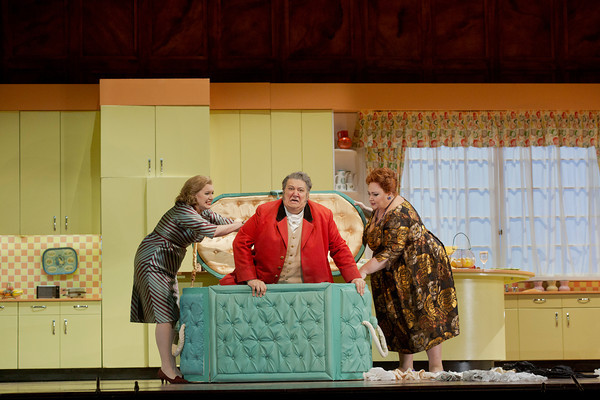
Jennifer Johnson Cano, Ambrogio Maestri, and Stephanie Blythe in the Met’s Falstaff; photo by Ken Howard
Looking ahead to the Met’s Live in HD broadcast of its new Falstaff production tomorrow, I gathered a sampling of the critical responses:
[T]his was a perfectly respectable Falstaff. It just wasn’t the superb Falstaff the occasion called for….This level of micro control is put to the test in Falstaff. For this sparkling comedy based on Shakespeare’s The Merry Wives of Windsor, Verdi wrote a quicksilver score that, when conducted precisely, feels improvisational. But when the conducting is off even by a hair, the music seems to lurch and halt like a car whose driver is riding the brakes. And that’s how Mr. Levine’s Falstaff felt: We reached our destination, but the ride was a little rough.
The opera turns on a dime between slapstick, romance, and poignancy, but the production, while good-natured, isn’t so agile….Falstaff is a James Levine signature piece and he brings a bounce and light to the music that was missing from the production (particularly in the last act). It’s quick, light, and transparent, but quiet when it needs to be. That being said, there were a few ensemble coordination issues in Act 1, particularly between the two sides of the stage (men on one side, women on the other). Things improved….
Ambrogio Maestri, however, was not a particularly interesting Falstaff. He’s got the big round voice for it, and the round shape, but while musically fine it was a one-dimensional characterization, little more than a teddy bear….As Alice Ford, Angela Meade put in a valiant effort, acting-wise, and this was by far the most animated performance I’ve seen from her….Nanetta’s music is a gift to any light soprano, and the Met has fortunately cast Lisette Oropesa, possibly the best singer they have in this Fach….On the low side, Stephanie Blythe as Mistress Quickly sounded like a very loud trombone. This role is her ideal Fach as well–she’s much better here than she is in higher Verdi stuff.
At 6 foot 5 with his Falstaffian physique, Mr. Maestri certainly looks the part. A natural onstage, and surprisingly light on his feet, he makes Falstaff a charming rapscallion and sings with consummate Italianate style. …
Inspired by the librettist Arrigo Boito’s breezy adaptation of Shakespeare’s comic verse [only a fraction of Merry Wives is actually in verse (Ed.)], Verdi wrote music that responded minutely to the patterns and flow of the words. The music is like a gossamer fabric of sewn-together snippets. Mr. Levine revealed the continuity and structure of those snippets in this performance. The tempos he chose were sometimes restrained, allowing for enhanced richness and breathing room….But, there were shaky moments in the performance. “Falstaff” is an opera of ensembles, and some of these passages were a little scrappy….Over all, when it comes to theatrical flair, captivating costumes, stage antics and imagination, there are not many shows on Broadway to rival the Met’s new “Falstaff.”
[W]hile conventional productions might assume Verdi and his librettist Boito created a silly, self-deluded shell of a knight descending to society’s dregs, Carsen shows Falstaff in upper-echelon men’s clubs and someone to be ridiculed only at your own risk….Carsen went far to solve the central problem that makes the opera more respected than loved. For all its distilled, compact music, Verdi’s final opera often seems to be an enshrinement of buffoonery while the soprano/tenor love interest have far-less-than-usual stage time and everybody else has a high old time practicing the un-exalted human pastimes of humiliation and revenge….
Now for the reservations: The clear narrative lines that are typical of Carsen broke down a bit in larger crowd scenes. The bigger problem is that, aside from the coup-de-theatre kitchen and and the nighttime scene in the final act, Paul Steinberg’s sets are surprisingly plain with a lot of bourgeois wood paneling.
The Met’s much-loved 1964 Franco Zeffirelli production, which dated back to the old 39th Street house, will be missed, but Robert Carsen’s new take on Verdi’s final opera is a true delight….Carsen sets his version in late-1950s London, well after the war but just before the Mod revolution. It was a time when existing social systems were crumbling, and Carsen has great fun contrasting the twilight of aristocracy with the rise of the middle class.
Carsen is known for his trademark motif of theater-within-theater for most of his productions. He manages to ignore it for most of the work but manages to get it in during the final choral fugue….This “Falstaff” is one of the finest productions of general manager Peter Gelb’s tenure and the perfect way to end the 2013 bicentennial celebration of Verdi’s immortal genius.
There’s a trend of classic film scores being played live by orchestras around the U.S., and they’re proving to be a successful programming strategy for attracting audiences. Which film composers currently writing are producing future classics? Alan Zilberman argues that there’s been “a sea change in film scores from complexity toward simplicity.” Why?
[B]ecause composers trust canny audiences to feel an emotional response when abstracted melodies contain an aural space for significance (or what feels like significance).
I talked about the power of simplicity with composer Nicholas Britell, who composed all the musical arrangements performed by Solomon Northup (Chiwetel Ejiofor) in “12 Years a Slave” (The rest of the score of the film is by Hans Zimmer). After studying neuromusicology at Harvard, Britell became deeply aware of, “patterns that trigger cascades of feeling.” The ability to invoke such feeling is instrumental to a composer’s work (pun intended): the best ones do not manipulate, exactly, and instead want their work to reflect what happens on screen.
Still, a conversation about feelings and patterns [does] not explain what it is about the notes that provokes a strong reaction, so I asked Britell to give an illustrative example of powerful music. He thought for a moment and suggested François Couperin’s “Les Barricades Mysterieuses,” a baroque piece for the solo piano Terrence Malick used in “The Tree of Life.” According to Britell, the key to the piece’s power is the dissonance.
“Throughout the piece, there are certain times where the lines continue a little longer (i.e. “suspensions”). The harmony changes yet they’re still holding an old harmony and then they quickly resolve. This process is something I always find very beautiful. It’s the main technique of a lot of music, where something overstays its welcome by a millisecond then resolves.”
[…]
Zimmer’s [“Time” from the 2010 film “Inception”] is full of lengthy suspensions that have time to resolve. But right at the very end, there’s one final note has no opportunity to decay. It’s cut off short. Do you want more? That’ll be one ticket.
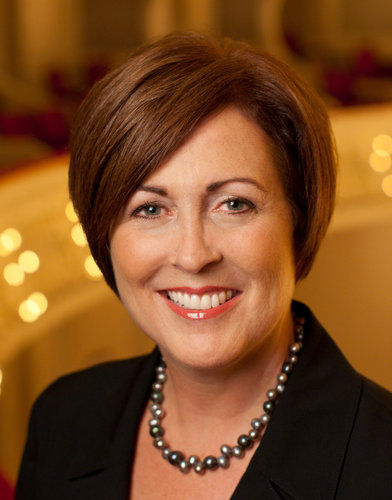
This announcement really made my day: Deborah Rutter has been named the third (and first female) president in the history of the Kennedy Center. Her position will combine artistic and administrative leadership. Deborah takes over the reins from current president Michael M. Kaiser in September 2014.
I have a special attachment to the Kennedy Center. This was the home-away-from-home where I first experienced the live performing arts when I was growing up in the region. It’s amazing how vivid and imperturbable those early memories remain (even if the memories themselves are fluid and do shuffle and rearrange, as recent studies show). The thrill of going to symphony concerts and operas – still a rare adventure in those years – was enough to ignite a lifelong passion.
The KC board has really struck gold with its selection of Deborah Rutter. Her accomplishments with the Chicago Symphony – which she headed after serving for a decade as executive director of Seattle Symphony – are already legendary. This is someone who genuinely loves and knows music. Here’s a quick roundup of some of the first announcements and reactions, including speculation about what to expect under Deborah’s tenure, such as her digital media savvy: